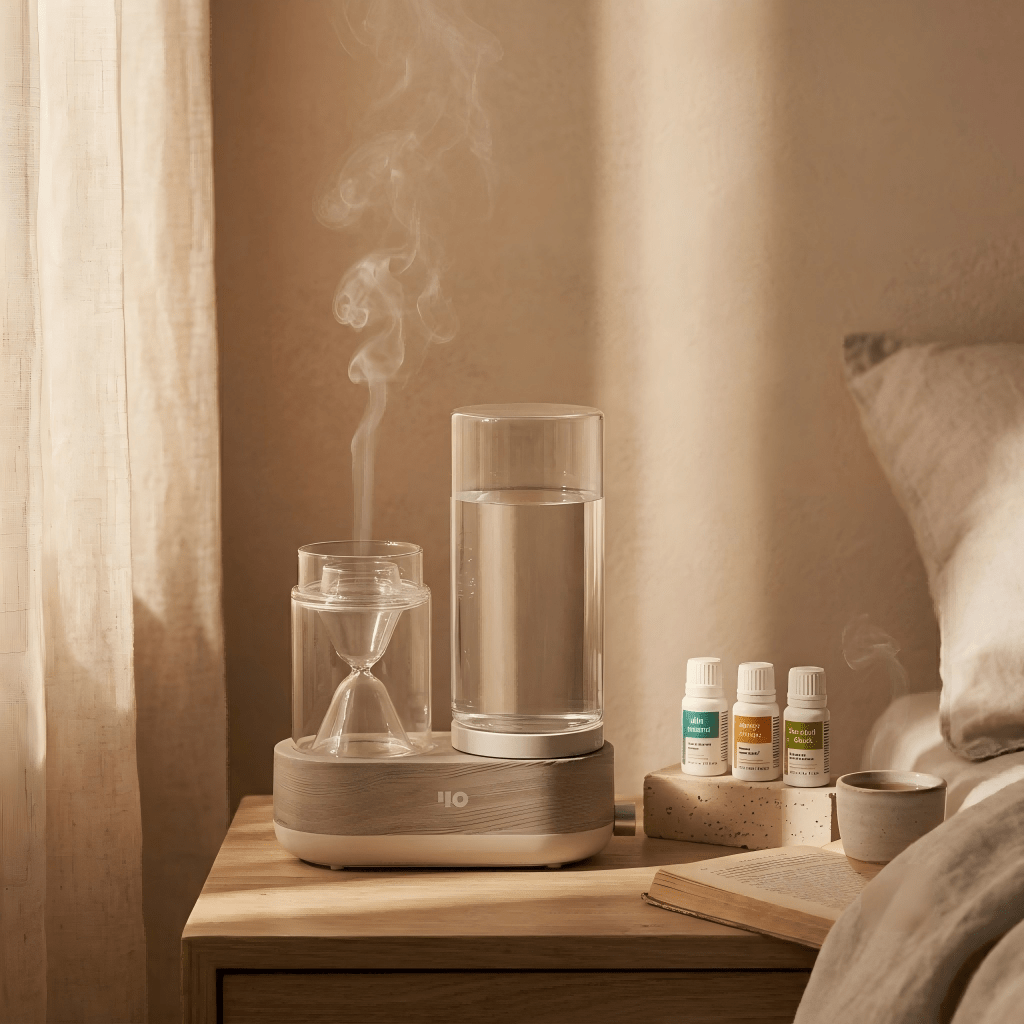

Coffee gets the credit. But the first thing that reaches your brain in the morning isn't caffeine — it's scent.
Before you've taken a sip, before your eyes have fully adjusted, your nose is already processing the air around you. That signal travels faster than almost any other sensory input, straight to the part of the brain that governs mood and alertness.
Which means the air you wake up to matters more than most people realize.
A morning diffuser ritual isn't about replacing coffee or reinventing your routine. It's about giving your senses something to orient around — a consistent signal that tells your nervous system the day has started, on your terms.
Why Scent Works Faster Than Any Other Morning Signal
Every sensory signal your body receives travels through a relay station in the brain before reaching conscious awareness — except smell.
Aromatic molecules that enter your nose bind directly to receptors that connect to the olfactory bulb, which sits immediately adjacent to the limbic system: the brain's center for emotion, memory, and the sense of being awake or asleep. No relay. No translation layer. The signal arrives faster than touch, faster than sound, faster than light through your eyelids.
This is why a specific scent can shift how you feel within seconds of encountering it — not because of anything mystical, but because of how directly the olfactory pathway connects to the structures that govern alertness and mood.
There's also a timing consideration. In the first 20–30 minutes after waking, cortisol levels naturally peak — a biological process called the Cortisol Awakening Response. This window is when your nervous system is most primed to receive the signals that will set the tone for the next several hours. What you expose yourself to during this window has an outsized influence on how the morning unfolds.
The first half-hour after waking is the body's natural transition period from rest to readiness. Pairing a consistent aromatic signal with that window — the same scent, every morning — may help the transition feel more intentional and less jarring over time.
The Essential Oils Most Associated with a Fresh Start
Not all oils suit the morning equally well. The ones that tend to work best for a wake-up ritual share a common quality: they're bright, clean, and easy to respond to without effort.
They fall into three natural groups.
Citrus — The Quickest Lift
Citrus peel oils — sweet orange, lemon, grapefruit, bergamot — are the most universally recognized as morning scents. Their top notes are volatile, meaning they disperse quickly and reach the nose fast. The association with freshness is partly cultural (they're everywhere in morning products) and partly sensory: the sharp, sweet-bright character of citrus is simply hard to feel sleepy around.
Mint & Eucalyptus — The Opening Breath
Peppermint and eucalyptus create a sensation of clear, open airways — the olfactory equivalent of a deep breath. They're particularly effective on mornings when the air feels stale or heavy. Use them sparingly: 1–2 drops is enough. Their intensity can feel overwhelming in an unventilated room.
Rosemary & Conifer — The Grounded Start
For mornings that call for steadiness rather than a jolt, rosemary and forest needle oils (fir, pine, spruce) offer a grounded, green quality. They're associated with a sense of presence and calm focus rather than urgency. Good for slow mornings, creative work days, or anyone for whom citrus feels too sharp first thing.
| Essential Oil | Sensory Character | Best Morning Mood | Drops (per session) |
|---|---|---|---|
| Sweet Orange | Warm, sweet, uplifting | Everyday cheerful start | 2–3 |
| Lemon | Crisp, clean, sharp | High-output work day ahead | 2–3 |
| Grapefruit | Bright, slightly bitter, energetic | Physical activity morning | 2–3 |
| Bergamot | Floral-citrus, nuanced, sophisticated | Calm but present start | 2 |
| Peppermint | Cool, sharp, opening | Sluggish or heavy morning | 1–2 |
| Eucalyptus | Clean, camphoraceous, airy | Stale air / winter morning | 1–2 |
| Rosemary | Herbal, green, grounding | Slow morning / creative day | 2–3 |
| Fir / Pine | Forest, fresh, steady | Grounded, unhurried start | 2–3 |

Building the 10-Minute Morning Ritual
The ritual doesn't require extra time. It slots into what you're already doing.
- The night before: fill the reservoir, add your morning oil — so all you do is press a button when you wake up
- On waking: turn on the diffuser before you do anything else — let the scent arrive while you're still horizontal if you want
- During the first 10 minutes: let the aroma do its work while you make coffee, stretch, or simply sit
- Consistency: use the same oil (or same blend) every morning for a week — the scent-to-wakefulness association strengthens with repetition
- Ventilation: crack a window after 20–30 minutes, especially in winter when rooms are sealed
- Don't use more than 3 drops in a closed bedroom — morning rooms are often unventilated and scent concentrates quickly
- Don't use citrus oils if you're going to be in direct sunlight shortly after — some are photosensitive when applied to skin (though diffused use is fine)
- Don't run the diffuser during breakfast if you have young children or pets in the room — give them an opt-out
- Don't assume more drops equals a stronger effect — past a certain concentration, scent becomes fatiguing rather than invigorating
Why the Device You Use Matters for a Morning Ritual
Most diffuser guides focus entirely on which oil to choose. They skip the part where the device itself is contributing something to your morning air — and not always something you'd want.
A plastic ultrasonic diffuser running in a closed bedroom overnight means heated water against a plastic reservoir for hours. Essential oils are natural solvents — over time, that interaction can degrade the plastic surface. What enters the air in the morning isn't just the aromatic compounds you chose. It may also include mineral particulate from hard tap water and trace VOCs from plastic degradation.
This is the quiet contradiction of a morning wellness ritual built around a low-quality device: the intention is clean air and intentional scent, but the delivery mechanism may be introducing its own unwanted elements.
The air in a closed bedroom after an overnight ultrasonic session may contain mineral aerosol from hard tap water and VOCs from oil-plastic contact. For a ritual designed around the quality of your first morning breath, the material of the diffuser is not a small detail.
For a morning ritual to be worth keeping, it should be completely frictionless and unambiguously clean. That means a device you can prep the night before, turn on in one motion, and trust to put only what you intended into the air.
Set It the Night Before. Press One Button in the Morning.
The Yo-A1's 1,600ml glass reservoir holds enough for an overnight rest and a full morning session — no refill, no plastic contact, no mineral dust. Just the oil you chose.
Meet the Yo-A1 →The Yo-A1 as a Morning Ritual Anchor
The details that make the Yo-A1 well-suited to a morning ritual are the same ones that matter most when you're half-asleep and not yet making careful decisions.
The reservoir is 1,600ml borosilicate glass — no plastic anywhere in the water or oil path. Essential oils meet only glass surfaces, which means no degradation, no off-gassing, and nothing unintended entering the steam. The first breath of your morning is exactly what you put in the night before.
The heating element brings water to 100°C (212°F) before each session, which means the reservoir that sat overnight is sterilized before the steam reaches you. No biofilm. No question about what accumulated while you slept.
Because it produces pure steam rather than atomized water, there's no mineral carry-over from tap water. No white residue on the nightstand. No particulate in the morning air.
The noise level — under 25 dB — means the ritual stays quiet. No hum, no gurgle, no sound that competes with the stillness of early morning. Just the scent arriving, steadily, while everything else is still.
And the 8-hour auto shut-off means you can set it, sleep, and let the morning happen without any additional decisions. The ritual is already prepared. You just wake up into it.

Independent reviews of the Yo-A1 in home environments:
Your Best Mornings Start the Night Before
Glass reservoir · 100°C sterilization · <25 dB · 8-hour runtime. Fill it tonight. Press one button tomorrow. The rest takes care of itself.
Shop the Yo-A1 →Frequently Asked Questions
Can I add essential oils to my diffuser the night before?
Yes — and it's one of the most practical things you can do for a morning ritual. Add your chosen oil the night before, and all you need to do when you wake up is press the button. The oil will still be present in the reservoir in the morning. With a glass steam unit, there's no concern about the oil degrading plastic overnight. With plastic ultrasonic models, it's worth checking the manufacturer guidance, as prolonged oil-plastic contact can cause degradation over time.
What are the best essential oils to wake up with?
The oils most widely used in morning routines are citrus-based — sweet orange, lemon, and grapefruit — for their bright, clean, uplifting character. Peppermint and eucalyptus are popular when you want that open, clear-air feeling. Rosemary and fir oils suit mornings when you want something grounded rather than sharp. The "best" oil is the one you find yourself actually looking forward to — consistency matters more than the specific oil you choose.
When is the best time to turn on the diffuser in the morning?
Right when you wake up, or even 20–30 minutes before if your diffuser has a timer. The first half-hour after waking is the body's natural transition window — pairing an aromatic signal with that period consistently may help make the ritual feel more automatic over time. Some people find it helpful to run the diffuser while still in bed for a few minutes; others prefer to start it as they get up and move around. Either works — the key is doing it at the same point in your routine each day.
How many drops of essential oil should I use in the morning?
Start with 2–3 drops for a typical bedroom or living space. Morning rooms are often closed up from the night before, which means scent concentrates faster than in a ventilated space. More drops doesn't mean a stronger or better effect — past a certain concentration, heavy scent can feel fatiguing rather than refreshing. If you're using a potent oil like peppermint or eucalyptus, start with 1–2 drops. You can always add more; you can't take it back once it's in the air.
Is it safe to run a diffuser while sleeping and wake up to it?
It can be, with the right setup. Use a device with auto shut-off so it doesn't run indefinitely. Keep the oil concentration low — 2 drops maximum for overnight use. Ensure some ventilation (even a slightly open door helps). Avoid strong oils like clove, cinnamon, or high-dose peppermint for overnight sessions; gentler options like lavender or a single drop of cedarwood are better suited. If you have asthma or respiratory sensitivities, consult your doctor before running any diffuser overnight.
Why does my diffuser smell like plastic in the morning?
That's a sign of oil-plastic interaction in the reservoir. Essential oils are natural solvents — when they sit in contact with plastic overnight (particularly polypropylene or ABS), they can begin to break down the surface over time, releasing a faint plastic or chemical note into the steam. It's one of the reasons glass reservoirs matter for anyone running a diffuser regularly. With a glass unit, oil contacts only an inert surface — what you smell in the morning is only what you put in.
References
- U.S. EPA — Indoor Air Quality: epa.gov/indoor-air-quality-iaq
- CDC — Indoor Environmental Quality: cdc.gov/niosh/topics/indoorenv
- Justia Patents — Steam Diffusion Patent 11052167: patents.justia.com/patent/11052167