
You moisturize every day. You drink enough water. You switched to a gentler cleanser. And your skin still feels tight by 2pm.
In winter, that's rarely a skincare routine problem. It's an air problem.
The moment you turn on the heat indoors, you change the air your skin lives in — and most of what you put on your face can only do so much when the air itself is pulling moisture away.
Indoor heating doesn't just warm a room. It strips the air of humidity, and dry air pulls water from your skin continuously — no matter how much you moisturize. The winter ritual that actually makes a difference starts with the air, not the bottle.
What Heating Season Does to Indoor Air
Outdoor winter air is naturally low in humidity — cold air holds less moisture. When that cold, dry air gets pulled inside and heated, it gets even drier. The relative humidity in a heated room can drop below 20%, well under the 30–50% range the Mayo Clinic considers comfortable for skin and airways.
Most people don't feel this directly. What they feel is the result: tight skin, flaky patches, chapped lips, a persistent sensation that nothing is absorbing properly.
The gap between what most people do (more moisturizer) and what actually helps (address the air) is where winter skin routines quietly fall apart.
Transepidermal Water Loss: The Mechanism Behind Winter Dryness
Your skin constantly loses water to the surrounding air through a process called transepidermal water loss, or TEWL. This is normal and unavoidable — it happens even with healthy skin.
The rate of TEWL is directly influenced by the humidity of the air around you. When indoor air humidity drops, the moisture gradient between your skin and the air increases, and water leaves your skin faster.
A moisturizer helps seal the surface temporarily. But it can't change the physics of dry air. When relative humidity is low, TEWL continues — just slightly slower.
Moisturizer works on the skin's surface. Humidity works on the air around it. In a dry heated room, surface moisture evaporates faster than it's replaced — creating the feeling that nothing is working. Raising room humidity is the variable that changes that equation.
This is why a humidifier in winter isn't a luxury. It's the environmental condition your skincare routine is designed to work within.
Can You Put Essential Oils in a Humidifier?
This is one of the most searched questions in winter home care — and the honest answer is: it depends entirely on the device.
Standard humidifiers — cool mist, evaporative, ultrasonic — are designed to move water, not oil. Essential oils are natural solvents. Add oil to a plastic reservoir, and you risk degrading the plastic, clogging the filter, voiding the warranty, or releasing degraded plastic particles into the air along with the mist.
Putting essential oils into a standard plastic humidifier can melt or crack the reservoir, clog the mechanism, and introduce plastic-derived compounds into the mist. Several sources have found that oil-damaged humidifiers release contaminants — the opposite of what you want in a winter wellness ritual.
The reason people want to combine them makes complete sense: you want humidity for your skin and a pleasant, grounding scent for the room. The problem isn't the goal — it's using the wrong device to reach it.
What Oils Actually Work Well in a Winter Diffuser Ritual
Once you have the right device — one designed to handle both water and essential oils safely — the choice of oil shapes the whole feel of the season.
Winter diffuser oils tend to fall into two moods: warming and grounding (for dark evenings), or crisp and clearing (for mornings when you want to feel awake despite the grey outside).
| Essential Oil | Seasonal Mood | When to Use | Pairs Well With |
|---|---|---|---|
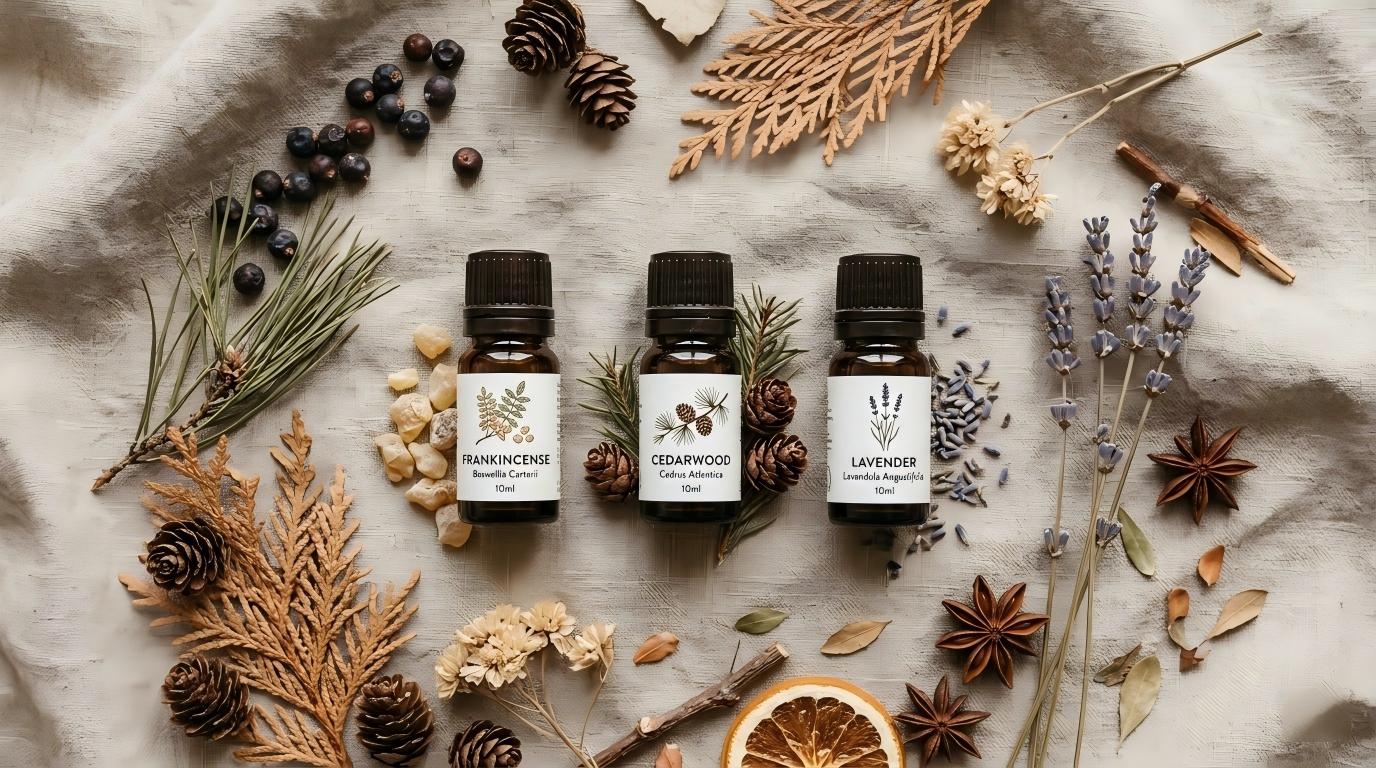
| Frankincense | Warm, resinous, grounding | Evening wind-down | Sandalwood, cedarwood |
| Cedarwood | Woody, calm, cozy | Afternoon or evening | Frankincense, lavender |
| Lavender | Soft, familiar, settling | Bedtime ritual | Cedarwood, bergamot |
| Eucalyptus | Crisp, cool, opening | Morning or when air feels stale | Peppermint, lemon |
| Peppermint | Sharp, clear, energizing | Morning routine | Eucalyptus, lemon |
| Sweet Orange | Bright, uplifting, familiar | Midday reset | Cinnamon (1 drop only), clove |
| Sandalwood | Smooth, luxurious, quiet | Evening self-care ritual | Rose, frankincense |
A note on concentration: winter rooms are often closed up tight. Less ventilation means scent builds up faster. Start with 2–3 drops per session and adjust from there — more isn't always more in a sealed winter room.

Building a Winter Humidity Ritual: Morning to Evening
The most effective approach isn't running a device all day — it's building short, intentional sessions into moments that already exist in your routine.
- Morning (wake-up): Eucalyptus or peppermint — 2 drops, 30 minutes while you get ready. Crisp start, room feels alive.
- Midday (desk reset): Sweet orange or bergamot — 1–2 drops, 20 minutes. Lifts the flat feeling of a grey afternoon.
- Evening (wind-down): Frankincense or cedarwood — 2–3 drops, 45–60 minutes during skincare. The ritual that feels like winter done right.
- Bedtime: Lavender — 2 drops, run until you fall asleep if auto shut-off is enabled.
- Don't run continuously all day in a closed room — let the air breathe between sessions
- Don't use citrus oils like lemon or grapefruit near direct sunlight on skin
- Don't add oils to a standard plastic humidifier — use a device designed for both
- Don't ignore the water quality — mineral-heavy tap water in an ultrasonic creates white dust that settles on skin and surfaces
Why Most Devices Can't Do Both
The reason "can I put essential oils in my humidifier" gets searched so often is that it's a completely reasonable thing to want. One device, two benefits: humidity for the skin, scent for the room.
The limitation isn't the idea — it's that standard humidifiers weren't designed for oil. Their plastic reservoirs degrade on contact with concentrated essential oils. Their filtration systems clog. And ultrasonic humidifiers, which can handle oil, still create mineral aerosol from tap water — white dust that settles on every surface in the room, including your face.
What you actually need is a device built from the ground up for both: a non-plastic water contact surface, a heating mechanism that sterilizes the water before dispersal, and true water-oil separation so the aromatics diffuse cleanly without emulsifying into the water supply.
A standard humidifier handles water. A standard ultrasonic diffuser handles oil, but creates mineral mist and risks plastic contact. A glass steam diffuser with water-oil separation does both — cleanly, without the trade-offs of either.
One Device. Humidity and Scent — Without the Trade-offs.
The Yo-A1 was designed to do both: borosilicate glass, steam heat, and true water-oil separation. Your winter ritual, done right.
Meet the Yo-A1 →The Yo-A1 as a Winter Ritual Anchor
The Yo-A1 was designed around exactly the gap that makes winter home care frustrating: you can't safely add essential oils to a standard humidifier, and standard ultrasonic diffusers create mineral dust and have plastic reservoirs that degrade with oil exposure.
The Yo-A1's reservoir is 1,600ml borosilicate glass — chemically inert to essential oils, no plastic contact anywhere in the water or oil path. The heating element brings water to 100°C (212°F), sterilizing the reservoir with every use and ensuring no biofilm accumulates over a winter of daily sessions.
Because it produces pure steam rather than atomized water droplets, there's no mineral carry-over from tap water. No white dust. No residue settling on surfaces or skin.
And with true water-oil separation, the essential oil you add stays on the surface of the water column, volatilizing into consistent aromatic steam — not dumped into the water where it degrades or concentrates unpredictably.
For a winter routine, the 8-hour runtime means one fill in the evening carries through the wind-down ritual, the bedtime session, and into the night — the hours when heated indoor air is doing the most damage to skin comfort.

Independent reviews covering the Yo-A1 in home environments:

Winter Air Doesn't Have to Feel Like This
Glass reservoir · steam heat · 8-hour runtime · no white dust · no plastic contact. The Yo-A1 handles humidity and scent the way winter actually needs.
Shop the Yo-A1 →Frequently Asked Questions
Can you put essential oils in a humidifier?
With most standard humidifiers — no. Essential oils are natural solvents that can degrade plastic reservoirs, clog filters, and in ultrasonic models, create an inconsistent and potentially contaminated mist. The safe answer is to use a device specifically designed to handle both water and essential oils: one with a non-plastic reservoir (glass or stainless steel) and a mechanism that keeps oil separate from the water supply until it diffuses as vapor.
Does a humidifier actually help with dry skin in winter?
Yes — by addressing the environmental cause rather than just the surface symptom. Dry heated indoor air accelerates transepidermal water loss (TEWL), pulling moisture from your skin continuously. Raising room humidity to 30–50% slows that process, making your moisturizer and skincare routine work more effectively. It won't replace topical skincare, but it changes the conditions your skin is operating in all day.
What essential oils are best for dry winter air?
For a warming, cozy winter feel: frankincense, cedarwood, and sandalwood are the classic choices — resinous, grounding, and suited to long evening sessions. For mornings or when you want to feel more awake: eucalyptus and peppermint create a crisp, clearing atmosphere. Sweet orange works well as a midday mood lift. Use 2–3 drops per session in a closed winter room — scent builds faster than in summer with windows open.
What's the difference between a humidifier and a diffuser?
A humidifier's primary purpose is adding moisture to the air — it has a large reservoir and runs for extended periods to raise room humidity. A diffuser's primary purpose is dispersing aromatic oils — it has a smaller reservoir and focuses on scent delivery. Standard versions of each don't do the other's job well: humidifiers aren't built for oil, and most diffusers don't have enough output to meaningfully humidify a room. A glass steam unit like the Yo-A1, with a 1,600ml reservoir and 8-hour runtime, bridges both functions.
How long should I run a humidifier for skin in winter?
There's no fixed rule, but most people find that 2–4 hours of continuous use in the evening — when the room is occupied and windows are closed — makes a noticeable difference in air feel by morning. Running it overnight in a bedroom is a common approach, especially in very dry climates or older buildings with forced-air heating. Auto shut-off is important for overnight use. Avoid running it so long that condensation forms on windows, which signals humidity is too high.
Why does my humidifier leave white dust on everything?
White dust is mineral residue — calcium and magnesium from hard tap water — that gets aerosolized by ultrasonic humidifiers and diffusers. The vibration that breaks water into fine mist also breaks up the dissolved minerals, which then float through the air and settle on surfaces. Using distilled water reduces it significantly. Switching to a steam-based unit eliminates it entirely, because the boiling process means only pure water vapor rises — minerals stay in the reservoir.
References
- U.S. EPA — Indoor Air Quality: epa.gov/indoor-air-quality-iaq
- USGS — Water Hardness: usgs.gov — Water Hardness
- ASHRAE — Indoor Humidity Guidelines: ashrae.org
- Justia Patents — Steam Diffusion Patent 11052167: patents.justia.com/patent/11052167