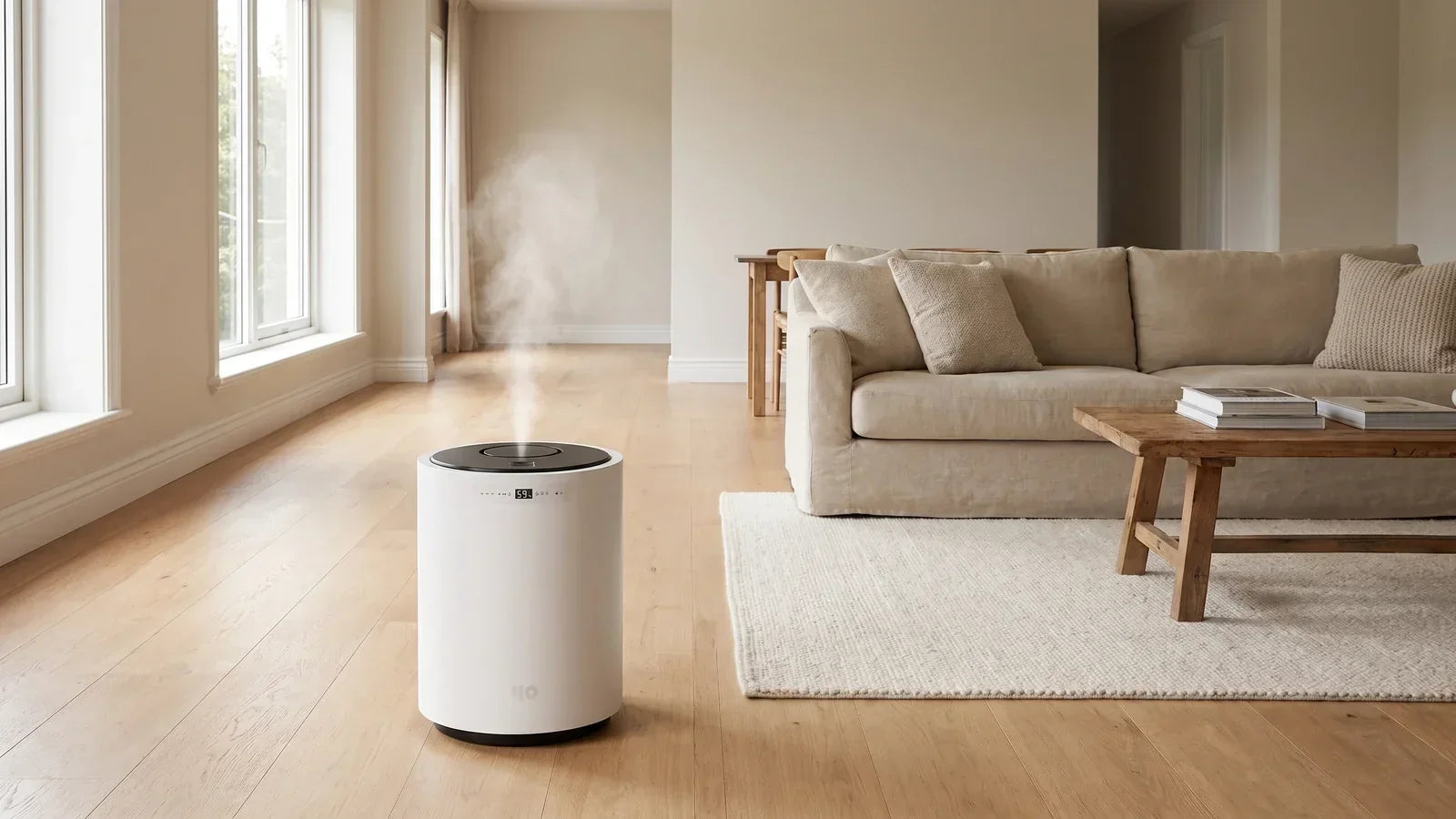

It’s one of the most-searched worries about whole-house humidifiers, and the honest answer isn’t a clean yes or no. A whole-house humidifier can grow mold in your ducts — but not because the machine “makes mold.” It happens under three specific, avoidable conditions: the humidity is set too high, the unit holds standing water, or moist air meets cold, dusty ductwork. Get those wrong and you’re feeding mold inside a duct network you can’t see or easily clean. Below is exactly how duct mold starts, which humidifier types are riskiest, how to tell if you already have it, how to prevent it if you keep your system — and why a portable steam humidifier avoids the duct pathway entirely by never touching your ducts.
The short answer
Yes, a whole-house humidifier can lead to mold in your ducts — and no, it isn’t inevitable. The distinction matters, because the fear and the reassurance are both half-true. A properly sized, correctly set, well-maintained whole-house humidifier usually won’t cause a mold problem. A humidifier cranked too high, left dirty, or run while the ducts are cold very much can. The EPA is blunt about the maintenance side: it advises that in-duct humidification equipment be operated and maintained strictly as the manufacturer recommends, and that stand-alone humidifiers be cleaned very frequently so they don’t turn moldy.
So this isn’t a scare piece, and it isn’t a free pass. It’s the set of conditions that decide which way it goes — and an honest look at how much of that risk you even need to take on.
How moisture gets into your ducts
A whole-house humidifier is plumbed into your heating system and adds water vapour directly to the air moving through your ductwork. When everything is balanced, that damp air warms, mixes, and spreads through the house as comfortable humidity. The trouble starts when the moisture meets a cold surface before it reaches the room. Water vapour condenses back into liquid on any surface colder than the air’s dew point — and the inside of a metal duct running through an unheated attic, crawlspace or basement is exactly that kind of cold surface.

Ducts are also dusty and dark, and dust is organic — it’s food for mold. Add condensed moisture to dust in a dark duct and you have the three things mold needs: water, food and time. The EPA makes the same point in reverse when it says controlling moisture is the single most effective way to prevent biological growth in air ducts. Duct mold isn’t a humidifier defect; it’s condensation plus dust in a place warm dry air is supposed to reach but sometimes doesn’t. That’s why running the unit only while the furnace is actively heating — so warm air carries the moisture out of the ducts rather than letting it settle — is one of the standard defences.
The three conditions that actually cause it
Strip away the alarm and duct mold comes down to three conditions. You usually need at least one; the worst cases have all three.
- The humidity is set too high. A single humidistat setting held all winter is the most common culprit. As you’ll see below, the humidity your home can safely hold falls as it gets colder outside — and a set-and-forget system doesn’t know that, so it keeps pushing moisture past the point where it condenses.
- The unit holds standing water. Some designs keep a reservoir of water sitting in the system. Standing water plus warmth is a breeding ground for mold and bacteria, which then get blown into the airstream. This is a design-and-maintenance issue, and it’s the reason the EPA singles out drain pans and reservoirs as things to check routinely.
- Moist air reaches cold, dusty ducts. Ducts in unconditioned space, or a humidifier run when the furnace isn’t heating, let moisture settle on cold metal coated in dust — the same condensation-plus-dust combination, in the worst possible spot.
Notice that all three are about control and upkeep, not about humidification being inherently dangerous. That’s the useful reframing: the risk is real, but it’s a function of how the system is set and maintained — and of putting water into ducts in the first place.
Not every whole-house system carries the same risk
“Whole-house humidifier” actually covers three different designs, and their mold risk is not the same — a distinction most buying guides skip. If you have one, or are shopping, it’s worth knowing which you’re dealing with.
| Type | How it works | Standing water? | Mold risk | Upkeep |
|---|---|---|---|---|
| Drum / reservoir | A rotating foam drum picks up water from a tray and evaporates it into the airflow | Yes — a tray sits full | Highest — the reservoir is a breeding ground if not cleaned | Clean roughly monthly |
| Flow-through / bypass | Fresh water trickles over an evaporator pad; excess drains away, leaving no pool | No | Lower — fresh water, no standing pool | Replace the water panel each season |
| Steam (in-duct) | Electricity boils water and injects steam into the duct airstream | No | Low inside the unit — but it still puts moisture into your ducts | Descale/clean the canister; highest energy use |
The pattern is clear: standing-water designs carry the most mold risk, which is why a neglected drum-style unit is the classic duct-mold story. But note the last row — even an in-duct steam unit, which is the most sanitary inside the machine, still shares the underlying issue that it adds moisture to a duct network. Sanitary water going in doesn’t change where it can condense once it’s in the ducts.
The root cause: over-humidification (and why the ceiling moves)
If there’s one thing to take away, it’s this: most duct-mold problems trace back to simply running too much humidity for the weather. And the amount your home can safely hold isn’t a fixed number — it drops as it gets colder outside, because colder surfaces condense moisture sooner. The chart at the top of this page shows the widely used guideline: at a mild 20–40°F outside you can hold up to about 40% indoors, but in a hard freeze below −20°F you need to be under 15% to keep moisture off cold windows and ducts.
Here is why whole-house systems get caught by this. A single humidistat setting can’t follow a moving ceiling — set it to a comfortable 40% in November and leave it, and the first cold snap pushes you well over the line, condensing moisture exactly where mold grows. The EPA’s general guidance is to keep indoor humidity in the 30–50% range and below 60%; the University of Minnesota Extension puts the winter comfort-and-safety target nearer 25–40%, lower in deep cold. A system that has to be manually re-tuned every time the forecast changes is a system that, in practice, spends part of the winter set too high.
How to tell if your ducts already have mold
You can’t see inside your ducts without opening them, but there are honest warning signs worth checking:

- A musty smell that appears when the heat runs. If the air smells earthy or stale specifically when the system kicks on, that’s the classic tell — you’re smelling the ducts.
- Visible growth at the registers or on the unit. Dark speckling around supply vents, or slime and discolouration on the humidifier’s pad, tray or nearby duct, is worth a closer look.
- Persistent condensation on windows. Fogged or dripping windows in cold weather mean your indoor humidity is above the line in the chart — the same condition that wets your ducts.
The EPA’s own trigger for action is substantial visible mold on the hard surfaces of your ducts or system components — that’s when it recommends professional cleaning. If you suspect it but can’t confirm it, a heating-and-cooling professional can inspect the unit and accessible ductwork.
Why duct mold is a pain to fix
This is the part that makes duct mold worse than mold you can wipe off a bathroom wall: much of your duct system is hidden, and some of it can’t truly be cleaned. Hard metal ducts with visible mold can be professionally cleaned. But the EPA notes something important about the insulated kind: once fibreglass duct liner is contaminated with mold, cleaning isn’t enough to prevent it coming back, and there are no EPA-registered products to treat porous duct materials — so affected sections often have to be replaced.
Professional duct cleaning isn’t cheap, and replacing runs of ducting is a real expense on top of it. The quiet cost of a whole-house humidifier isn’t just the install — it’s the possibility of a remediation bill for a problem hidden inside your walls. We break down the sticker side separately in whole-house vs portable steam. The point here is simply that duct mold is expensive and awkward to undo precisely because it lives where you can’t reach it.
If you keep your whole-house system: how to prevent duct mold
None of this means you have to rip out a system you already own. If it’s well matched to your home and you stay on top of it, you can keep the risk low. The genuine prevention steps:
- Lower the setting as it gets colder. Follow the chart above rather than one fixed number — drop your humidity in cold snaps until windows stay clear. Clear windows are the simplest real-world signal you’re under the line.
- Run it only while the furnace is heating. That way warm air carries the moisture out of the ducts instead of letting it condense on cold metal.
- Service it on schedule. Replace the water panel each season on a flow-through unit; clean a drum unit’s reservoir about monthly; descale a steam unit. Check the drain pan actually drains.
- Keep an eye on the warning signs above — musty smell, window condensation, growth at vents — and act early.
Done consistently, that upkeep is what separates a system that humidifies cleanly from one that seeds mold. The honest catch is the word “consistently” — a whole-house unit only stays safe as long as someone keeps re-tuning and cleaning it, every season, for the life of the system.
Why a portable steam humidifier sidesteps the whole problem
Here is the structural difference, and it’s the reason we build what we build. A portable steam humidifier has no ducts — it boils water and releases the mist into the air of the room it’s in, so there is no hidden, dusty, cold duct network for moisture to condense in and no reservoir buried in your HVAC to grow mold. The single most effective mold defence, per the EPA, is controlling moisture; a portable unit keeps that moisture out in the open room where you can feel it, see your hygrometer, and adjust — instead of inside walls where you can’t.

We’re not neutral here, so treat this as disclosure — but the logic is structural, not a sales pitch: the duct-mold pathway simply doesn’t exist without ducts. That said, a portable steam unit is not magic, and it has its own honest trade-offs. You still shouldn’t over-humidify a room — the same condensation-and-mold rules apply to your windows and walls, which is why we cover them in do humidifiers cause mold — and a steam unit needs periodic descaling and covers the rooms you put it in rather than a whole house through vents. For most people that last point is a feature, not a bug: you probably don’t need to humidify the whole house through ducts, only the rooms you actually live in, which is the case we make in how many humidifiers you really need. If you’re comparing the technologies themselves, steam vs ultrasonic vs evaporative and the tap-water guide lay out the full trade.
FAQ
Do whole-house humidifiers always cause mold?
No. A properly sized, correctly set and well-maintained whole-house humidifier usually does not cause a mold problem. Mold becomes likely under specific conditions: the humidity is set too high for the weather, the unit holds standing water and is not cleaned, or moist air condenses on cold, dusty ducts. Control those and the risk stays low.
How do I know if there is mold in my ducts?
The common signs are a musty or earthy smell that appears when the heat runs, dark growth around supply vents or on the humidifier pad and tray, and persistent condensation on cold windows. The EPA recommends professional cleaning when there is substantial visible mold on the hard surfaces of your ducts or system, so if you can see it, act on it.
What humidity setting prevents duct mold?
Keep indoor humidity roughly in the 30 to 50 percent range and below 60 percent, and lower it as it gets colder outside, since colder surfaces condense moisture sooner. In a hard freeze that can mean 25 percent or less. Running the humidifier only while the furnace is heating also helps, because warm air carries the moisture out of the ducts.
Does a portable steam humidifier cause mold?
It cannot grow mold in ducts, because it is not connected to any: it releases mist into the air of the room it is in. There is no reservoir buried in your HVAC and no cold duct for moisture to condense in. You should still avoid over-humidifying a room, since the same condensation rules apply to windows and walls, and a steam unit needs periodic descaling.
Can moldy ducts be cleaned, or do they need replacing?
Hard metal ducts with visible mold can be professionally cleaned. However, the EPA notes that once fibreglass duct liner is contaminated with mold, cleaning does not reliably stop it returning and there are no registered products to treat porous duct materials, so affected sections often have to be replaced. That is why duct mold is expensive and awkward to fix.
Keep reading
- Do humidifiers cause mold?
- Whole-house vs portable steam
- How many humidifiers do you really need?
- Is your humidifier making you sick?
- Steam vs ultrasonic vs evaporative
- Can you use tap water in a humidifier?
Sources — duct, mold and humidity guidance from the authorities below. Verified live.
- US EPA — Should You Have the Air Ducts in Your Home Cleaned? (humidifiers, duct mold, fibreglass liner)
- US EPA — A Brief Guide to Mold, Moisture and Your Home (keep RH 30–50%)
- US EPA — Mold Course, Chapter 2 (moisture and mold basics)
- University of Minnesota Extension — Controlling moisture problems in your home
- FGIA — Understanding Indoor Condensation (indoor RH by outdoor temperature)
- Carrier — Furnace Humidifiers (types: bypass, fan-powered, steam)