
Sie cremen sich jeden Tag ein. Sie trinken genug Wasser. Sie sind zu einem sanfteren Reinigungsmittel gewechselt. Und Ihre Haut spannt immer noch um 14 Uhr.
Im Winter ist das selten ein Problem der Hautpflegeroutine. Es ist ein Problem der Luft.
In dem Moment, in dem Sie drinnen die Heizung einschalten, verändern Sie die Luft, in der Ihre Haut lebt – und die meisten Dinge, die Sie auf Ihr Gesicht auftragen, können nur begrenzt wirken, wenn die Luft selbst der Haut Feuchtigkeit entzieht.
Die Innenheizung wärmt nicht nur einen Raum. Sie entzieht der Luft Feuchtigkeit, und trockene Luft entzieht Ihrer Haut ständig Wasser – egal wie viel Sie eincremen. Das Winterritual, das wirklich einen Unterschied macht, beginnt mit der Luft, nicht mit der Flasche.
Was die Heizperiode mit der Raumluft macht
Die Winterluft im Freien ist von Natur aus arm an Feuchtigkeit – kalte Luft speichert weniger Feuchtigkeit. Wenn diese kalte, trockene Luft nach drinnen gezogen und erwärmt wird, wird sie noch trockener. Die relative Luftfeuchtigkeit in einem beheizten Raum kann unter 20 % sinken, weit unter den Bereich von 30–50 %, den die Mayo Clinic für Haut und Atemwege als angenehm erachtet.
Die meisten Menschen spüren dies nicht direkt. Was sie spüren, ist das Ergebnis: spannende Haut, schuppige Stellen, rissige Lippen, ein anhaltendes Gefühl, dass nichts richtig einzieht.
Die Kluft zwischen dem, was die meisten Menschen tun (mehr Feuchtigkeitscreme), und dem, was tatsächlich hilft (die Luft ansprechen), ist der Punkt, an dem Winterhautroutinen leise auseinanderfallen.
Transepidermaler Wasserverlust: Der Mechanismus hinter der Wintertrockenheit
Ihre Haut verliert ständig Wasser an die umgebende Luft durch einen Prozess, der als transepidermaler Wasserverlust oder TEWL bezeichnet wird. Dies ist normal und unvermeidlich – es geschieht selbst bei gesunder Haut.
Die Rate des TEWL wird direkt von der Luftfeuchtigkeit der umgebenden Luft beeinflusst. Wenn die Luftfeuchtigkeit in Innenräumen sinkt, nimmt der Feuchtigkeitsgradient zwischen Ihrer Haut und der Luft zu, und Wasser verlässt Ihre Haut schneller.
Eine Feuchtigkeitscreme hilft, die Oberfläche vorübergehend zu versiegeln. Aber sie kann die Physik trockener Luft nicht ändern. Wenn die relative Luftfeuchtigkeit niedrig ist, geht der TEWL weiter – nur etwas langsamer.
Feuchtigkeitscreme wirkt auf der Hautoberfläche. Luftfeuchtigkeit wirkt auf die umgebende Luft. In einem trockenen, beheizten Raum verdunstet die Oberflächenfeuchtigkeit schneller, als sie ersetzt wird – was das Gefühl erzeugt, dass nichts funktioniert. Die Erhöhung der Raumluftfeuchtigkeit ist die Variable, die diese Gleichung verändert.
Deshalb ist ein Luftbefeuchter im Winter kein Luxus. Er ist die Umgebungsbedingung, unter der Ihre Hautpflegeroutine funktionieren soll.
Können ätherische Öle in einen Luftbefeuchter gegeben werden?
Dies ist eine der am häufigsten gesuchten Fragen in der Winter-Haushaltspflege – und die ehrliche Antwort lautet: Es hängt ganz vom Gerät ab.
Standard-Luftbefeuchter – Kaltnebel-, Verdunstungs-, Ultraschallgeräte – sind dazu bestimmt, Wasser zu bewegen, nicht Öl. Ätherische Öle sind natürliche Lösungsmittel. Wenn Sie Öl in einen Kunststoffbehälter geben, riskieren Sie, den Kunststoff zu zersetzen, den Filter zu verstopfen, die Garantie zu verlieren oder zersetzte Kunststoffpartikel zusammen mit dem Nebel in die Luft abzugeben.
Das Einfüllen ätherischer Öle in einen handelsüblichen Kunststoff-Luftbefeuchter kann den Behälter schmelzen oder reißen, den Mechanismus verstopfen und kunststoffhaltige Verbindungen in den Nebel abgeben. Mehrere Quellen haben herausgefunden, dass durch Öl beschädigte Luftbefeuchter Verunreinigungen freisetzen – das Gegenteil dessen, was man sich von einem Winter-Wellness-Ritual wünscht.
Der Grund, warum Menschen sie kombinieren wollen, ist völlig sinnvoll: Sie wünschen sich Feuchtigkeit für Ihre Haut und einen angenehmen, erdenden Duft für den Raum. Das Problem ist nicht das Ziel – es ist die Verwendung des falschen Geräts, um es zu erreichen.
Welche Öle eignen sich tatsächlich gut für ein Winter-Diffusor-Ritual?
Sobald Sie das richtige Gerät haben – eines, das sicher mit Wasser und ätherischen Ölen umgehen kann – prägt die Wahl des Öls das gesamte Gefühl der Jahreszeit.
Winter-Diffusoröle neigen dazu, in zwei Stimmungen zu fallen: wärmend und erdend (für dunkle Abende) oder frisch und klärend (für Morgen, wenn man sich trotz des grauen Wetters wach fühlen möchte).
| Ätherisches Öl | Saisonale Stimmung | Wann verwenden | Passt gut zu |
|---|---|---|---|
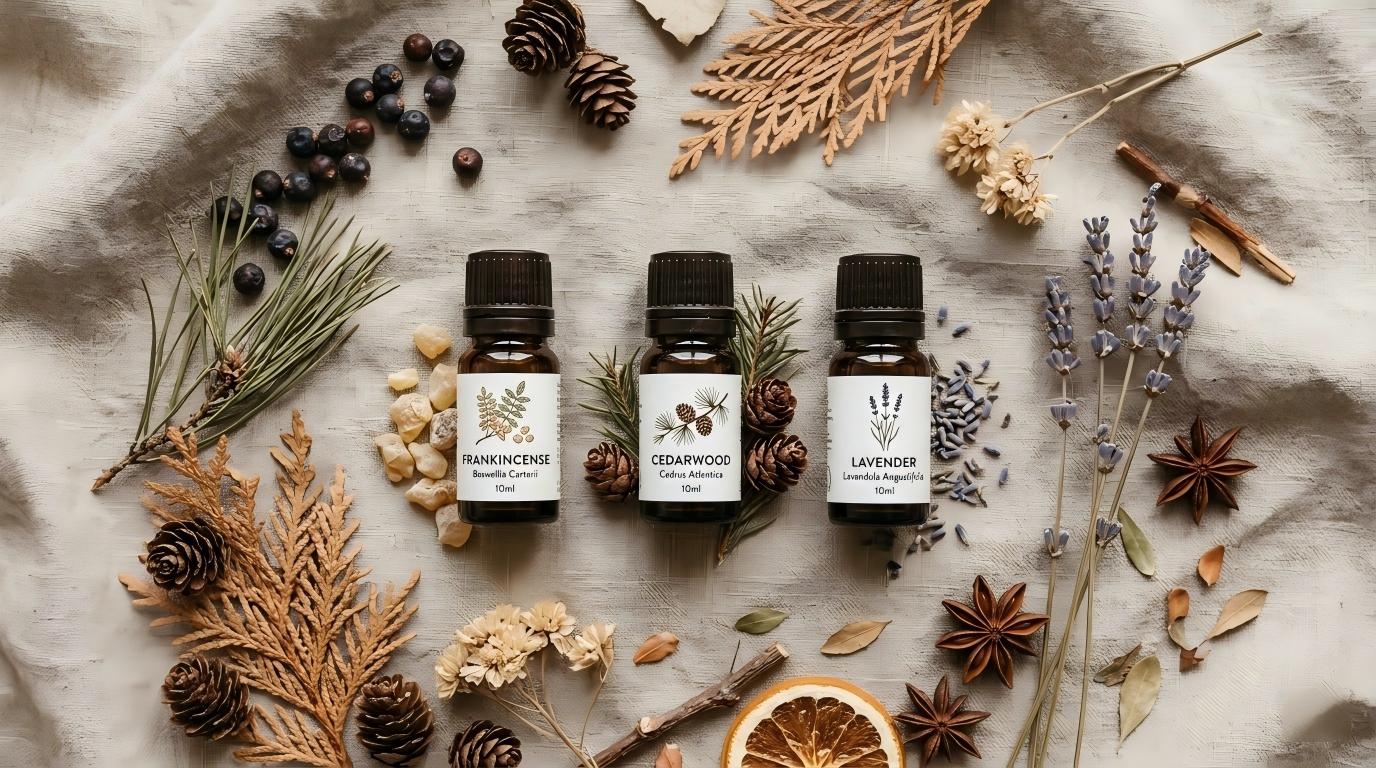
| Weihrauch | Warm, harzig, erdend | Abendliches Entspannen | Sandelholz, Zedernholz |
| Zedernholz | Holzig, beruhigend, gemütlich | Nachmittag oder Abend | Weihrauch, Lavendel |
| Lavendel | Sanft, vertraut, beruhigend | Gutenacht-Ritual | Zedernholz, Bergamotte |
| Eukalyptus | Frisch, kühl, öffnend | Morgens oder wenn die Luft abgestanden wirkt | Pfefferminze, Zitrone |
| Pfefferminze | Scharf, klar, belebend | Morgenroutine | Eukalyptus, Zitrone |
| Süße Orange | Hell, belebend, vertraut | Mittags-Reset | Zimt (nur 1 Tropfen), Nelke |
| Sandelholz | Sanft, luxuriös, ruhig | Abendliches Selbstpflege-Ritual | Rose, Weihrauch |
Ein Hinweis zur Konzentration: Winterräume sind oft fest verschlossen. Weniger Belüftung bedeutet, dass sich der Duft schneller aufbaut. Beginnen Sie mit 2–3 Tropfen pro Anwendung und passen Sie dies bei Bedarf an – mehr ist in einem geschlossenen Winterraum nicht immer mehr.

Ein Winter-Feuchtigkeits-Ritual gestalten: Von morgens bis abends
Der effektivste Ansatz ist nicht, ein Gerät den ganzen Tag laufen zu lassen – es geht darum, kurze, bewusste Sitzungen in bereits bestehende Momente Ihrer Routine zu integrieren.
- Morgens (Aufwachen): Eukalyptus oder Pfefferminze – 2 Tropfen, 30 Minuten, während Sie sich fertig machen. Frischer Start, der Raum fühlt sich lebendig an.
- Mittags (Schreibtisch-Reset): Süße Orange oder Bergamotte – 1–2 Tropfen, 20 Minuten. Vertreibt das träge Gefühl eines grauen Nachmittags.
- Abends (Entspannung): Weihrauch oder Zedernholz – 2–3 Tropfen, 45–60 Minuten während der Hautpflege. Das Ritual, das sich wie ein richtiger Winter anfühlt.
- Schlafenszeit: Lavendel – 2 Tropfen, laufen lassen, bis Sie einschlafen, wenn die automatische Abschaltung aktiviert ist.
- Nicht ununterbrochen den ganzen Tag in einem geschlossenen Raum laufen lassen – lassen Sie die Luft zwischen den Sitzungen atmen
- Keine Zitrusöle wie Zitrone oder Grapefruit in der Nähe von direkter Sonneneinstrahlung auf der Haut verwenden
- Keine Öle in einen Standard-Luftbefeuchter aus Kunststoff geben – verwenden Sie ein Gerät, das für beides konzipiert ist
- Die Wasserqualität nicht ignorieren – mineralreiches Leitungswasser in einem Ultraschallgerät erzeugt weißen Staub, der sich auf Haut und Oberflächen absetzt
Warum die meisten Geräte nicht beides können
Der Grund, warum so oft nach "Kann ich ätherische Öle in meinen Luftbefeuchter geben?" gesucht wird, ist, dass es eine völlig vernünftige Sache ist, die man sich wünscht. Ein Gerät, zwei Vorteile: Feuchtigkeit für die Haut, Duft für den Raum.
Die Einschränkung liegt nicht in der Idee – sondern darin, dass Standard-Luftbefeuchter nicht für Öl konzipiert wurden. Ihre Kunststoffbehälter zersetzen sich bei Kontakt mit konzentrierten ätherischen Ölen. Ihre Filtersysteme verstopfen. Und Ultraschall-Luftbefeuchter, die Öl verarbeiten können, erzeugen immer noch Mineralaerosol aus Leitungswasser – weißen Staub, der sich auf jeder Oberfläche im Raum, einschließlich Ihres Gesichts, absetzt.
Was Sie tatsächlich benötigen, ist ein Gerät, das von Grund auf für beides gebaut wurde: eine nicht-plastische Wasserkontaktfläche, einen Heizmechanismus, der das Wasser vor der Abgabe sterilisiert, und eine echte Wasser-Öl-Trennung, damit die Aromastoffe sauber diffundieren, ohne sich in der Wasserversorgung zu emulgieren.
Ein Standard-Luftbefeuchter verarbeitet Wasser. Ein Standard-Ultraschall-Diffusor verarbeitet Öl, erzeugt aber Mineralnebel und birgt das Risiko von Kunststoffkontakt. Ein Glasdampfdiffusor mit Wasser-Öl-Trennung macht beides – sauber, ohne die Kompromisse beider.
Ein Gerät. Feuchtigkeit und Duft – ohne Kompromisse.
Der Yo-A1 wurde für beides entwickelt: Borosilikatglas, Dampfhitze und echte Wasser-Öl-Trennung. Ihr Winterritual, richtig gemacht.
Lernen Sie den Yo-A1 kennen →Der Yo-A1 als Anker für Winterrituale
Der Yo-A1 wurde genau für die Lücke entwickelt, die die Winter-Haushaltspflege frustrierend macht: Man kann Standard-Luftbefeuchtern keine ätherischen Öle sicher hinzufügen, und Standard-Ultraschall-Diffusoren erzeugen Mineralstaub und haben Kunststoffbehälter, die bei Kontakt mit Öl zerfallen.
Der Behälter des Yo-A1 besteht aus 1.600 ml Borosilikatglas – chemisch inert gegenüber ätherischen Ölen, kein Plastikkontakt im Wasser- oder Ölweg. Das Heizelement erhitzt Wasser auf 100 °C (212 °F), sterilisiert den Behälter bei jeder Benutzung und sorgt dafür, dass sich über einen Winter täglicher Anwendungen kein Biofilm ansammelt.
Da er reinen Dampf statt atomisierter Wassertröpfchen erzeugt, gibt es keine mineralische Übertragung aus Leitungswasser. Kein weißer Staub. Keine Rückstände, die sich auf Oberflächen oder der Haut absetzen.
Und mit echter Wasser-Öl-Trennung bleibt das hinzugefügte ätherische Öl auf der Oberfläche der Wassersäule und verflüchtigt sich zu konsistentem aromatischem Dampf – es wird nicht in das Wasser geleitet, wo es unvorhersehbar zerfällt oder sich konzentriert.
Für eine Winterroutine bedeutet die 8-stündige Laufzeit, dass eine Füllung am Abend ausreicht, um das Entspannungsritual, die Schlafenszeit und die Nacht zu überbrücken – die Stunden, in denen beheizte Innenluft der Haut am meisten schadet.

Unabhängige Bewertungen des Yo-A1 in häuslicher Umgebung:

Winterluft muss sich nicht so anfühlen
Glasbehälter · Dampfhitze · 8 Stunden Laufzeit · kein weißer Staub · kein Plastikkontakt. Der Yo-A1 bewältigt Feuchtigkeit und Duft, so wie der Winter es tatsächlich braucht.
Den Yo-A1 kaufen →Häufig gestellte Fragen
Kann man ätherische Öle in einen Luftbefeuchter geben?
Bei den meisten Standard-Luftbefeuchtern – nein. Ätherische Öle sind natürliche Lösungsmittel, die Kunststoffbehälter zersetzen, Filter verstopfen und bei Ultraschallmodellen einen inkonsistenten und potenziell kontaminierten Nebel erzeugen können. Die sichere Antwort ist, ein Gerät zu verwenden, das speziell für die Handhabung von Wasser und ätherischen Ölen konzipiert ist: eines mit einem nicht-plastischen Behälter (Glas oder Edelstahl) und einem Mechanismus, der das Öl vom Wasser getrennt hält, bis es als Dampf diffundiert.
Hilft ein Luftbefeuchter tatsächlich bei trockener Haut im Winter?
Ja – indem er die Umweltursache statt nur das Oberflächensymptom behebt. Trockene, beheizte Raumluft beschleunigt den transepidermalen Wasserverlust (TEWL) und entzieht Ihrer Haut kontinuierlich Feuchtigkeit. Eine Erhöhung der Raumluftfeuchtigkeit auf 30–50 % verlangsamt diesen Prozess und lässt Ihre Feuchtigkeitscreme und Hautpflegeroutine effektiver wirken. Es ersetzt nicht die topische Hautpflege, aber es verändert die Bedingungen, unter denen Ihre Haut den ganzen Tag arbeitet.
Welche ätherischen Öle eignen sich am besten für trockene Winterluft?
Für ein wärmendes, gemütliches Wintergefühl: Weihrauch, Zedernholz und Sandelholz sind die klassischen Entscheidungen – harzig, erdend und für lange Abendsitzungen geeignet. Für morgens oder wenn Sie sich wacher fühlen möchten: Eukalyptus und Pfefferminze schaffen eine frische, klärende Atmosphäre. Süße Orange wirkt gut als Stimmungsaufheller am Mittag. Verwenden Sie 2–3 Tropfen pro Anwendung in einem geschlossenen Winterraum – der Duft baut sich schneller auf als im Sommer mit geöffneten Fenstern.
Was ist der Unterschied zwischen einem Luftbefeuchter und einem Diffusor?
Der Hauptzweck eines Luftbefeuchters ist es, der Luft Feuchtigkeit zuzuführen – er hat einen großen Behälter und läuft über längere Zeiträume, um die Raumluftfeuchtigkeit zu erhöhen. Der Hauptzweck eines Diffusors ist es, aromatische Öle zu verteilen – er hat einen kleineren Behälter und konzentriert sich auf die Duftabgabe. Standardversionen von beiden erfüllen die Aufgabe des anderen nicht gut: Luftbefeuchter sind nicht für Öl gebaut, und die meisten Diffusoren haben nicht genug Leistung, um einen Raum sinnvoll zu befeuchten. Ein Glas-Dampfgerät wie der Yo-A1 mit einem 1.600 ml Behälter und 8 Stunden Laufzeit überbrückt beide Funktionen.
Wie lange sollte ich einen Luftbefeuchter für die Haut im Winter laufen lassen?
Es gibt keine feste Regel, aber die meisten Menschen stellen fest, dass 2–4 Stunden ununterbrochener Betrieb am Abend – wenn der Raum belegt und die Fenster geschlossen sind – am Morgen einen merklichen Unterschied im Luftgefühl bewirken. Ihn über Nacht in einem Schlafzimmer laufen zu lassen, ist ein gängiger Ansatz, insbesondere in sehr trockenen Klimazonen oder älteren Gebäuden mit Warmluftheizung. Eine automatische Abschaltung ist wichtig für den Gebrauch über Nacht. Vermeiden Sie es, ihn so lange laufen zu lassen, dass sich Kondenswasser an den Fenstern bildet, was darauf hinweist, dass die Luftfeuchtigkeit zu hoch ist.
Warum hinterlässt mein Luftbefeuchter weißen Staub auf allem?
Weißer Staub ist ein Mineralrückstand – Kalzium und Magnesium aus hartem Leitungswasser –, der von Ultraschall-Luftbefeuchtern und -Diffusoren zerstäubt wird. Die Vibration, die Wasser in feinen Nebel zerlegt, zersetzt auch die gelösten Mineralien, die dann durch die Luft schweben und sich auf Oberflächen ablagern. Die Verwendung von destilliertem Wasser reduziert dies erheblich. Der Wechsel zu einem dampfbasierten Gerät eliminiert es vollständig, da durch den Kochprozess nur reiner Wasserdampf aufsteigt – Mineralien bleiben im Reservoir.
Referenzen
- U.S. EPA — Raumluftqualität: epa.gov/indoor-air-quality-iaq
- USGS — Wasserhärte: usgs.gov — Wasserhärte
- ASHRAE — Richtlinien zur Raumluftfeuchtigkeit: ashrae.org
- Justia Patente — Dampfdiffusionspatent 11052167: patents.justia.com/patent/11052167