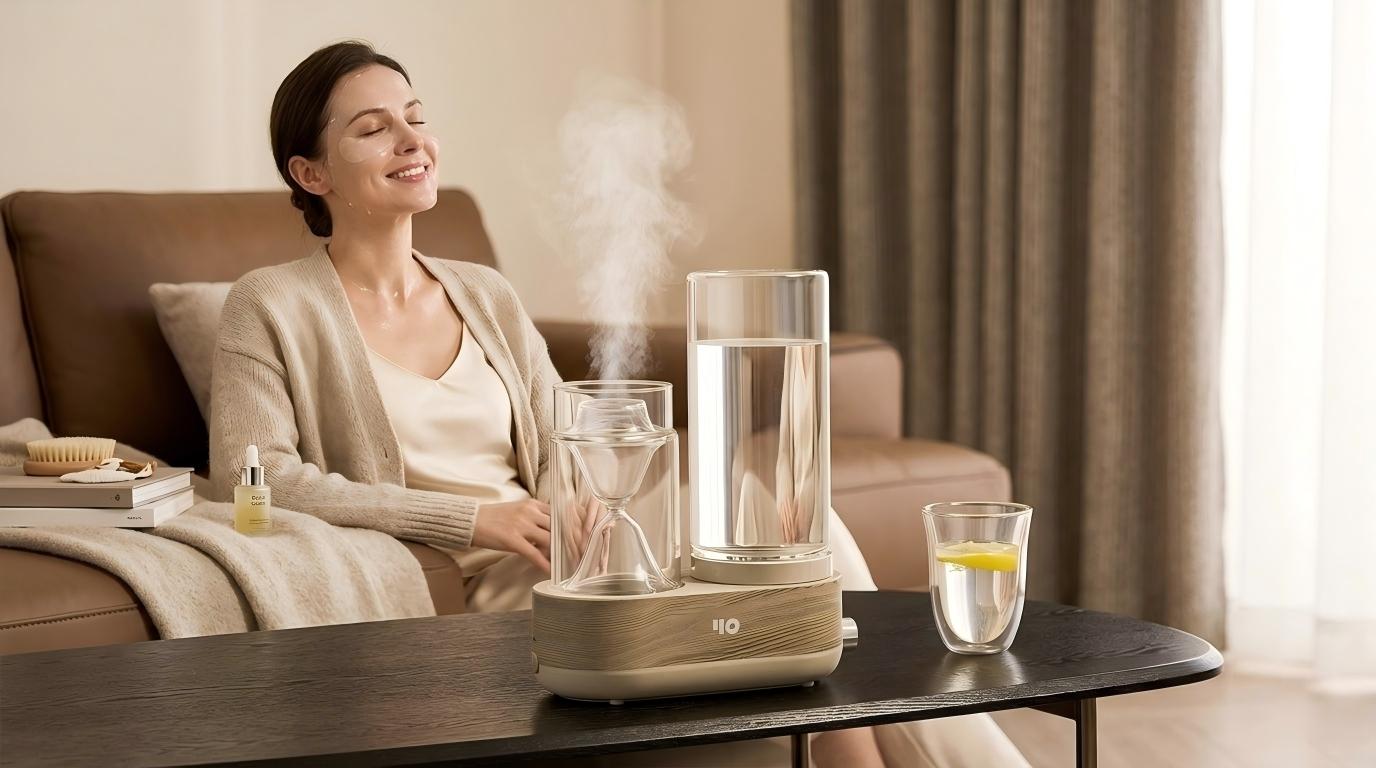

Es gibt einen Grund, warum jede hochwertige Gesichtsbehandlung gleich beginnt: mit warmem Dampf auf dem Gesicht.
Vor den Seren, vor den Masken, vor allem anderen – die Kosmetikerin macht Ihre Haut mit Dampf weich. Es ist der Schritt, der alles danach besser wirken lässt.
Sie können dieses Ritual zu Hause nachbilden. Der Haken: Der Dampf und die Öle, die Sie verwenden, sind wichtiger, als die meisten Menschen erkennen.
Bei einer Gesichtssauna geht es nicht um Hitze um ihrer selbst willen. Es geht darum, die Haut auf die Aufnahme vorzubereiten – die Oberfläche weich zu machen, die Routine zu öffnen und warmen Dampf mit den richtigen botanischen Ölen zu verbinden, um fünf Minuten in ein echtes Ritual zu verwandeln.
Was ein Gesichtsbedampfer wirklich für Ihre Haut tut
Warmer Dampf wirkt auf die Haut auf einige einfache, gut verstandene Weisen. Nichts davon ist Magie – es ist nur Physik und Hautbiologie.
Erstens macht Wärme die äußerste Hautschicht weich. Eine weichere Oberfläche fühlt sich geschmeidiger an und lässt die Produkte, die Sie danach auftragen, gleichmäßiger verteilen und einziehen.
Zweitens fördert sanfte Wärme ein gerötetes, rosiges Aussehen. Dieser frische Glanz nach einem Spaziergang ist einfach eine erhöhte Durchblutung an der Hautoberfläche.
Drittens – und das ist der Teil, den die meisten Menschen übersehen – fügt Dampf der Luft direkt an Ihrem Gesicht Feuchtigkeit hinzu. Dieser kurze Feuchtigkeitsschub ist die Grundlage für jeden folgenden Schritt.
Das Ritual ist einfach. Die Variablen, die es luxuriös erscheinen lassen – oder die Haut irritieren – hängen von zwei Dingen ab: der Qualität des Dampfes und den Ölen, die Sie dazu verwenden.
Warum der transepidermale Wasserverlust das eigentliche Ziel ist
Hier ist das Konzept, das eine Gesichtssauna zusammenhält: der transepidermale Wasserverlust, kurz TEWL.
TEWL ist einfach das Wasser, das ständig von Ihrer Haut in die Luft verdunstet. Jeder erlebt es. Wenn es schneller geschieht, als Ihre Haut mithalten kann, beginnt sich die Haut straff, trocken und stumpf anzufühlen.
Eine Gesichtssauna-Sitzung wirkt dem in zwei Phasen entgegen. Der warme Dampf überflutet die Hautoberfläche kurzzeitig mit Feuchtigkeit. Dann – und das ist der Schlüssel – versiegeln Sie diesen Moment sofort mit dem richtigen Öl oder Feuchtigkeitsspender.
Dampf allein spendet nicht langfristig Feuchtigkeit – das Wasser verdunstet so schnell, wie es gekommen ist. Das Ritual funktioniert, wenn Sie dem Dampf ein pflanzliches Öl folgen lassen, das dazu beiträgt, diese Verdunstung zu verlangsamen und die hauteigene Feuchtigkeitsbarriere zu unterstützen.

Deshalb gehören eine Gesichtssauna und ätherische Öle zusammen. Der Dampf eröffnet das Ritual; die Öle vollenden es.
Die Öle, die Dampf zu einem Ritual machen
Sobald Sie die Idee des Dampf-und-Versiegelns verstanden haben, sind die Öle kein nachträglicher Gedanke mehr. Jedes bringt eine andere Qualität in die Sitzung – für die Haut und für die Sinne.
Eine schnelle, wichtige Unterscheidung: Die meisten Pflanzenöle lassen sich in zwei Gruppen einteilen. Ätherische Öle sind konzentrierte Aromastoffe, die Sie für Duft und Atmosphäre dem Wasser hinzufügen. Trägeröle sind die pflegenden Öle, die Sie anschließend auf die Haut auftragen, um alles zu versiegeln.
| Pflanzenstoff | Typ | Was es zum Ritual beiträgt |
|---|---|---|
| Lavendel | Ätherisch | Beruhigendes, sanftes blumiges Aroma; die klassische Wahl für eine wohltuende Entspannungssitzung |
| Rose | Ätherisch | Luxuriöser, romantischer Duft, der seit langem mit Verwöhn- und Selbstpflegeritualen verbunden ist |
| Weihrauch | Ätherisch | Warmes, harziges Aroma; ein Favorit in Hautpflege-Routinen für reifere Haut aufgrund seiner erdenden Wirkung |
| Geranium | Ätherisch | Frische, grün-blumige Note, oft gewählt, um Hautpflege-Routinen für Mischhaut auszugleichen |
| Teebaum | Ätherisch | Knackiger, sauberer Duft, beliebt in Routinen für fettigere, zu Unreinheiten neigende Haut |
| Jojoba | Träger | Leichter Verschluss, der den hauteigenen Oberflächenölen sehr ähnlich ist; selten fettig |
| Hagebutte | Träger | Reich an hautfreundlichen Fettsäuren; ein beliebtes Abschlussöl in glanzorientierten Routinen |
| Squalan | Träger | Ultraleichter, schnell einziehender Verschluss, der für fast jeden Hauttyp geeignet ist |
Wichtig: Ätherische Öle sind hochkonzentriert und sollten niemals unverdünnt direkt auf die Haut aufgetragen werden. In einer Gesichtssauna kommen sie ins Wasser – niemals direkt auf Ihr Gesicht.
Passende Öle für Ihre Routine
Sie brauchen nicht alle davon. Wählen Sie nach Stimmung und der Routine, die Sie aufbauen möchten.
- Für ein beruhigendes Abendritual: Lavendel oder Rose ins Wasser, Jojoba zum Versiegeln
- Für eine Verwöhnroutine reifer Haut: Weihrauch ins Wasser, Hagebutte zum Versiegeln
- Für Mischhaut oder fettige Haut: Geranium oder Teebaum ins Wasser, Squalan zum Versiegeln
- Für eine einfache Erstanwendung: ein einziger Tropfen Lavendel, danach ein leichtes Trägeröl
So führen Sie eine Gesichtssauna zu Hause Schritt für Schritt durch
Das ganze Ritual dauert etwa fünfzehn Minuten, von Anfang bis Ende.
- Zuerst reinigen – mit einem sauberen, ungeschminkten Gesicht beginnen
- 1–2 Tropfen ätherisches Öl in den Wasserbehälter geben, niemals mehr
- Gesicht mindestens 15 cm vom Dampf entfernt halten, Augen geschlossen
- 5–10 Minuten bedampfen, langsam atmen – das ist der entspannende Teil
- Haut sanft abtupfen, nicht reiben, wenn Sie fertig sind
- Sofort mit einem Trägeröl oder Ihrer üblichen Feuchtigkeitspflege versiegeln, solange die Haut noch warm ist
- Nicht länger als 10 Minuten bedampfen – mehr ist nicht besser für die Haut
- Gesicht nicht direkt über einen Dampfauslass halten; einen angenehmen Abstand halten
- Ätherische Öle niemals unverdünnt auf die Haut auftragen
- Nicht täglich bedampfen, wenn sich Ihre Haut danach straff anfühlt; 2–3 Mal pro Woche ist ausreichend
Warum die Dampfquelle wichtiger ist, als man denkt
Hier ist, wo die meisten Heimanwendungen für Gesichtsbedampfungen stillschweigend versagen.
Eine Schüssel mit heißem Wasser kühlt innerhalb von Minuten ab und gibt Ihnen keine Kontrolle. Ein billiger Kunststoff-Gesichtsdampfer birgt ein anderes Problem: Erwärmtes Wasser, das Stunde für Stunde, Sitzung für Sitzung an Kunststoff liegt.
Wenn ätherische Öle – die natürliche Lösungsmittel sind – auf warmen Kunststoff treffen, kann die Oberfläche mit der Zeit zerfallen. Das ist das Letzte, was Sie in einem Dampf wollen, der direkt auf Ihr Gesicht steigt.
Für ein Ritual, das auf Haut und Selbstpflege aufbaut, ist das Material der Dampfquelle kein Detail – es ist die ganze Grundlage. Erhitzte ätherische Öle auf Kunststoff können die Oberfläche zersetzen, und dieser Dampf gelangt direkt in Ihr Gesicht.
Es gibt auch das Problem der Konsistenz. Die meisten einfachen Dampfer mischen Öl direkt ins Wasser, sodass die Konzentration niemandem bekannt ist – eine Minute stark, die nächste weg.
Ein richtiges Gesichtssauna-Ritual braucht drei Dinge, die eine Schüssel oder ein Plastikdampfer nicht zuverlässig bieten kann: sauberes Material, stabile Wärme und kontrollierte Ölzufuhr.
Glas, nicht Plastik – wo Ihr Ritual beginnen sollte
Der Yo-A1 kombiniert Borosilikatglas mit Dampfhitze und echter Wasser-Öl-Trennung – speziell gebaut für ein Gesichtssauna-Ritual, das Sie tatsächlich beibehalten werden.
Lernen Sie den Yo-A1 kennen →Das Ritual um den Yo-A1 aufbauen
Sobald Sie sich entschieden haben, dass die Dampfquelle wichtig ist, wird die Spezifikation für eine Gesichtssauna klar – und genau darauf wurde der Y&O Yo-A1 aufgebaut.
Das Reservoir besteht aus 1.600 ml Borosilikatglas – dem gleichen Material, das in Laborgeräten verwendet wird. Es ist chemisch inert, sodass erhitzte ätherische Öle niemals mit einer Kunststoffoberfläche in Kontakt kommen. Für ein Ritual, bei dem der Dampf auf Ihr Gesicht steigt, ist dies der wichtigste Teil.
Das Heizsystem bringt Wasser auf 100 °C (212 °F) und gibt dann Dampf mit sanften ~50 °C (122 °F) ab. Warm genug, um sich wie ein Spa anzufühlen, sanft genug, um während der gesamten Sitzung bequem zu sitzen.
Und weil es eine echte Wasser-Öl-Trennung verwendet, diffundiert Ihr ätherisches Öl als gleichmäßiger, kontrollierter Dampf – nicht ins Wasser gekippt, wo die Konzentration stark schwankt. Ihr Ritual fühlt sich jedes Mal gleich an.
Es gibt einen Bonus, den die meisten Leute später entdecken. Nach Ihrer Gesichtspflege-Sitzung wird das gleiche Glasgerät zu einem leisen Raumbefeuchter – der die hauteigene Feuchtigkeitsbarriere sanft vor dem täglichen Wasserverlust schützt, lange nachdem das Ritual beendet ist.

So verankert dasselbe Gerät zwei Routinen: die gezielte Gesichtssauna ein paar Mal pro Woche und die Hintergrundfeuchtigkeit, die die Haut täglich angenehm hält.
Unabhängige Rezensionen, die das Glasgerät in echten Haushalten zeigen:

Ihr Fünf-Minuten-Glühritual beginnt hier
Borosilikatglas · sanfter Dampf · echte Wasser-Öl-Trennung · flüsterleise. Der Yo-A1 verwandelt Dampf und Öle in ein Ritual, das Sie beibehalten werden.
Den Yo-A1 kaufen →Häufig gestellte Fragen
Wie oft sollte ich eine Gesichtssauna machen?
Für die meisten Hauttypen sind 2-3 Mal pro Woche ausreichend. Bedampfen macht die Hautoberfläche weich und unterstützt Ihre Routine, aber mehr ist nicht besser – zu häufiges Bedampfen kann die Haut spannen lassen. Wenn sich Ihre Haut danach angenehm anfühlt und frisch aussieht, haben Sie Ihren Rhythmus gefunden. Wenn sie sich trocken anfühlt, reduzieren Sie es auf einmal pro Woche.
Welche ätherischen Öle eignen sich am besten für eine Gesichtsbedampfung?
Es hängt von der gewünschten Stimmung und Routine ab. Lavendel und Rose sind wunderbar für ein beruhigendes Abendritual. Weihrauch ist ein Favorit in Verwöhnroutinen für reife Haut. Geranium und Teebaum passen zu Mischhaut oder fettigerer Haut. Verwenden Sie nur 1-2 Tropfen im Wasser – tragen Sie ätherische Öle niemals direkt auf Ihr Gesicht auf.
Worin liegt hier der Unterschied zwischen ätherischen Ölen und Trägerölen?
Ätherische Öle sind konzentrierte Aromastoffe, die Sie für Duft und Atmosphäre dem Dampfwasser hinzufügen. Trägeröle – wie Jojoba, Hagebutte oder Squalan – sind die pflegenden Öle, die Sie nach dem Bedampfen auf Ihre Haut auftragen, um diesen Moment der Feuchtigkeit zu versiegeln. Das Ritual verwendet beides: ätherische Öle im Wasser, Trägeröle auf der Haut.
Warum sollte man einen Glasdampfer anstelle einer Schüssel mit heißem Wasser verwenden?
Eine Schüssel kühlt innerhalb von Minuten ab und bietet keine Kontrolle über Temperatur oder Ölkonzentration. Eine Glasdampfeinheit hält während der gesamten Sitzung eine gleichmäßige, sanfte Wärme und – durch Wasser-Öl-Trennung – hält den aromatischen Dampf konstant. Sie vermeidet auch das Problem des Kontakts mit Kunststoff, das bei billigeren Kunststoffdampfern auftritt, wenn erhitzte ätherische Öle im Spiel sind.
Kann ich meinen Gesichtsbedampfer auch als Luftbefeuchter verwenden?
Mit dem Yo-A1, ja. Sein 1.600 ml Reservoir und 8 Stunden Laufzeit bedeuten, dass nach Ihrer Gesichtspflege-Sitzung dasselbe Glasgerät als leiser Raumbefeuchter fungiert. Diese Hintergrundfeuchtigkeit hilft, Ihre Haut vor dem täglichen Wasserverlust zu schützen – so deckt ein Gerät sowohl das fokussierte Ritual als auch den täglichen Hautkomfort ab.
Ist Gesichtsdampf für empfindliche Haut geeignet?
Ja, mit einem sanfteren Ansatz: kürzere Sitzungen (ca. 5 Minuten), mehr Abstand zum Dampf und ein mildes Einzelöl wie Lavendel mit nur einem Tropfen. Halten Sie den Dampf eher warm als heiß. Wenn Sie eine diagnostizierte Hauterkrankung haben, sprechen Sie vor der Aufnahme von Dampf oder ätherischen Ölen in Ihre Routine mit einem Dermatologen.
Referenzen
- U.S. EPA — Raumluftqualität: epa.gov/indoor-air-quality-iaq
- USGS — Wasserhärte: usgs.gov — Wasserhärte
- Justia Patente — Patent für Dampfdiffusion 11052167: patents.justia.com/patent/11052167