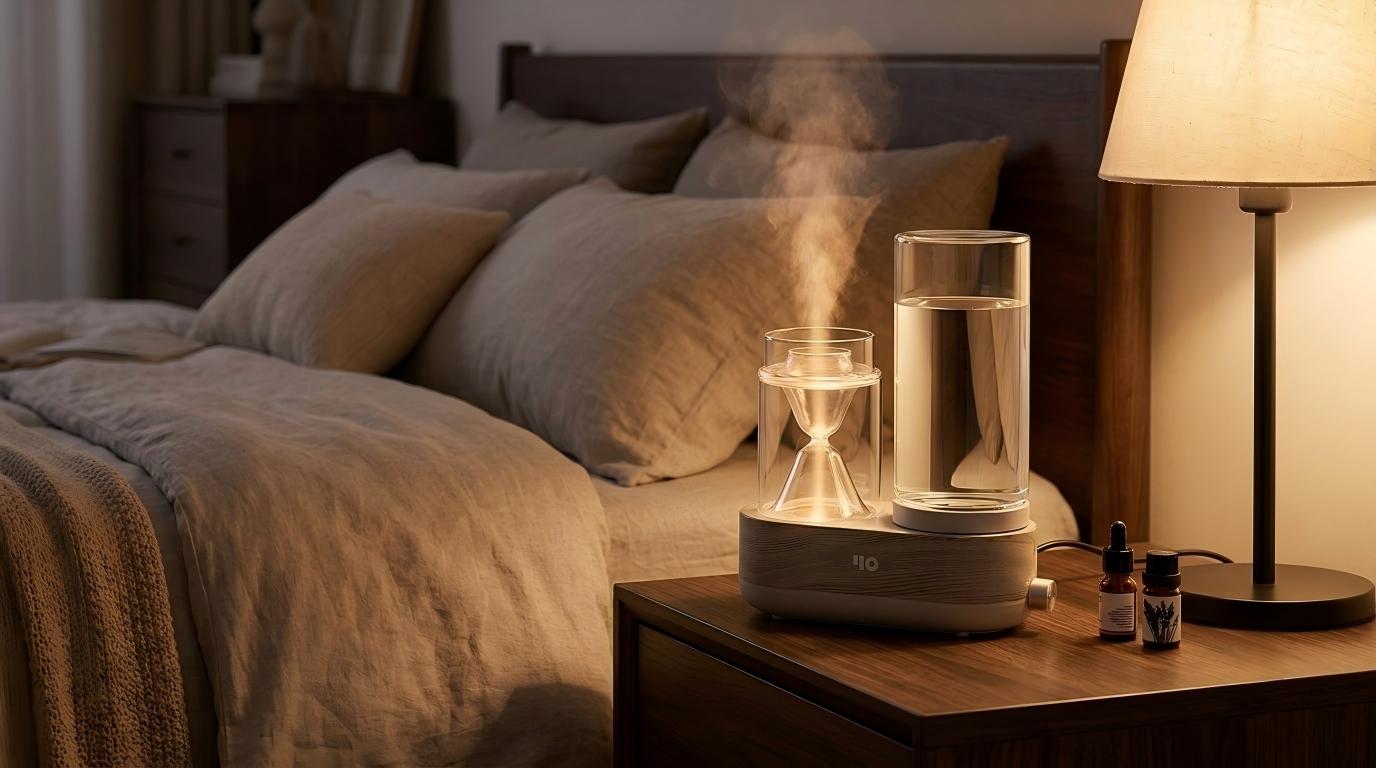

Sie haben einen Diffusor gekauft, um sich zu Hause wohler zu fühlen. Lavendel gegen Stress. Eukalyptus gegen Verstopfung. Pfefferminze an schlechten Tagen.
Dann begann das Niesen. Oder die Brust wurde eng. Oder Ihre Augen wurden innerhalb von zwanzig Minuten nach dem Einschalten rot.
Wenn Sie Allergien oder Asthma haben, kann ein Diffusor entweder Erleichterung oder eine Reaktion hervorrufen. Der Unterschied liegt nicht im ätherischen Öl. Es ist das, was der Diffusor tatsächlich in Ihre Luft abgibt.
Die meisten Diffusor-Probleme für Allergiker und Asthmatiker werden nicht durch den Duft verursacht – sie werden durch luftgetragene Partikel, Kunststoffausdünstungen, Mineralnebel oder mikrobielles Wachstum verursacht, über die niemand auf der Produktseite spricht.
Warum empfindliche Atemwege auf Diffusoren reagieren
Die Lungen unterscheiden nicht zwischen „natürlich“ und „schädlich“. Sie reagieren auf Partikelgröße, Konzentration und Fremdverbindungen – unabhängig von der Quelle.
Wenn ein Diffusor läuft, gibt er nicht nur Duft ab. Er gibt eine Mischung von Dingen ab, abhängig von seiner Technologie, Wasserqualität und den Materialien. Für die meisten Menschen ist diese Mischung in Ordnung. Für jemanden mit Allergien oder Asthma ist jedes Element ein potenzieller Auslöser.
Die Raumluftqualität ist der Ausgangspunkt und oft das Ende der Allergie- und Asthmabehandlung. Ein Diffusor steht im Mittelpunkt dieser Umgebung – er läuft stundenlang und verteilt Partikel in der Luft, die Sie ständig atmen.
Die vier verborgenen Auslöser in einem Standarddiffusor
1. Weißer Staub (Mineralisches Aerosol)
Ultraschall-Diffusoren verwenden Hochfrequenzschwingungen, um Wasser in einen feinen Nebel zu zerlegen. Wenn Ihr Leitungswasser Kalzium oder Magnesium enthält – was die meisten kommunalen Wasserversorger tun –, werden diese Mineralien mit dem Nebel als Aerosol freigesetzt.
Das Ergebnis ist „weißer Staub“: mikroskopisch kleine Kalziumkarbonatpartikel, die in der Luft schweben. Sie setzen sich auf Oberflächen ab, aber noch wichtiger ist, dass sie zuerst eingeatmet werden.
Eingeatmete Mineralpartikel können die Bronchien reizen. Für Asthmatiker können selbst nicht-allergene Reizstoffe einen Bronchospasmus auslösen. Je härter Ihr lokales Wasser, desto mehr mineralische Partikel erzeugt Ihr Ultraschall-Diffusor.
Lesen Sie unsere vollständige Analyse: Warum Ihr Diffusor überall weißen Staub hinterlässt – und was er tatsächlich mit Ihrer Luft macht
2. Schimmel und Biofilm
Stehendes Wasser in einem Diffusorbehälter – insbesondere unter warmen, feuchten Bedingungen – bildet innerhalb weniger Tage Biofilm. Biofilm ist eine strukturierte Kolonie von Bakterien und Pilzen, die die Tankwände überzieht.
Wenn der Diffusor läuft, wird alles, was sich in diesem Wasser befindet, als Aerosol freigesetzt. Bei einem unbehandelten Reservoir sind das Schimmelsporen, bakterielle Fragmente und Endotoxine – allesamt bekannte Auslöser für Asthma und Allergien.
Schimmel ist eines der häufigsten Raumallergene. Das Zerstäuben von Schimmelsporen aus einem kontaminierten Diffusor bringt sie direkt in die Atemwege – aus nächster Nähe, kontinuierlich, während Sie schlafen.
Schimmel in Ihrem Diffusor: Was darin wächst und wie Sie es stoppen können
3. Ausgasung von Kunststoff
Die meisten Diffusoren verwenden Polypropylen oder ABS-Kunststoff für den Wasserbehälter. Diese Kunststoffe sind bei Raumtemperatur stabil – aber ätherische Öle sind Lösungsmittel.
Im Laufe der Zeit (und manchmal sofort) zersetzen konzentrierte Öle Kunststoffoberflächen. Die Wechselwirkung von Öl und Kunststoff setzt flüchtige organische Verbindungen (VOCs) frei: Acetaldehyd, Formaldehyd-Vorläufer und Weichmacher, einschließlich Phthalate.
VOCs sind ein anerkannter Asthmaauslöser. Die EPA stuft viele gängige VOCs als Atemwegsreizstoffe ein, und Phthalate werden zunehmend hinsichtlich ihrer Auswirkungen auf die Lungenfunktion untersucht.
Die meisten VOCs, die durch ein sich zersetzendes Diffusorreservoir entstehen, können Sie weder sehen noch riechen. Aber die Wirkung akkumuliert sich mit jeder Sitzung – besonders in einem geschlossenen Schlafzimmer über Nacht.
4. Konzentrationsüberlastung
Ätherische Öle haben bei angemessenen Konzentrationen therapeutische Wirkungen. Bei hohen Konzentrationen – insbesondere in kleinen, schlecht belüfteten Räumen – werden sie selbst für gesunde Menschen zu Reizstoffen.
Die verantwortlichen Verbindungen: Terpene wie Limonen und Linalool, die mit Ozon reagieren und sekundäre Schadstoffe bilden. Kampfer, Eukalyptol und Menthol können in hohen Dosen die glatte Bronchialmuskulatur reizen.
Für Asthmatiker ist dies das Paradoxon: Das Eukalyptusöl, das die Atemwege öffnen soll, kann sie verengen, wenn es im Übermaß vernebelt wird.

Welche ätherischen Öle sind für Allergiker und Asthmatiker sicherer?
Nicht alle Öle bergen das gleiche Risikoprofil. Einige haben dokumentierte entzündungshemmende und lindernde Wirkungen auf die Atemwege bei geringen Konzentrationen. Andere werden durchweg als Auslöser gemeldet.
| Ätherisches Öl | Allgemeine Verträglichkeit | Hinweise für empfindliche Atemwege |
|---|---|---|
| Lavendel | ✓ Allgemein gut verträglich | Entzündungshemmende Eigenschaften; geringe Terpenreaktivität bei Standardkonzentrationen |
| Weihrauch | ✓ Allgemein gut verträglich | Entzündungshemmende Boswelliasäuren; weit verbreitet in der Atemwegsunterstützungsforschung |
| Kamille (römisch) | ✓ Allgemein gut verträglich | Beruhigend; geringes Reizpotenzial; vermeiden, wenn man auf Ambrosia empfindlich reagiert |
| Eukalyptus | ⚠ Vorsicht geboten | Öffnet Atemwege bei geringer Dosis; kann bei hoher Konzentration reizen; bei Kleinkindern vermeiden |
| Pfefferminze | ⚠ Vorsicht geboten | Menthol kann bei einigen Asthmatikern den Hustenreflex auslösen; stark verdünnen |
| Nelke / Zimt | ✗ Vermeiden | Hoher Eugenolgehalt; starker Bronchienreizstoff bei empfindlichen Personen |
| Teebaum | ✗ Vermeiden | Terpinen-4-ol oxidiert schnell; produziert reizende Aldehyde; häufiger Allergieauslöser |
| Ylang Ylang | ✗ Vermeiden | Hohes Allergenpotenzial; häufige Berichte über Kopfschmerzen und Atembeschwerden |
Wichtiger Hinweis: Individuelle Reaktionen variieren erheblich. Wenn Sie diagnostiziertes Asthma oder bekannte Duftstoffallergien haben, beginnen Sie mit sehr geringen Konzentrationen jedes Öls – 2 bis 3 Tropfen pro Anwendung – und beobachten Sie die Symptome, bevor Sie die Menge erhöhen.
Was die Forschung tatsächlich sagt
Die Beweise für ätherische Öle und die Atemwegsgesundheit sind tatsächlich gemischt – deshalb ist es ein Fehler, in beide Richtungen zu übertreiben.
Mehrere von Fachkollegen begutachtete Studien zeigen, dass Linalool und Linaloolacetat von Lavendel messbare entzündungshemmende Wirkungen auf das Atemwegsgewebe haben. Weihrauch (Boswellia) hat eine längere Forschungsgeschichte in der Atemwegsunterstützung als die meisten anderen Öle.
Dieselbe Studien werden jedoch typischerweise mit kontrollierten Konzentrationen in klinischen Umgebungen durchgeführt – nicht in einem geschlossenen Schlafzimmer mit einem minderwertigen Diffusor, der acht Stunden lang läuft.
Ein nützliches Öl, das über einen kontaminierten, kunststoffbeschichteten, mineralnebelnden Diffusor abgegeben wird, erzeugt nicht die untersuchte Wirkung. Die Verunreinigungen können den Nutzen überwiegen – besonders über Nacht, wenn die Raumlüftung am geringsten und die kumulative Exposition am höchsten ist.
Der Vergleich der Diffusor-Technologien
Die meisten Menschen wählen einen Diffusor nach Preis und Ästhetik aus. Bei empfindlichen Atemwegen ist die Technologie jedoch viel wichtiger als beides.
| Typ | Mechanismus | Mineralnebel | Schimmelrisiko | Plastikkontakt | Allergie-/Asthma-Eignung |
|---|---|---|---|---|---|
| Ultraschall | Vibration zerlegt Wasser in feinen Nebel | ✗ Hoch | ✗ Hoch | ✗ Öl berührt Kunststoff | ⚠ Problematisch für viele |
| Vernebler | Luftdruck zerstäubt reines Öl | ✓ Keine | ✓ Gering | ⚠ Glas- oder Kunststoffdüse | ⚠ Risiko hoher Ölkonzentration |
| Verdampfer | Ventilator bläst Luft durch ölbefeuchtetes Pad | ✓ Keine | ✗ Pad bildet Schimmel | ⚠ Pad-Kontakt | ⚠ Inkonsistent; Pad-Hygiene entscheidend |
| Wärme / Dampf | Kochwasser; Dampf trägt Öldampf | ✓ Keine | ✓ Hitze hemmt Wachstum | ✓ Nur Dampf (kein Öl-Plastik-Kontakt) | ✓ Beste Option für empfindliche Atemwege |
Die Dampfdiffusion hat das sauberste Ausgabeprofil aller Diffusortypen. Wasser kocht bei 100 °C (212 °F), was das Bakterien- und Schimmelwachstum im Reservoir eliminiert. Der Dampf selbst transportiert nur Wasserdampf und flüchtige aromatische Verbindungen – keine mineralischen Partikel, keine mikrobiellen Fragmente, keine aus Kunststoff stammenden VOCs.
Ausgabevergleich: Ultraschall- vs. wärmebasierte Dampfdiffusion unter Berücksichtigung von Allergien und Asthma
Praktische Regeln für die Diffusion bei Allergien oder Asthma
- Beginnen Sie mit 2–3 Tropfen pro Anwendung; erhöhen Sie die Menge nur, wenn Sie nach mehreren Anwendungen symptomfrei sind
- Maximal 30–60 Minuten laufen lassen, nicht durchgehend
- Halten Sie den Raum belüftet – ein Spaltfenster verändert die Exposition erheblich
- Reinigen Sie das Reservoir nach jedem Gebrauch; lassen Sie niemals Wasser stehen
- Beginnen Sie mit Lavendel oder Weihrauch, bevor Sie komplexere Öle ausprobieren
- Betreiben Sie einen Diffusor nicht in einem geschlossenen Schlafzimmer über Nacht beim ersten Versuch
- Verwenden Sie keine Nelken-, Zimt- oder Teebaumöle, wenn Sie eine bekannte Duftstoffempfindlichkeit haben
- Ignorieren Sie keine frühen Symptome – Niesen, tränende Augen oder Engegefühl sind Signale, die darauf hinweisen, dass Sie aufhören und neu bewerten sollten
- Verwenden Sie kein Leitungswasser in einem Ultraschall-Diffusor, wenn Sie hartes Wasser und Asthma haben
Unabhängige Rezensionen, die Luftqualität und empfindliche Benutzer erwähnen:
Das Materialproblem, das niemand löst
Die meisten Diffusor-Anleitungen hören bei der Frage auf, „welches Öl zu verwenden ist“. Sie gehen nicht auf das Reservoir-Problem ein.
Selbst wenn Sie das richtige Öl wählen, die richtige Konzentration verwenden und den Raum lüften – wenn Ihr Wassertank aus Kunststoff ist und Ihr Diffusor Ultraschall verwendet, führen Sie bei jeder Anwendung immer noch mineralisches Aerosol und potenzielle aus Kunststoff stammende VOCs ein.
Für jemanden ohne Atemwegsempfindlichkeiten mag dies unbedeutend sein. Für jemanden mit Asthma oder Allergien sind diese Hintergrundkontaminanten genau die Art von geringfügigen, kumulativen Reizstoffen, die die zugrunde liegende Atemwegsentzündung im Laufe der Zeit verschlimmern.
Die Lösung erfordert eine andere Art von Diffusor – kein anderes Öl.
Für empfindliche Atemwege entwickelt
Der Yo-A1 verwendet Borosilikatglas und Dampfhitze – kein Plastikbehälter, kein Mineralnebel, kein Risiko von Biofilm durch kaltes Wasser. Sehen Sie sich die vollständigen Spezifikationen an.
Yo-A1 Diffusor ansehen →Worauf Sie bei einem Diffusor für Allergiker und Asthmatiker achten sollten
Nach der Kartierung jedes Auslösers – Mineralstaub, Schimmel, Kunststoff-VOCs, Konzentration – wird die Spezifikation für einen allergikerfreundlichen Diffusor klar:
- Nicht-plastische Wasserkontaktflächen – Glas oder Edelstahl eliminiert die Ausgasung von Öl-Kunststoff
- Hitzesterilisation – kochendes Wasser tötet Biofilm ab, bevor er als Aerosol freigesetzt werden kann
- Dampfausstoß (kein kalter Nebel) – Dampf transportiert keine mineralischen Partikel
- Wasser-Öl-Trennung – Öl diffundiert als Dampf, nicht emulgiert in die Wassersäule
- Automatische Abschaltung – verhindert Überkonzentration durch längere unbeaufsichtigte Sitzungen
- Geringe Geräuschentwicklung – relevant für den nächtlichen Gebrauch ohne Schlafstörung
Der Y&O Yo-A1 wurde genau nach diesen Spezifikationen entwickelt. Das 1600 ml Reservoir besteht aus Borosilikatglas – demselben Material, das in Laborgeräten verwendet wird – chemisch inert gegenüber ätherischen Ölen. Es gibt keine Kunststoffoberfläche, die mit dem Wasser oder Öl in Kontakt kommt.
Das Heizelement bringt Wasser auf 100 °C (212 °F), bevor die Diffusion beginnt. Dies eliminiert das Biofilmwachstumsfenster, das Ultraschallreservoirs schaffen. Der Dampf tritt bei ca. 50 °C (122 °F) aus – warm genug, um aromatische Verbindungen effektiv zu transportieren, kühl genug für den kontinuierlichen Raumgebrauch.
Da er reinen Dampf statt zerstäubter Wassertröpfchen erzeugt, gibt es keine mineralische Verschleppung – unabhängig von der lokalen Wasserhärte.
Die Wasser-Öl-Trennfunktion hält ätherische Öle auf der Oberfläche der Wassersäule, wo sie als Dampf in die Luft verdampfen – nicht in das Wasser selbst emulgiert werden. Dies gewährleistet eine gleichbleibende Leistung und verhindert, dass sich Öl im Inneren des Reservoirs ablagert.
Für alle, die Asthma oder Umweltallergien haben, eliminiert der Yo-A1 die vier mechanischen Auslöser, bevor Sie überhaupt ein Öl auswählen. Was in den Raum gelangt, ist Dampf und aromatische Verbindungen – nichts anderes.


Kein weißer Staub. Kein Plastik. Kein Biofilm-Risiko.
Der Yo-A1 eliminiert die vier wichtigsten mechanischen Auslöser, bevor Sie ein Öl auswählen. 1600 ml Borosilikatglas · Dampfhitze · 8 Stunden Laufzeit.
Yo-A1 Diffusor kaufen →Häufig gestellte Fragen
Können ätherische Öl-Diffusoren Asthmaanfälle auslösen?
Ja – unter bestimmten Bedingungen. Die Auslöser, die am häufigsten mit diffuserbedingten Asthmasymptomen in Verbindung gebracht werden, sind: Mineralien-Aerosol aus Ultraschallnebel, Schimmelsporen aus kontaminierten Reservoirs, aus Kunststoff stammende VOCs durch Öl-Kunststoff-Kontakt und hohe Konzentrationen spezifischer Öle (Nelke, Zimt, Teebaum, hochdosierte Pfefferminze). Die Verwendung eines dampfbasierten Glasdiffusors mit niedrigen Konzentrationen gut verträglicher Öle reduziert diese Risiken erheblich.
Welche ätherischen Öle sind für Allergiker am sichersten?
Lavendel und Weihrauch sind die am besten verträglichen Optionen für Menschen mit Atemwegsempfindlichkeiten. Beide haben bei Standardkonzentrationen dokumentierte entzündungshemmende Eigenschaften. Römische Kamille ist ebenfalls im Allgemeinen risikoarm, es sei denn, Sie haben eine Kreuzreaktivität mit Ambrosia. Beginnen Sie immer mit 2–3 Tropfen und beobachten Sie, bevor Sie die Dosis erhöhen.
Ist Dampf-Diffusion für Asthmatiker sicherer als Ultraschall?
Aus mechanischer Sicht ja. Dampf-Diffusion eliminiert Mineralien-Aerosol (kein kalter Nebel = keine Mineralienübertragung) und hemmt das Biofilmwachstum durch Hitzesterilisation. Der Ausstoß ist reiner Dampf, der aromatische Verbindungen transportiert – kein mineralienhaltiger Nebel aus einem potenziell kontaminierten Reservoir. Für Asthmatiker, die auch hartes Leitungswasser haben, kann der Unterschied in den Symptomen erheblich sein.
Wie lange sollte ich einen Diffusor laufen lassen, wenn ich Allergien habe?
Beginnen Sie mit 30-minütigen Sitzungen in einem gut belüfteten Raum. Viele Aromatherapie-Praktiker empfehlen intermittierende Diffusion (30 Min. an, 30 Min. aus) anstelle von Dauerbetrieb. Wenn Sie dies über mehrere Sitzungen gut vertragen, können Sie die Dauer verlängern – aber mehr ist nicht immer besser. Längere Exposition gegenüber jeder konzentrierten aromatischen Verbindung erhöht das Reizrisiko bei empfindlichen Personen.
Kann ich einen Diffusor über Nacht im Schlafzimmer verwenden, wenn ich Asthma habe?
Mit Vorsicht und mit der richtigen Ausrüstung. Die Schlüsselfaktoren: Verwenden Sie einen dampfbasierten Diffusor (nicht Ultraschall), wählen Sie ein gut verträgliches Öl in niedriger Konzentration, sorgen Sie für etwas Belüftung und aktivieren Sie die automatische Abschaltung. Ein Glas-Dampf-Diffusor mit Lavendel bei 3–4 Tropfen ist ganz anders als ein Ultraschall-Kunststoffmodell mit Teebaum, das die ganze Nacht in einem geschlossenen Raum läuft. Bauen Sie die Anwendung schrittweise auf – beginnen Sie nicht mit Übernacht-Sitzungen.
Ist der Diffusor-Typ wichtiger als die Ölwahl?
Für Menschen mit Allergien oder Asthma ja – der Diffusor-Typ ist oft wichtiger. Mineralien-Aerosole, Schimmel und Kunststoff-VOCs aus einem minderwertigen Ultraschall-Diffusor können Symptome verursachen, unabhängig davon, welches Öl verwendet wird. Umgekehrt kann ein sauberer, dampfbasierter Glasdiffusor selbst mäßig reizende Öle sicherer machen, wenn sie in geeigneten Konzentrationen verwendet werden. Beheben Sie zuerst den Abgabemechanismus, dann optimieren Sie die Ölauswahl.
Referenzen
- U.S. EPA — Raumluftqualität: epa.gov/indoor-air-quality-iaq
- U.S. EPA — Feinstaub (PM2.5): epa.gov/pm-pollution
- CDC — Qualität der Innenraumluft: cdc.gov/niosh/topics/indoorenv
- USGS — Wasserhärte: usgs.gov — Wasserhärte
- WHO — Mikroplastik im Trinkwasser: who.int — Mikroplastik
- Justia Patents — Dampfdiffusionspatent 11052167: patents.justia.com/patent/11052167