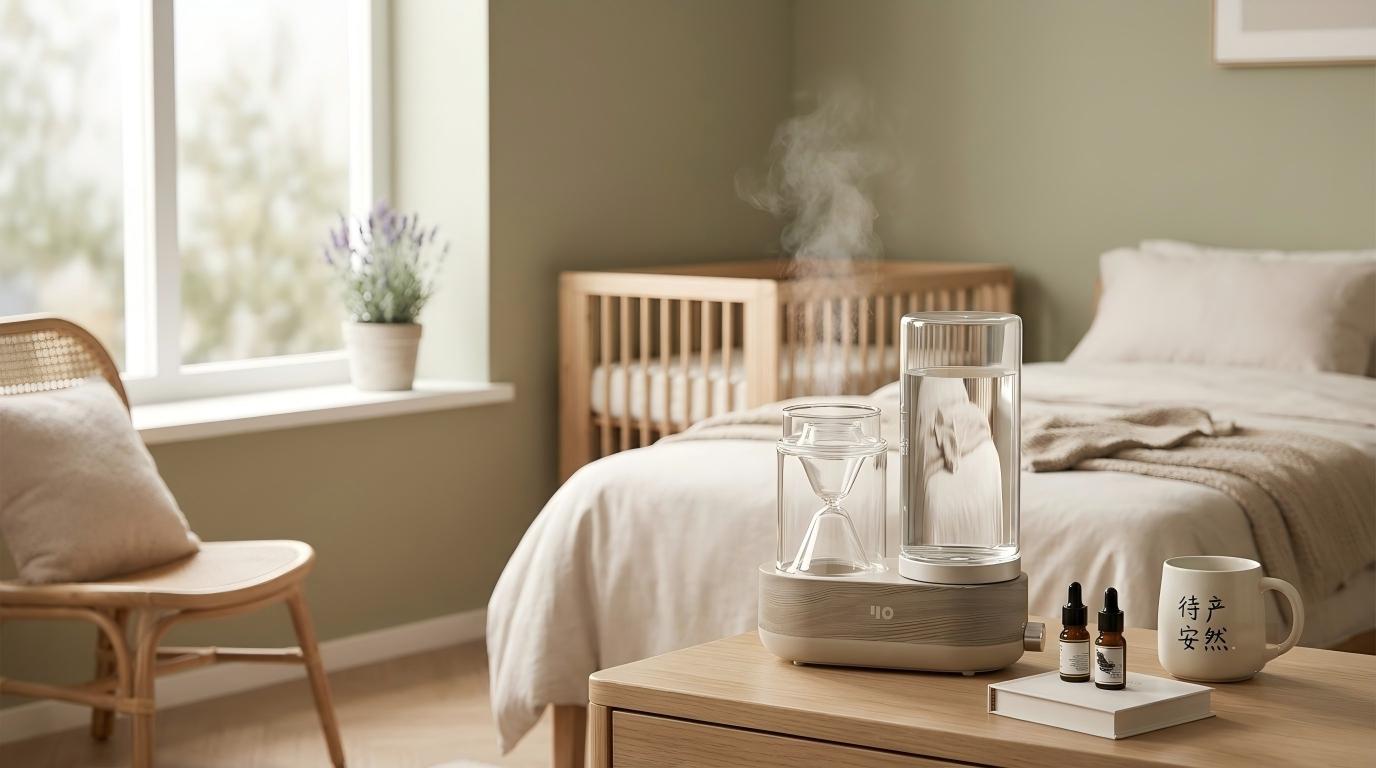

Pregnancy changes your relationship with scent. Smells you barely noticed before can suddenly feel overwhelming. Ones you loved might now turn your stomach.
At the same time, a lot of people find that certain soft, familiar scents — lavender, chamomile, a hint of citrus — are among the few things that still feel genuinely calming during a pregnancy that can be anything but.
So the question isn't unreasonable: can you use an essential oil diffuser while pregnant? The answer is: with care, and with the right information first.
Diffusing is considered the lowest-risk way to use essential oils during pregnancy — far lower than topical application or ingestion. But "lowest risk" doesn't mean "no consideration required." The oils you choose, the device you use, and the ventilation of the room all matter more than they do outside of pregnancy.
Why Pregnancy Changes How You Respond to Scent
Heightened smell sensitivity during pregnancy — sometimes called hyperosmia — is one of the most commonly reported early symptoms. It's driven primarily by rising estrogen levels, which amplify olfactory perception significantly in the first trimester.
This matters for diffuser use in a practical way: an oil concentration that felt pleasant before pregnancy may feel intense or even nauseating during it. This isn't a sign that the oil is harmful — it's a sign that your sensory threshold has shifted. Starting with fewer drops than usual and in a well-ventilated space is the appropriate adjustment.
Of all the ways to use essential oils — topical application, ingestion, inhalation — diffusion involves the lowest exposure level. A few drops dispersed into a room over 30 minutes represents a fraction of the concentration of direct skin contact. Most pregnancy aromatherapy guidance is built around this distinction. That said, consult your OB-GYN before incorporating any new practice into your routine during pregnancy.
Essential Oils Generally Considered Lower-Risk During Pregnancy
It's important to be clear about what "lower-risk" means here: it means these oils appear most frequently on lists compiled by aromatherapy practitioners and physicians as less likely to cause concern when used in low concentrations via diffusion. It does not mean they have been formally studied and approved for pregnancy use — the research base in this area is limited, and individual responses vary.
Always confirm with your OB-GYN before using any essential oil during pregnancy.
| Essential Oil | Sensory Character | Notes |
|---|---|---|
| Lavender | Soft, calming, familiar | Among the most widely referenced as lower-risk; well-tolerated by most |
| Roman Chamomile | Gentle, apple-like, settling | Frequently cited as a gentler option; avoid German chamomile |
| Frankincense | Warm, resinous, grounding | Generally considered lower-risk in diffusion; avoid in first trimester without guidance |
| Sweet Orange | Bright, uplifting, familiar | Citrus oils widely referenced as generally well-tolerated via diffusion |
| Lemon | Clean, crisp, light | Some research suggests lemon aroma may be associated with reduced nausea discomfort |
| Geranium | Floral, green, balancing | Generally considered lower-risk after first trimester; confirm with your provider |
Essential Oils to Avoid During Pregnancy
This is the more important list. Several essential oils are widely flagged by aromatherapy practitioners and physicians as inappropriate during pregnancy, primarily because certain chemical constituents may have effects on uterine muscle or hormonal activity.
The oils below represent those most commonly flagged in pregnancy aromatherapy guidance. The full list of oils with potential concerns is longer. When in doubt about any oil, do not use it without first consulting your OB-GYN or a qualified aromatherapist with pregnancy experience.
| Essential Oil | Primary Concern |
|---|---|
| Clary Sage | May stimulate uterine contractions — widely flagged as inappropriate during pregnancy |
| Rosemary | Potential uterine stimulant; generally avoided throughout pregnancy |
| Oregano | Strong uterine stimulant properties; avoid during pregnancy |
| Peppermint | Considered inappropriate in later pregnancy; may affect milk supply during breastfeeding |
| Clove | High eugenol content; avoid during pregnancy |
| Cinnamon Bark | Strong sensitizer; uterine stimulant properties; avoid during pregnancy |
| Lemongrass | Potential uterine stimulant; generally avoided |
| Jasmine | Sometimes used to stimulate contractions during labor — avoid until full term and only with provider guidance |

Practical Guidelines for Diffusing During Pregnancy
- Confirm with your OB-GYN first — before adding any essential oil practice to your pregnancy routine
- Use fewer drops than usual — 2 drops maximum per session, especially in the first and second trimesters
- Keep sessions short — 20–30 minutes maximum; take breaks rather than diffusing continuously
- Ventilate the room — a cracked window or open door significantly reduces cumulative concentration
- Trust your body's signals — if a scent causes nausea, headache, or discomfort, stop immediately
- Be more cautious in the first trimester — many practitioners recommend avoiding diffusion entirely during this period
- Don't apply essential oils directly to skin without dilution — pregnancy increases skin sensitivity significantly
- Don't ingest essential oils under any circumstances during pregnancy
- Don't use oils flagged as uterine stimulants (clary sage, rosemary, oregano, clove, cinnamon bark) at any point during pregnancy without explicit provider guidance
- Don't diffuse in a sealed, unventilated room — concentration builds quickly in small enclosed spaces
- Don't assume that "natural" means "safe during pregnancy" — concentration and chemistry matter regardless of origin
Why the Diffuser Itself Matters More During Pregnancy
Pregnancy is exactly the context where the device delivering the vapor matters as much as the oil inside it.
Most standard ultrasonic diffusers use polypropylene or ABS plastic for their water reservoirs. Essential oils are natural solvents — in prolonged contact with a plastic surface, they can begin to degrade it over time. The resulting vapor may carry not just the aromatic compounds you intended, but also trace plastic-derived compounds from a compromised reservoir.
For most people, this is a low-level background concern. During pregnancy, when you're trying to minimize every unnecessary exposure, it becomes more relevant. The same is true of mineral aerosol from ultrasonic mist: white dust from hard tap water suspended in the air is an uninvited addition to any room's air quality — and one you may not want to introduce near a developing pregnancy.
When essential oils sit in a plastic reservoir over time, the oil-plastic interaction can degrade the surface and introduce trace compounds into the vapor. For a practice you're being careful about during pregnancy, the material of the delivery device is not a minor consideration.
The case for a glass steam diffuser during pregnancy comes down to what it removes from the equation: no plastic in the oil or water path, no cold mineral mist, no biofilm risk from standing water. What goes into the air is steam carrying the aromatic compounds you chose — nothing added, nothing unintended.
When You're Being Careful About Everything, the Device Matters Too
The Yo-A1 uses borosilicate glass throughout — no plastic in the water or oil path, no mineral mist, 100°C sterilization. What enters the air is only what you put in.
Meet the Yo-A1 →Why a Glass Steam Diffuser Is a More Considered Choice During Pregnancy
The Yo-A1's design removes the concerns that matter most when you're being deliberate about what enters the air around you.
The water reservoir is 1,600ml borosilicate glass — chemically inert to essential oils. No plastic contact anywhere in the water or oil path means no possibility of oil-plastic degradation compounds entering the steam. What you add to the reservoir is what reaches the air.
The heating element brings water to 100°C (212°F) before each session. This eliminates biofilm formation — standing water in a reservoir that sits between sessions won't accumulate bacterial growth before the next use. The reservoir is sterilized at the start of every session automatically.
Because it produces pure steam rather than atomized water droplets, there's no mineral carry-over from tap water. No white dust settling in the room. No additional particulate in air you're already being careful about.
The auto shut-off and 8-hour runtime also mean you can set a session length and trust the device to stop — useful when the recommendation is 20–30 minutes and you don't want to have to remember to turn it off.

Glass. Steam. No Plastic. No Mineral Mist.
When you're being intentional about what enters the air, the Yo-A1 gives you one less variable to worry about. Borosilicate glass · 100°C sterilization · pure steam output.
Shop the Yo-A1 →Frequently Asked Questions
Is it safe to use an essential oil diffuser during pregnancy?
Diffusion is considered the lowest-risk method of essential oil use during pregnancy compared to topical application or ingestion. However, "lowest risk" doesn't mean "no consideration required." The oils you choose, the duration of sessions, room ventilation, and the trimester you're in all affect the appropriateness of diffuser use. Most practitioners recommend avoiding diffusion entirely in the first trimester, and using only well-established, lower-risk oils in short sessions with good ventilation thereafter. Always consult your OB-GYN before incorporating essential oils into your pregnancy routine.
Which essential oils should be avoided during pregnancy?
The oils most consistently flagged as inappropriate during pregnancy include clary sage, rosemary, oregano, clove, cinnamon bark, lemongrass, and jasmine — primarily due to their potential to stimulate uterine activity. Peppermint is also generally avoided in later pregnancy and during breastfeeding. This list is not exhaustive, and guidance varies between practitioners. When in doubt about any oil, consult your OB-GYN or a qualified aromatherapist with pregnancy experience before use.
Can diffusing essential oils harm my baby during pregnancy?
There are currently no studies showing that normal, low-concentration diffusion of appropriate essential oils causes harm during pregnancy. However, the research base in this area is limited, and the precautionary principle applies: use the lowest effective amount, for the shortest appropriate time, in a well-ventilated space, and only with oils that have not been flagged as potentially problematic. Avoid oils with known uterine-stimulant properties. And always consult your OB-GYN — they can give guidance specific to your situation and trimester.
How many drops of essential oil can I use when pregnant?
Most pregnancy aromatherapy guidance suggests reducing the usual amount by half or more — typically no more than 2 drops per session during pregnancy, compared to the usual 3–5. Pregnancy heightens scent sensitivity, so less goes further than it did before. Keep sessions to 20–30 minutes maximum with a well-ventilated room. If a scent feels overwhelming at any concentration, that's a reliable signal to stop and ventilate.
Is lavender oil safe to diffuse during pregnancy?
Lavender is among the essential oils most frequently cited by aromatherapy practitioners and physicians as lower-risk for diffusion during pregnancy, particularly in the second and third trimesters. It appears in guidance from sources including Mayo Clinic and WebMD as a commonly used option. That said, the first trimester is a period of particular caution, and individual responses vary. The appropriate approach is to confirm with your OB-GYN before use, start with one drop in a ventilated room, and stop immediately if any discomfort occurs.
Does the type of diffuser matter during pregnancy?
Yes — more than it does outside of pregnancy. Plastic ultrasonic diffusers in prolonged contact with essential oils can experience surface degradation over time, introducing trace plastic-derived compounds into the vapor. For a practice you're being deliberate about during pregnancy, a glass reservoir eliminates that variable entirely. Steam-based units also avoid the mineral aerosol that ultrasonic diffusers produce from hard tap water — one less unintended addition to the air. The material and mechanism of the device are worth considering when you're choosing what enters the air around you.
References
- Mayo Clinic Health System — Essential Oils and Pregnancy: mayoclinichealthsystem.org
- WebMD — Is It Safe to Use Essential Oils While Pregnant: webmd.com
- Healthline — Essential Oils for Pregnancy: healthline.com
- NOW Foods — Essential Oil Use During Pregnancy FAQs: nowfoods.com
- U.S. EPA — Indoor Air Quality: epa.gov/indoor-air-quality-iaq
- Justia Patents — Steam Diffusion Patent 11052167: patents.justia.com/patent/11052167