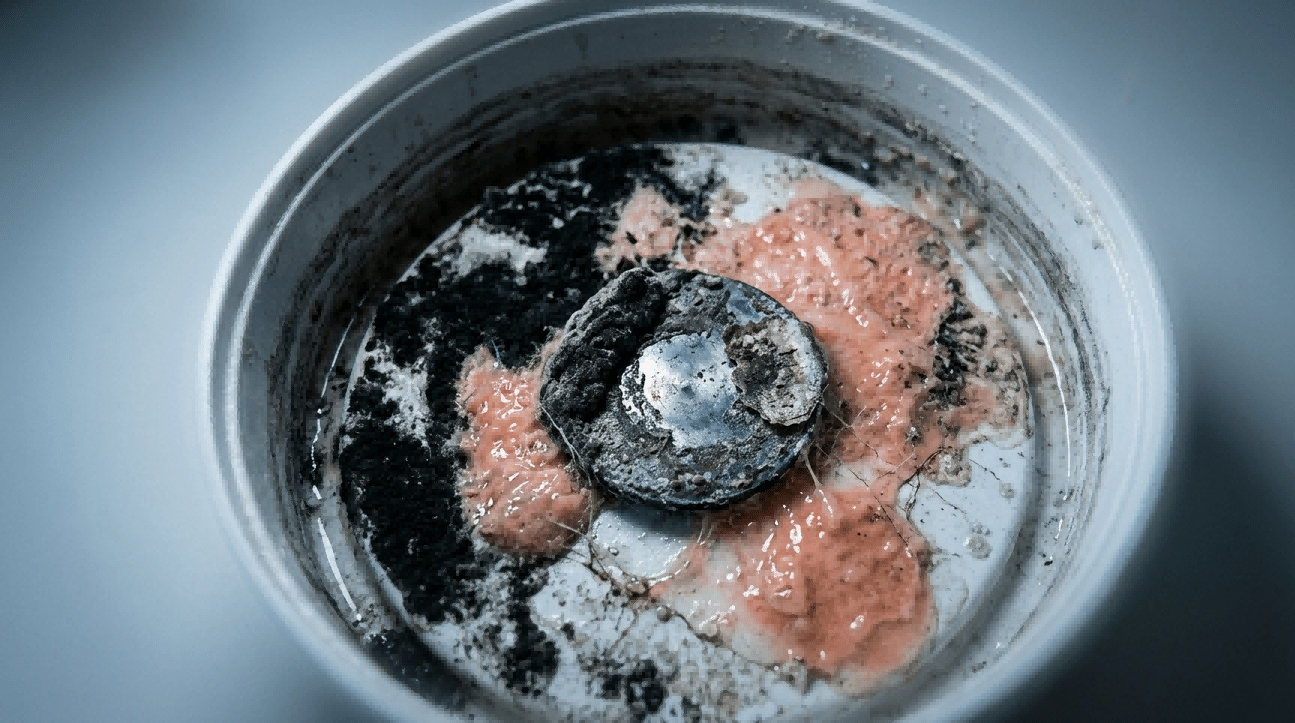

You bought it to breathe easier. You plugged it in, filled the tank, and went to sleep feeling like you were doing something good for your health. But here's the question nobody asks at the point of purchase: what happens to that water while it sits inside the tank for 8 hours at room temperature?
The answer, for most humidifiers on the market, is not nothing. It's a lot — and most of it is biological.
The wrong humidifier, or even the right one cleaned incorrectly, can turn your bedroom air into a delivery system for mold spores, bacteria, and — in serious cases — a lung condition your doctor may never have mentioned. Here's what's actually growing inside your tank while you sleep, and what you can do about it.
What's Actually Growing Inside Your Humidifier
A humidifier water tank is, from a microbiology standpoint, close to ideal conditions for growth: room-temperature standing water, a plastic surface for biofilm to attach to, and no UV exposure or circulation to disrupt colonization.
Within 24–48 hours of filling, tap water in an unheated tank begins supporting measurable bacterial growth. Within 72 hours, biofilm — the slick, slimy layer you may have noticed on the inside of a water tank — begins forming on surfaces.
Fig. 1 — Microbial growth timeline in an unheated humidifier tank vs. steam. The gap between "just filled" and "biologically active" is shorter than most users assume.
Ultrasonic: The Highest-Risk Technology
Ultrasonic humidifiers aerosolize water directly — which means whatever is in the tank goes into the air. Bacteria, mold spores, and biofilm particles are dispersed along with the water droplets, in particle sizes small enough to reach deep into the respiratory tract.
Research published in 2025 by Virginia Tech professor Andrea Dietrich found that ultrasonic humidifiers can aerosolize not just minerals but also heavy metals and biological contaminants from tap water — with children at disproportionate risk due to higher relative inhalation rates.
The EPA's guidance on humidifier use and care explicitly states that ultrasonic and evaporative humidifiers have been associated with dispersing microorganisms into indoor air when not properly maintained — and that proper maintenance requires daily cleaning.
An ultrasonic humidifier that hasn't been cleaned in 48+ hours and is running with tap water is actively aerosolizing whatever has colonized that water — directly into the breathing zone of everyone in the room. In a bedroom running overnight, that's 7–9 hours of continuous exposure per person.

Evaporative: Better, But Not Risk-Free
Evaporative humidifiers use a wet wick filter and a fan — the fan blows air through the wick, and only water vapor passes through. Minerals stay in the wick. This is a meaningful improvement over ultrasonic for mineral dispersal.
The biological risk, however, is the wick itself. A damp wick at room temperature is an ideal surface for mold colonization. Manufacturers typically recommend replacing wicks every 4–8 weeks. Community feedback consistently shows most users go far longer than that — and many never replace them at all.
A visibly discolored or musty-smelling wick is already hosting significant mold growth. Air passing through it carries spores into the room.
Humidifier Lung: When It Gets Serious
The following section discusses a recognized medical condition for informational and educational purposes only. It does not constitute medical advice, diagnosis, or treatment. If you are experiencing respiratory symptoms — including persistent cough, shortness of breath, or fever — consult a qualified healthcare provider immediately. Do not use this article as a substitute for professional medical evaluation.
Humidifier Lung is the colloquial name for a condition formally known as Hypersensitivity Pneumonitis (HP) — an inflammatory lung disease triggered by repeated inhalation of biological allergens, including mold spores and bacterial particles.
It is not a rare condition. The CDC recognizes HP as an occupational and environmental lung disease, and humidifiers are a documented environmental trigger in residential settings.
Fig. 2 — Humidifier Lung symptom progression. The condition is most commonly misdiagnosed in Stages 1–2 because symptoms resemble common allergies or a cold. The key diagnostic signal is that symptoms improve when away from home and worsen upon return.
The critical diagnostic clue, noted by both the Mayo Clinic and NIH, is the pattern: symptoms improve when away from home for an extended period, and worsen within hours of returning. If that pattern sounds familiar, your home environment — including your humidifier — warrants investigation.
The Cleaning Reality: Why "Weekly" Isn't Enough
Most humidifier manufacturers recommend cleaning every 1–3 days for ultrasonic models. Not weekly — every 1–3 days. That's what it takes to interrupt the bacterial growth cycle in an unheated tank.
Community feedback consistently shows that real-world cleaning frequency is far below that threshold. The gap between what's required and what actually happens is where the biological risk lives.
Red Flags: Stop Using Your Humidifier Immediately If You Notice These

- Pink, orange, or black discoloration on tank walls or base — all indicate bacterial or mold colonization
- A slimy or slick feeling on the inside of the tank — this is biofilm, not a residue that rinses away easily
- A musty, earthy, or sour smell from the mist output — the smell is the mold
- Visible mold spots on the wick filter in an evaporative humidifier
- Tank has been sitting with water for more than 48 hours without being cleaned
- Anyone in the household has developed a persistent cough that worsens at home and improves when away
Comprehensive comparison including a dedicated maintenance chapter covering mold risk, filter replacement, and real cleaning burden across humidifier types
Detailed review of the Y&O steam humidifier's boiling mechanism and its implications for pathogen elimination and respiratory health
Honest trade-off breakdown with specific attention to biological safety differences between steam and cool-mist technologies
Why Steam Is Biologically Different
The steam humidifier's biological advantage isn't a feature — it's a physical consequence of how the technology works.
When water reaches 212°F (100°C), the thermal energy is sufficient to denature the proteins and disrupt the cell membranes of virtually all common humidifier pathogens: bacteria, mold spores, and viruses. What survives 212°F in water is, for practical residential purposes, nothing of concern.
Fig. 3 — The Y&O steam humidifier sterilization pathway. Pathogens are eliminated at 212°F before any output reaches room air. The dual-channel system then cools steam to a safe 122°F output temperature.
This is fundamentally different from filtration-based approaches. A filter can capture some particles — but it can also become a growth surface itself. The steam approach eliminates the biological load through heat before output, with no filter to maintain or bypass.
For a deeper look at why sterile output is the non-negotiable baseline for any humidifier choice, see our pillar article: Why 100% Sterile Is the #1 Standard for Humidifiers →
For the related issue of mineral dispersal in hard-water cities: Hard-Water Humidifier Disaster: White Dust & Your Lungs →
| Biological Risk Factor | Ultrasonic | Evaporative | Steam (Y&O) |
|---|---|---|---|
| Tank bacteria growth | High — unheated standing water | Medium — same unheated tank | Low — heating inhibits growth |
| Pathogens in output | Yes — directly aerosolized | Possible — via moldy wick | No — eliminated at 212°F |
| Humidifier Lung risk | Higher — especially if poorly maintained | Medium — wick-dependent | Lower — sterile output by design |
| Maintenance tolerance | Very low — skipping even 2 days raises risk | Low — wick replacement critical | Medium — monthly descale sufficient |
| Safe for nurseries | High risk if not cleaned daily | Moderate — filter must be fresh | Yes — with correct placement |
If You Already Own an Ultrasonic: Damage Control
Not everyone is ready to switch technologies immediately. If you're committed to your current ultrasonic or evaporative humidifier, here's the minimum you need to do to operate it at acceptable biological risk levels.
For a full step-by-step cleaning and descaling protocol, see: How to Clean a Humidifier: Descale & Sanitize →

- Empty and rinse the tank every single day — don't leave standing water overnight when the unit is off
- Clean the tank with undiluted white vinegar every 2–3 days — fill, soak 15 minutes, scrub, rinse thoroughly
- Use distilled or filtered water only — tap water in hard-water cities accelerates both mineral and biological buildup
- Replace evaporative wicks on schedule — every 4–6 weeks, not when they visibly discolor (by then it's too late)
- Once per month, disinfect with a food-grade 3% hydrogen peroxide solution — fill tank, soak 30 minutes, rinse multiple times
- If you smell anything from the output, stop using immediately and do a full clean before restarting
- Never run the humidifier in a closed room with a sleeping infant without confirming it was cleaned within the last 24 hours
The daily and every-2–3-day cleaning requirement for ultrasonic humidifiers is what manufacturers specify, not an exaggeration. Most households don't sustain this schedule through a 6-month heating season. If you know you won't — or can't — clean that frequently, a steam humidifier's monthly descale requirement is a more realistic and safer long-term plan. For a complete technology comparison: Steam vs Ultrasonic vs Evaporative: Which Is Actually Worth It? →

Not Sure Your Current Humidifier Is Safe?
The Y&O Steam Plus eliminates the biological risk at the source — 212°F means nothing harmful survives to reach your air. No filters to mold, no daily scrubbing required.
See the Y&O Steam Plus →Your Questions Answered
How do I know if my humidifier has mold?
The most common signs are visible discoloration (pink, orange, or black spots on tank walls or base), a slimy or slick texture on the inside of the tank, and a musty or earthy smell coming from the mist output. If the mist has any odor at all — earthy, sour, or chemical — stop using the unit immediately. A properly functioning, clean humidifier should produce odorless output. If you're unsure, fill the tank with a 3% hydrogen peroxide solution, let it soak for 30 minutes, scrub with a soft brush, and rinse thoroughly before restarting. If discoloration returns within 48 hours, the unit may have mold established in areas difficult to clean — at that point, replacement may be more practical than remediation.
Can a humidifier cause a lung infection?
Yes, in certain conditions. Poorly maintained humidifiers — particularly ultrasonic models operated with stagnant or tap water — can disperse bacteria including Legionella (which causes Legionnaire's Disease) and various mold species associated with respiratory infections and hypersensitivity reactions. The risk is highest for individuals with compromised immune systems, the elderly, young children, and those with pre-existing respiratory conditions. If you or someone in your household develops a persistent respiratory illness that improves when away from home and worsens upon return, tell your healthcare provider about your home humidifier use — it's a relevant piece of medical history that is often overlooked. This article is for educational purposes only and does not substitute for medical advice.
Is Humidifier Lung (Hypersensitivity Pneumonitis) permanent?
When caught early and the exposure source is removed, Hypersensitivity Pneumonitis can be reversible — lung function often improves once the triggering allergen is eliminated. In cases of prolonged exposure or delayed diagnosis, however, chronic HP can lead to pulmonary fibrosis (irreversible lung scarring). This is why the exposure duration matters: the symptom pattern of improving away from home and worsening on return is the key early signal that warrants investigation before the condition progresses. Any diagnosis or treatment of HP must be managed by a qualified pulmonologist — this article provides educational context only.
How often should I really clean my humidifier?
For ultrasonic humidifiers: the tank should be emptied, rinsed, and refilled daily. A more thorough cleaning with white vinegar should happen every 2–3 days. A full disinfection with hydrogen peroxide solution should occur monthly. For evaporative humidifiers: the tank requires similar daily rinsing; the wick filter should be inspected weekly and replaced every 4–6 weeks regardless of visible appearance. For steam humidifiers: the tank needs a monthly descaling treatment (citric acid or white vinegar) to remove limescale from the heating element — in hard-water cities, every 2–3 weeks. The maintenance burden difference between technologies is real and significant over a 6-month heating season. For a detailed cleaning protocol with step-by-step instructions: How to Clean a Humidifier →
Is a steam humidifier safe for people with asthma?
Steam humidifiers are generally considered appropriate for individuals with asthma, with a few practical considerations. The output temperature of approximately 122°F (50°C) cools rapidly at room distance and doesn't create a thermal risk in normal use. The absence of mineral aerosol (white dust) and pathogen dispersal removes two of the most common triggers associated with humidifier-aggravated respiratory symptoms. Individuals with asthma should still maintain target indoor humidity in the 40–60% range recommended by ASHRAE — both too-dry and too-humid environments can affect airway sensitivity. As always, anyone with a diagnosed respiratory condition should discuss humidifier use with their healthcare provider before making changes to their home environment. This is educational context, not medical advice.
Related Reading
Sources & References
- U.S. Environmental Protection Agency — Use and Care of Home Humidifiers
- Centers for Disease Control and Prevention — Hypersensitivity Pneumonitis
- NIH / National Heart, Lung and Blood Institute — Hypersensitivity Pneumonitis
- Mayo Clinic — Hypersensitivity Pneumonitis: Symptoms and Causes
- Virginia Tech / Prof. Andrea Dietrich — Humidifiers and Indoor Air Quality (2025)
- ASHRAE Standard 55 — Thermal Environmental Conditions for Human Occupancy
- Reddit Community Discussions — r/Humidifiers · r/BuyItForLife · r/NewParents
- Y&O — YO-M2 Steam Plus Product Page
- YouTube Independent Reviews — ALLCHECKOUT · Computer Tech & More · Tech4Baba