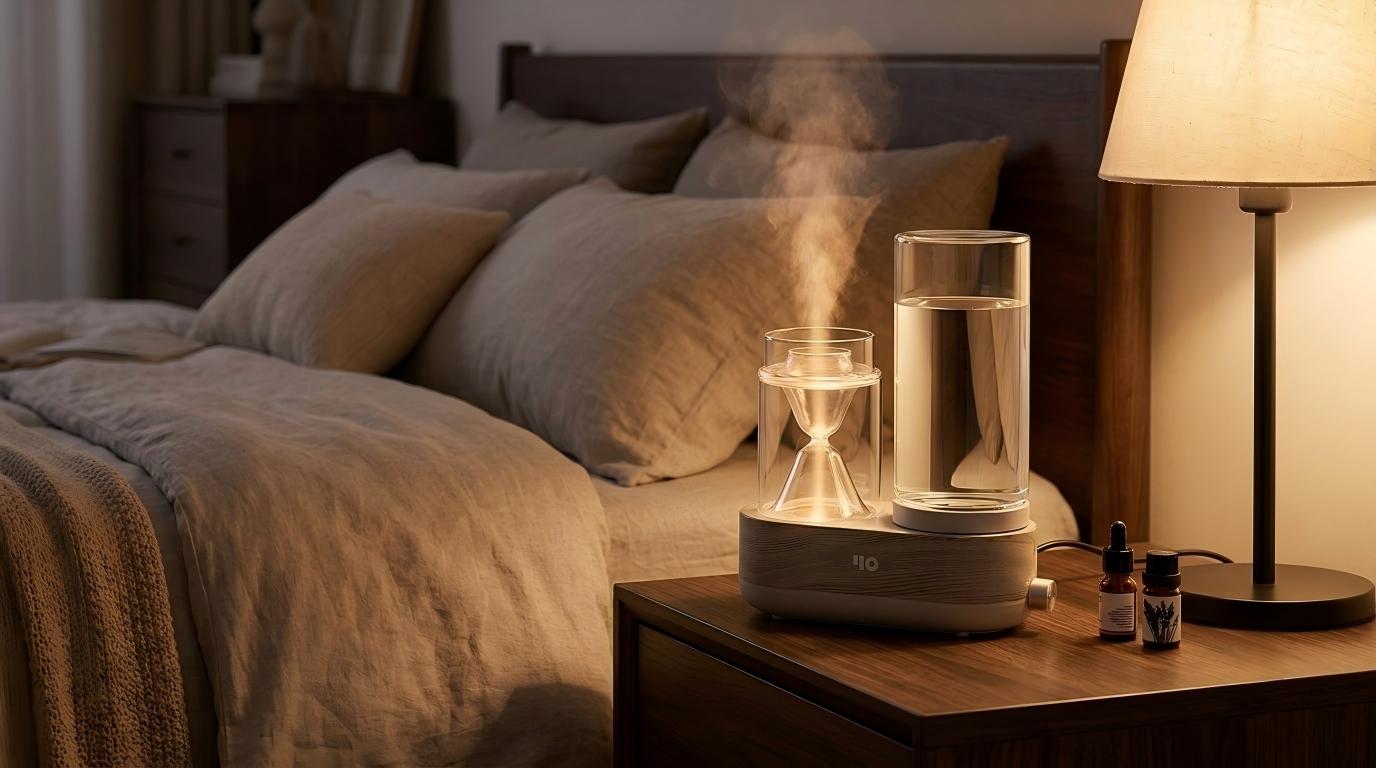

You bought a diffuser to feel better at home. Lavender for stress. Eucalyptus for congestion. Peppermint on bad days.
Then the sneezing started. Or the chest tightened. Or your eyes went red within twenty minutes of turning it on.
If you have allergies or asthma, a diffuser can go either way — relief or reaction. The difference isn't the essential oil. It's what the diffuser is actually putting into your air.
Most diffuser problems for allergy and asthma sufferers aren't caused by the scent — they're caused by airborne particles, plastic off-gassing, mineral mist, or microbial growth that no one talks about on the product page.
Why Sensitive Airways React to Diffusers
The lungs don't distinguish between "natural" and "harmful." They respond to particle size, concentration, and foreign compounds — regardless of the source.
When a diffuser runs, it doesn't just release scent. It releases a mix of things depending on its technology, water quality, and materials. For most people, that mix is fine. For someone with allergies or asthma, each element is a potential trigger.
Indoor air quality is where allergy and asthma management starts and often ends. A diffuser sits at the center of that environment — running for hours, dispersing particles into air you breathe continuously.
The Four Hidden Triggers in a Standard Diffuser
1. White Dust (Mineral Aerosol)
Ultrasonic diffusers use high-frequency vibration to break water into a fine mist. If your tap water contains calcium or magnesium — which most municipal water does — those minerals aerosolize with the mist.
The result is "white dust": microscopic calcium carbonate particles suspended in the air. They settle on surfaces, but more importantly, they get inhaled first.
Inhaled mineral particles can irritate bronchial passages. For asthma sufferers, even non-allergenic irritants can trigger bronchospasm. The harder your local water, the more mineral particulate your ultrasonic diffuser produces.
See our full breakdown: Why Your Diffuser Leaves White Dust Everywhere — and What It's Actually Doing to Your Air
2. Mold and Biofilm
Standing water in a diffuser reservoir — especially in warm, humid conditions — grows biofilm within days. Biofilm is a structured colony of bacteria and fungi that coats the tank walls.
When the diffuser runs, it aerosolizes whatever is in that water. For an untreated reservoir, that includes mold spores, bacterial fragments, and endotoxins — all of which are well-established asthma and allergy triggers.
Mold is one of the most common indoor allergens. Aerosolizing mold spores from a contaminated diffuser delivers them directly into the respiratory tract — at close range, continuously, while you sleep.
Mold in Your Diffuser: What's Actually Growing Inside and How to Stop It
3. Plastic Off-Gassing
Most diffusers use polypropylene or ABS plastic for the water reservoir. These plastics are stable at room temperature — but essential oils are solvents.
Over time (and sometimes immediately), concentrated oils degrade plastic surfaces. The oil-plastic interaction releases volatile organic compounds (VOCs): acetaldehyde, formaldehyde precursors, and plasticizers including phthalates.
VOCs are a recognized asthma trigger. The EPA classifies many common VOCs as respiratory irritants, and phthalates are under increasing scrutiny for their effects on lung function.
You can't see or smell most VOCs at the concentrations produced by a degrading diffuser reservoir. But the effect accumulates with each session — especially in a closed bedroom overnight.
4. Concentration Overload
Essential oils have therapeutic effects at appropriate concentrations. At high concentrations — particularly in small, poorly ventilated rooms — they become irritants even for healthy people.
The compounds responsible: terpenes like limonene and linalool, which react with ozone to produce secondary pollutants. Camphor, eucalyptol, and menthol at high doses can irritate bronchial smooth muscle.
For asthma sufferers, this is the paradox: the eucalyptus oil chosen to open airways can constrict them if diffused in excess.

Which Essential Oils Are Safer for Allergy and Asthma Sufferers?
Not all oils carry the same risk profile. Some have documented anti-inflammatory and airway-soothing effects at low concentrations. Others are consistently reported as triggers.
| Essential Oil | General Tolerance | Notes for Sensitive Airways |
|---|---|---|
| Lavender | ✓ Generally well tolerated | Anti-inflammatory properties; low terpene reactivity at standard concentrations |
| Frankincense | ✓ Generally well tolerated | Anti-inflammatory boswellic acids; widely used in respiratory support research |
| Chamomile (Roman) | ✓ Generally well tolerated | Calming; low irritation potential; avoid if ragweed-sensitive |
| Eucalyptus | ⚠ Use with caution | Opens airways at low dose; can irritate at high concentration; avoid with young children |
| Peppermint | ⚠ Use with caution | Menthol can trigger cough reflex in some asthma patients; dilute heavily |
| Clove / Cinnamon | ✗ Avoid | High eugenol content; strong bronchial irritant in sensitive individuals |
| Tea Tree | ✗ Avoid | Terpinen-4-ol oxidizes rapidly; produces irritant aldehydes; frequent allergy trigger |
| Ylang Ylang | ✗ Avoid | High allergen potential; frequent headache and breathing discomfort reports |
Important caveat: individual responses vary significantly. If you have diagnosed asthma or known fragrance allergies, start with very low concentrations of any oil — 2 to 3 drops per session — and monitor symptoms before increasing.
What the Research Actually Says
The evidence on essential oils and respiratory health is genuinely mixed — which is why overclaiming in either direction is a mistake.
Several peer-reviewed studies show lavender's linalool and linalool acetate have measurable anti-inflammatory effects on airway tissue. Frankincense (boswellia) has a longer research history in respiratory support than most other oils.
But the same studies are typically done with controlled concentrations in clinical settings — not in a closed bedroom with a low-quality diffuser running for eight hours.
A beneficial oil delivered via a contaminated, plastic-lined, mineral-misting diffuser does not produce the studied effect. The contaminants can outweigh the benefit — especially overnight, when room ventilation is lowest and cumulative exposure is highest.
The Diffuser Technology Comparison
Most people pick a diffuser based on price and aesthetics. For sensitive airways, the technology matters far more than either.
| Type | Mechanism | Mineral Mist | Mold Risk | Plastic Contact | Allergy/Asthma Suitability |
|---|---|---|---|---|---|
| Ultrasonic | Vibration breaks water into fine mist | ✗ High | ✗ High | ✗ Oil touches plastic | ⚠ Problematic for many |
| Nebulizing | Air pressure atomizes pure oil | ✓ None | ✓ Low | ⚠ Glass or plastic nozzle | ⚠ High oil concentration risk |
| Evaporative | Fan blows air through oil-soaked pad | ✓ None | ✗ Pad grows mold | ⚠ Pad contact | ⚠ Inconsistent; pad hygiene critical |
| Heat / Steam | Boils water; steam carries oil vapor | ✓ None | ✓ Heat inhibits growth | ✓ Steam only (no oil-plastic contact) | ✓ Best option for sensitive airways |
Steam diffusion has the cleanest output profile of any diffuser type. Water boils at 100°C (212°F), which eliminates bacterial and mold growth in the reservoir. The steam itself carries only water vapor and volatile aromatic compounds — no mineral particulate, no microbial fragments, no plastic-derived VOCs.
Output comparison: ultrasonic vs. heat-based steam diffusion for allergy and asthma considerations
Practical Rules for Diffusing with Allergies or Asthma
- Start with 2–3 drops per session; increase only if symptom-free after multiple uses
- Run for 30–60 minutes max, not continuously
- Keep the room ventilated — a cracked window changes exposure significantly
- Clean the reservoir after every use; never let water sit
- Start with lavender or frankincense before trying more complex oils
- Don't run a diffuser in a sealed bedroom overnight on the first trial
- Don't use clove, cinnamon, or tea tree oils if you have known fragrance sensitivity
- Don't ignore early symptoms — sneezing, eye watering, or tightness are signals to stop and reassess
- Don't use tap water in an ultrasonic diffuser if you have hard water and asthma
Independent reviews mentioning air quality and sensitive users:
The Material Problem No One Fixes
Most diffuser guides stop at "which oil to use." They don't address the reservoir problem.
Even if you choose the right oil, use the right concentration, and ventilate the room — if your water tank is plastic and your diffuser is ultrasonic, you're still introducing mineral aerosol and potential plastic-derived VOCs with every session.
For someone without respiratory sensitivities, this may be inconsequential. For someone with asthma or allergies, these background contaminants are exactly the kind of low-level, cumulative irritants that worsen baseline airway inflammation over time.
The fix requires a different kind of diffuser — not a different oil.
Built for Sensitive Airways
The Yo-A1 uses borosilicate glass and steam heat — no plastic reservoir, no mineral mist, no cold-water biofilm risk. See the full spec.
View Yo-A1 Diffuser →What to Look for in a Diffuser for Allergies and Asthma
After mapping every trigger — mineral dust, mold, plastic VOCs, concentration — the specification for an allergy-friendly diffuser becomes clear:
- Non-plastic water contact surfaces — glass or stainless steel eliminates oil-plastic off-gassing
- Heat sterilization — boiling water kills biofilm before it can aerosolize
- Steam output (not cold mist) — steam carries no mineral particulate
- Water-oil separation — oil diffuses as vapor, not emulsified into the water column
- Auto shut-off — prevents over-concentration from extended unattended sessions
- Low noise — relevant for overnight use without sleep disruption
The Y&O Yo-A1 was designed around exactly this specification. The 1,600ml reservoir is borosilicate glass — the same material used in laboratory equipment — chemically inert to essential oils. There is no plastic surface in contact with the water or oil at any point.
The heating element brings water to 100°C (212°F) before diffusion begins. This eliminates the biofilm growth window that ultrasonic reservoirs create. Steam exits at approximately 50°C (122°F) — warm enough to carry aromatic compounds effectively, cool enough for continuous room use.
Because it produces pure steam rather than atomized water droplets, there is no mineral carry-over — regardless of local water hardness.
The water-oil separation feature keeps essential oil on the surface of the water column, where it volatilizes into steam as vapor — not emulsified into the water itself. This keeps output consistent and prevents oil from coating the reservoir interior.
For anyone managing asthma or environmental allergies, the Yo-A1 eliminates the four mechanical triggers before you even choose an oil. What enters the room is steam and aromatic compounds — nothing else.


No White Dust. No Plastic. No Biofilm Risk.
The Yo-A1 eliminates the four main mechanical triggers before you choose an oil. 1,600ml borosilicate glass · steam heat · 8-hour runtime.
Shop Yo-A1 Diffuser →Frequently Asked Questions
Can essential oil diffusers trigger asthma attacks?
Yes — under certain conditions. The triggers most commonly linked to diffuser-related asthma symptoms are: mineral aerosol from ultrasonic mist, mold spores from contaminated reservoirs, plastic-derived VOCs from oil-plastic contact, and high concentrations of specific oils (clove, cinnamon, tea tree, high-dose peppermint). Using a steam-based glass diffuser with low concentrations of tolerated oils significantly reduces these risks.
Which essential oils are safest for allergy sufferers?
Lavender and frankincense are the most consistently well-tolerated options for people with respiratory sensitivities. Both have documented anti-inflammatory properties at standard concentrations. Roman chamomile is also generally low-risk unless you have ragweed cross-reactivity. Always start with 2–3 drops and monitor before increasing.
Is steam diffusion safer than ultrasonic for asthma?
From a mechanical standpoint, yes. Steam diffusion eliminates mineral aerosol (no cold mist = no mineral carry-over) and inhibits biofilm growth through heat sterilization. The output is pure steam carrying aromatic compounds — not a mineral-laden mist from a potentially contaminated reservoir. For asthma sufferers who also have hard tap water, the difference in symptoms can be significant.
How long should I run a diffuser if I have allergies?
Start with 30-minute sessions in a ventilated room. Many aromatherapy practitioners recommend intermittent diffusion (30 min on, 30 min off) rather than continuous running. If you tolerate that well over several sessions, you can extend — but more is not always better. Prolonged exposure to any concentrated aromatic compound increases irritation risk in sensitive individuals.
Can I use a diffuser in my bedroom overnight if I have asthma?
With caution, and with the right equipment. The key factors: use a steam-based diffuser (not ultrasonic), choose a well-tolerated oil at low concentration, ensure some ventilation, and have auto shut-off enabled. A glass steam diffuser with lavender at 3–4 drops is very different from an ultrasonic plastic model with tea tree running all night in a sealed room. Build up gradually — don't start with overnight sessions.
Does diffuser type matter more than the oil choice?
For people with allergies or asthma, yes — the diffuser type often matters more. Mineral aerosol, mold, and plastic VOCs from a low-quality ultrasonic diffuser can cause symptoms regardless of which oil is used. Conversely, a clean steam-based glass diffuser can make even moderately irritating oils safer to use at appropriate concentrations. Fix the delivery mechanism first, then optimize the oil selection.
References
- U.S. EPA — Indoor Air Quality: epa.gov/indoor-air-quality-iaq
- U.S. EPA — Particulate Matter (PM2.5): epa.gov/pm-pollution
- CDC — Indoor Environmental Quality: cdc.gov/niosh/topics/indoorenv
- USGS — Water Hardness: usgs.gov — Water Hardness
- WHO — Microplastics in Drinking Water: who.int — Microplastics
- Justia Patents — Steam Diffusion Patent 11052167: patents.justia.com/patent/11052167