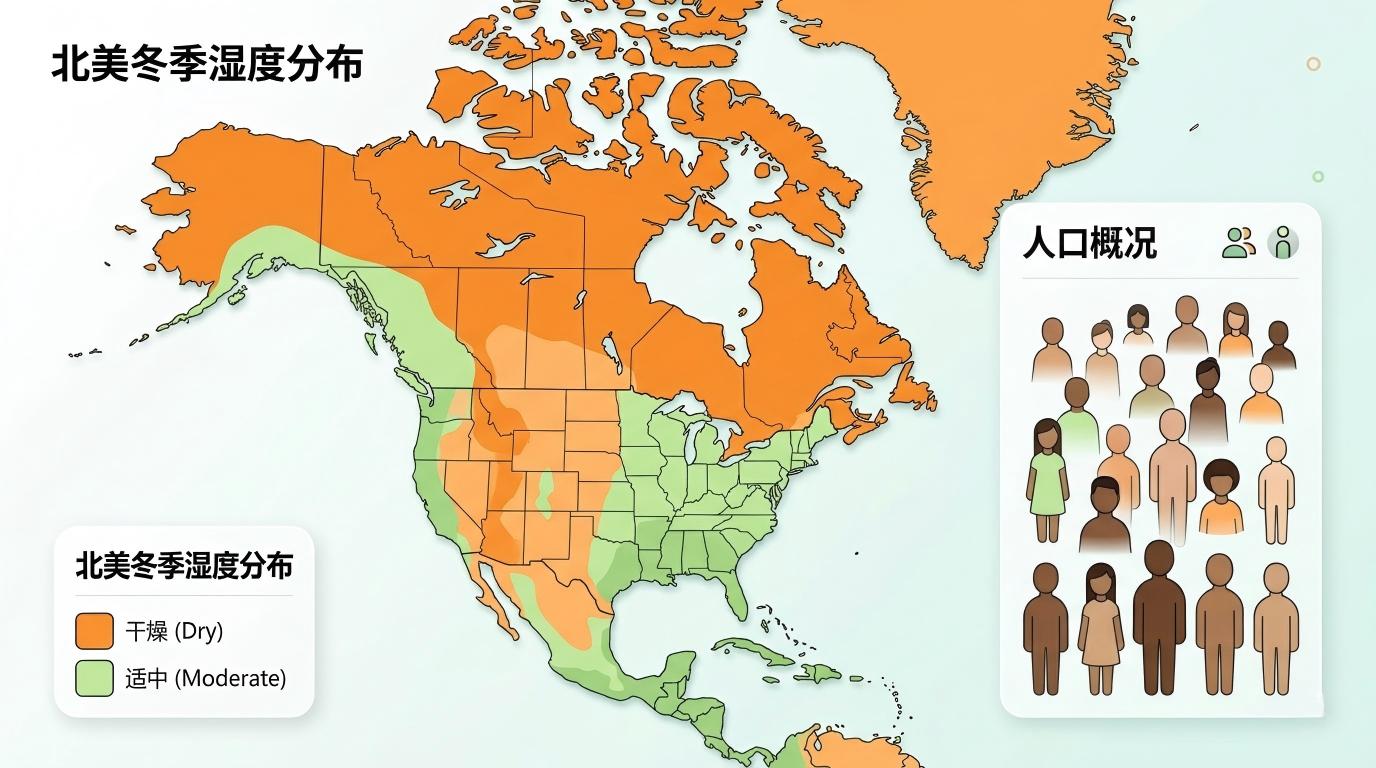

Most people don't think about humidity until their throat is raw at 2 a.m. in January. By then, months of dry forced air have already done their work: cracked woodwork, parched sinuses, and a home that feels uncomfortable no matter how high the thermostat climbs.
September and early October — the weeks before your furnace runs daily — are the single best window to get humidity right before winter locks in. What you set up now determines whether your home's air stays healthy all the way through April.
This checklist walks through exactly what to do before heating season begins: how to measure your baseline, size your output correctly, pick the right placement, and make sure you're not still scrambling when January's coldest nights arrive.
Why September — Not November — Is the Right Time to Act
Most people wait until they feel the dryness. That's the wrong trigger.
When your furnace starts cycling daily, it doesn't just heat air — it dilutes moisture. Outdoor air in fall is already drier than summer, and once it's pulled in and heated to 70°F, relative humidity can drop from a comfortable 45% to under 25% within a week of continuous heating. By the time you notice the scratchy throat, you've been below 30% for days.
Starting your humidifier after dryness sets in means recovering lost ground. Steam humidifiers are effective at recovery — but there's no reason to put your family through two weeks of dry air when the setup takes one afternoon.
The September window also gives you time to identify problems before you actually need the unit working every night. A placement that feels adequate in October may prove insufficient in January when the furnace runs around the clock. Catching that in September costs nothing. Catching it in December costs sleep.
The American Society of Heating, Refrigerating and Air-Conditioning Engineers recommends indoor relative humidity between 30–60% for thermal comfort and respiratory health. In most North American climates, reaching that range in winter without active humidification isn't possible. The full heating season context is covered in the North American Heating Season Humidity Guide →
What Happens If You Skip the Prep
The effects of heating-season dry air fall into two categories: the ones you feel quickly, and the structural ones you notice months later. Both are preventable.
| What's Affected | What Happens Below 30% RH | How Fast |
|---|---|---|
| Nasal passages & throat | Mucous membranes dry out, cilia slow, respiratory defenses compromised | 1–3 days |
| Sleep quality | Nasal congestion increases, dry throat causes waking, snoring worsens | 2–5 days |
| Skin | Itching, tightness, cracking at knuckles and lips | 1–2 weeks |
| Hardwood floors | Boards shrink, gaps form between planks, surface cracks develop | 4–8 weeks |
| Wood furniture & trim | Joints loosen, finishes crack, warping begins in solid pieces | 6–12 weeks |
| Static electricity | Chronic shocks, elevated risk to sensitive electronics | Days |
Wood damage is worth flagging specifically: floors that gap during a dry heating season don't fully close when humidity returns. The damage accumulates year over year. Maintaining 40–50% RH through heating season is a home maintenance decision as much as a comfort one.

The Pre-Season Checklist: 9 Steps Before Your Furnace Runs Daily
Step 1 — Take a Baseline Humidity Reading
Buy a digital hygrometer — $10–$15 at any hardware store — and place it in the room where you spend the most evening hours. Read it in the morning before heating kicks on. That's your starting point.
If you're already at or below 40% in September, your prep is urgent, not optional. Knowing your baseline tells you exactly how much output you need to close the gap before temperatures drop.
Step 2 — Calculate Your Output Requirement in ml/h, Not sq ft
The number that matters is output rate in ml/h — not the square footage coverage claims on any humidifier's packaging. Those ratings are almost always overstated — they don't account for ceiling height, air exchange rates, or how aggressively your heating system imports dry outdoor air.
| Space | Approx. Volume | Required Output | Notes |
|---|---|---|---|
| Single bedroom | ~300 sq ft, 8-ft ceiling | 150–250 ml/h | Door closed overnight |
| Master bedroom / nursery | ~450 sq ft, 9-ft ceiling | 250–400 ml/h | Include ensuite if connected |
| Open-plan living / kitchen | ~800 sq ft, 9-ft ceiling | 500–700 ml/h | Add 20% for high-traffic air changes |
| Large open-plan main floor | ~1,500 sq ft, 9-ft ceiling | 900–1,200 ml/h | Hard-water or extreme cold: upper range |
Size for your worst-case conditions — peak January cold, not mild October nights. A unit that barely keeps up in November will fall significantly short in January when outdoor temperatures bottom out and your furnace runs around the clock.
Step 3 — Finalize Placement Before You Need It Working
Steam rises and diffuses. Central, elevated placement — on a side table, nightstand, or bookshelf — gives better coverage than floor placement against an exterior wall. Avoid positioning directly next to cold exterior walls or too close to the bed; allow 3–5 feet for steam to diffuse before reaching your breathing zone.
For open-plan spaces, position toward the center of the room, away from forced-air vents that disperse humidity before it raises room RH. Treat each floor of a two-story home as a separate zone — humidity doesn't travel well between levels through closed stairwells.
Step 4 — Run a Test Cycle in September
Don't wait for the first cold snap to discover an issue. Fill and run your humidifier in September while temperatures are still mild. Confirm that output is consistent, the auto-shutoff works correctly, and there are no unusual sounds or drips.
For new units, this cycle also clears any manufacturing residue before you're running the humidifier in a closed bedroom every night. It takes 30 minutes and eliminates the risk of finding a problem on your first cold night of the season.
Step 5 — Map Your Multi-Room Strategy
One humidifier cannot effectively serve an entire home. Decide now which rooms get dedicated units and which rely on migration from adjacent spaces.
Bedrooms — especially those where children or anyone with respiratory sensitivities sleeps — should have their own unit. The guidance on how many humidifiers a large home actually needs covers zone mapping in detail, including how to prioritize when working within a budget.
Step 6 — Check Your Water Type
If you're in a hard-water city — Phoenix, Las Vegas, Denver, Dallas, Salt Lake City — your humidifier technology choice matters more than anywhere else. Ultrasonic and cool-mist units aerosolize mineral content directly into your air as fine white dust that settles on every surface and gets inhaled with every breath.
That dust is breathable — and it's not harmless. Steam humidifiers boil the water first; minerals remain in the tank rather than becoming airborne. In hard-water markets, steam isn't just preferable — it's the only technology that doesn't worsen your air quality while solving your humidity problem.
Step 7 — Set Your Target Range and Know When to Adjust It
The heating season target for most North American homes is 40–50% RH — not maximum. Above 60%, mold and dust mite activity increases. In very cold climates — Prairie Canada, Upper Midwest — you may need to accept 35–40% during peak cold snaps to avoid window condensation.
The temperature differential between indoor air and cold glass limits how high you can safely push RH without condensation forming on window frames. Always measure with a separate hygrometer: most humidifiers' built-in sensors read 5–10% higher than actual room humidity.
Step 8 — Prioritize Children's Rooms First
If you're working within a budget and can place only one humidifier before the season starts, the children's bedroom is the priority — not the living room.
Children's respiratory systems are more vulnerable to sustained low-RH air than adults'. Rhinitis symptoms in children escalate sharply once heating season begins — and they're almost entirely preventable with humidification running before the heating season creates the problem.
Step 9 — Protect Wood Before the Season Starts
Pull solid wood furniture slightly away from exterior walls. If you have hardwood floors, ensure humidification is running before the first extended cold snap — not after.
Wood loses moisture faster than it gains it. Floors that gap during a dry heating season don't fully recover when spring arrives. Starting in September protects what you can't undo in April.
September–October Readiness Checklist
- Hygrometer placed; baseline reading taken
- Output requirement calculated per zone (ml/h, not sq ft)
- Placement finalized in primary living and sleeping spaces
- Test cycle run; unit confirmed working correctly
- Multi-room strategy mapped; bedrooms prioritized
- Water hardness checked — steam selected if hard-water city
- Target range set: 40–50% (35–40% for extreme cold climates)
- Children's rooms covered first
- Solid wood floors and furniture noted for early-season monitoring
Why Technology Choice Matters More in Heating Season
Heating season is when the humidifier technology debate becomes concrete — because the demands are higher than any other time of year.
You're running a humidifier for 8–12 hours every day, often overnight in a closed room with recycled air. Output consistency, biological cleanliness, and the absence of airborne mineral particulate matter far more than they do for occasional seasonal use.

Cool-mist and ultrasonic units present two problems that worsen with continuous winter use: they aerosolize mineral content from hard water, and their standing water tanks become breeding environments for mold and bacteria when run continuously for months.
Steam humidifiers eliminate both risks by design. The boiling process kills pathogens before they can aerosolize, and minerals stay in the tank rather than entering your air. For a unit running all winter in a child's bedroom, steam is the only technology that removes biological risk from the equation.
For the full technology comparison: Steam vs. Ultrasonic vs. Evaporative: Which Is Worth It in 2026 →
The Climate Variable That Changes Everything
Not all heating seasons are equal. Phoenix and Minneapolis both require active humidification — but for different reasons, at different intensities, and with different output demands.
The Southwest has naturally low year-round humidity that worsens in winter. Outdoor RH in Phoenix from November through February often stays below 20% — and once that air enters a heated home, it's drier still. Units sized for moderate climates will fall short in Phoenix winters.
The Upper Midwest and Prairie Canada face a different extreme. At -20°F (-29°C), outdoor air holds almost no moisture at all. Every time the furnace pulls that air in and heats it, indoor RH drops further. In Winnipeg or Minneapolis, a humidifier keeping up at 45% RH in November may deliver only 30% in January — because the outdoor moisture deficit has grown, not because the unit has failed.
Phoenix, Las Vegas, Denver, Dallas, Salt Lake City, and most of Southern California have tap water with high mineral content. In these markets, ultrasonic and cool-mist humidifiers don't just underperform — they actively degrade air quality by aerosolizing mineral particulate throughout the winter. Steam is not optional here. Full analysis: Hard Water & White Dust: What's Actually in Your Air →
For a detailed breakdown of why North American winter conditions defeat most standard humidifiers — and what output rate is actually required by climate zone: Why Dry Air in North American Winters Defeats Most Humidifiers →

The Y&O Steam Plus — Sized for North American Heating Season
1,200 ml/h output · 10L dual tank · No filter · Steam sterilization · Zero white dust · Auto shut-off
See the YO-M2 Steam Plus →Your Questions Answered
When exactly should I start running my humidifier in fall?
Start monitoring with a hygrometer when outdoor temperatures begin dropping consistently below 50°F (10°C) — typically September to mid-October depending on your region. When indoor RH drops below 40%, it's time to run. Don't wait until you feel discomfort: by then you've been below 35% for days, and the effects on nasal passages and sleep quality are already accumulating. In Prairie cities and the Upper Midwest, plan to run continuously from late October through March. In milder climates like the Pacific Coast, November through February may be sufficient.
Does it actually matter whether I set up before vs. after the furnace starts?
Yes — significantly. Starting before daily heating begins means your home's air stays in the target range from day one rather than spending weeks below 30% RH while you play catch-up. Once indoor humidity drops, your furnace is running continuously and the moisture deficit is larger to close. It's far easier to maintain 45% than to recover from 20%. Pre-season setup also gives you time to identify any placement or output issues before you're depending on the unit every night.
Can one humidifier cover my whole house?
Not reliably in most North American home configurations. Open-plan spaces on a single floor can be served by a high-output unit centrally placed, but humidity doesn't travel effectively through closed stairwells, hallways, or between floors. Bedrooms with closed doors during sleep need their own humidification. The practical approach is to treat each zone — main floor and each bedroom — as a separate coverage area, and prioritize where vulnerable family members sleep. Full guidance: How Many Humidifiers Does a Large Home Actually Need? →
Why does my humidifier struggle more in January than it did in November?
Because the moisture demand is higher. In January, outdoor temperatures are at their lowest, which means outdoor air holds the least moisture of any point in the season. Your heating system runs at maximum load, continuously importing this ultra-dry air and distributing it through every room. A unit that kept up in November — when outdoor temperatures were milder and heating ran less aggressively — falls behind in January when demand peaks. This is exactly why sizing for worst-case conditions matters. Full climate zone analysis: Why Dry Air in North American Winters Defeats Most Humidifiers →
Is higher humidity always better during heating season?
No — the target is 40–50% RH, not maximum. Above 60%, mold and dust mite activity increases. In very cold climates, pushing above 45–50% during peak cold snaps risks condensation on windows, which can cause mold growth on frames and sills. The temperature differential between indoor air and cold glass limits how high you can safely push RH. Always measure with a separate hygrometer — most humidifiers' built-in sensors read 5–10% higher than actual room RH. For the full science: The 40–60% Humidity Rule →
Related Reading
Sources & References
- ASHRAE Standard 55 — Thermal Environmental Conditions for Human Occupancy
- U.S. Environmental Protection Agency — Use and Care of Home Humidifiers
- NOAA — U.S. Climate Data
- Environment and Climate Change Canada — Canadian Climate Normals
- U.S. Geological Survey — Hardness of Water — Regional Data
- National Wood Flooring Association — Technical Publication: Humidity and Hardwood Flooring
- Reddit Community Discussions — r/Humidifiers · r/homeowners
- Y&O — YO-M2 Steam Plus Product Page