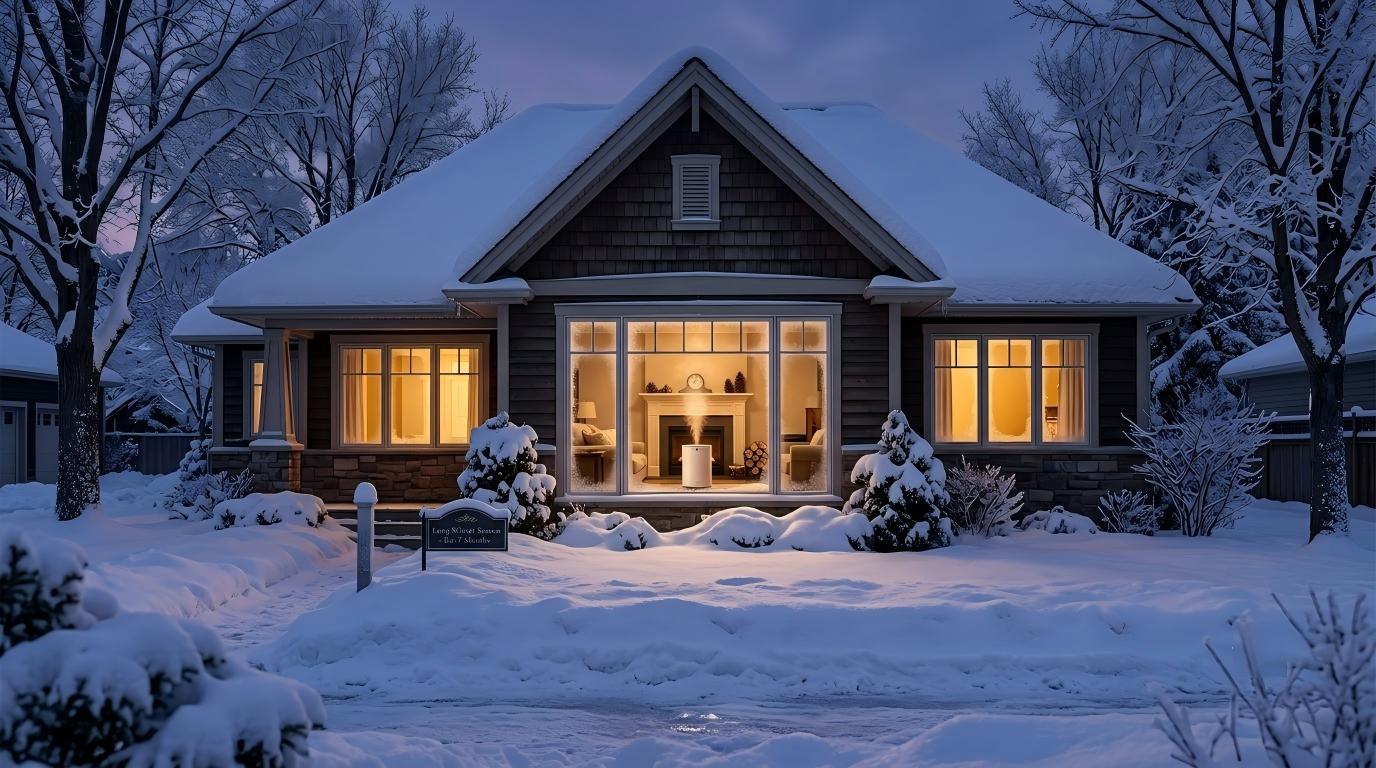

Irgendwann zwischen Oktober und November schaltet sich die Heizung ein. Der Ofen saugt kalte Außenluft an, erwärmt sie und lässt sie durch Ihr Zuhause zirkulieren. Innerhalb einer Woche ist die Luft in Ihrem Haus spürbar trockener. Innerhalb eines Monats wachen Sie mit einem kratzigen Hals auf. Im Januar beschweren sich Ihre Holzböden, Ihre Haut bleibt nicht mit Feuchtigkeit versorgt, und das Feuchtigkeitsmessgerät zeigt irgendwo zwischen 18 % und 25 % an.
Dieser Kreislauf wiederholt sich jedes Jahr in den USA und Kanada – fünf Monate in milden Klimazonen, sieben oder mehr Monate in Präriestädten und im oberen Mittleren Westen. Die meisten Hausbesitzer gehen reaktiv damit um: Sie spüren die Trockenheit, kaufen einen Luftbefeuchter, stellen ihn auf und hoffen auf das Beste. Diejenigen, die konstante Ergebnisse erzielen, behandeln das Problem proaktiv – sie verstehen, was in jeder Phase der Heizperiode passiert, und reagieren entsprechend.
Dieser Leitfaden behandelt den gesamten Verlauf der nordamerikanischen Heizperiode – was trockene Luft für Ihr Zuhause und Ihre Gesundheit bedeutet, warum Standard-Luftbefeuchter unter realen Bedingungen durchweg unterdurchschnittlich abschneiden und wie ein richtig verwaltetes Raumluftfeuchtigkeitssystem von Oktober bis April aussieht.
Warum die Heizperiode eine schleichende Feuchtigkeitskrise ist
Das Problem beginnt mit der Physik. Kalte Außenluft enthält fast keine Feuchtigkeit. Bei 14 °F (-10 °C) – einer üblichen Januartemperatur im Mittleren Westen der USA und den kanadischen Prärien – enthält die Außenluft weniger als 2 Gramm Wasserdampf pro Kilogramm. Wenn diese Luft in das Heizsystem Ihres Hauses gezogen und auf 70 °F erwärmt wird, sinkt ihre relative Luftfeuchtigkeit auf etwa 5 % bis 15 %.
Das Heizsystem Ihres Hauses erwärmt nicht nur die Luft. Es importiert kontinuierlich trockene Luft von außen, erwärmt sie und verteilt sie in jedem Raum. Je länger und kälter Ihre Heizperiode ist, desto stärker wird dieser Effekt.
Abb. 1 – Relative Luftfeuchtigkeit in Innenräumen während der Heizperiode. Ohne aktive Befeuchtung sinkt die relative Luftfeuchtigkeit in einem Umluftsystem bis November weit unter den Komfortbereich von 40–60 % und bleibt dort bis Februar. Ein richtig dimensionierter Dampfbefeuchter hält die relative Luftfeuchtigkeit während der gesamten Saison im Zielbereich.
Was trockene Heizungsluft für Ihr Zuhause und Ihre Gesundheit bedeutet
Die meisten Hausbesitzer bemerken zuerst das körperliche Unbehagen – trockene Haut, gereizte Nasengänge, kratziger Hals. Dies sind reale Auswirkungen einer anhaltenden Exposition gegenüber niedriger relativer Luftfeuchtigkeit. Aber die weniger sichtbaren Auswirkungen – auf die Struktur Ihres Hauses und Ihre langfristige Atemwegsgesundheit – sind ebenso bedeutsam.
Gesundheitliche Auswirkungen
Die Nasenschleimhaut – das Gewebe, das Ihre Nasengänge auskleidet – ist die erste Verteidigungslinie Ihres Atmungssystems. Sie fängt airborne Partikel ab, filtert Bakterien und produziert die Feuchtigkeit, die Ihre Atemwege angenehm hält. Wenn die relative Luftfeuchtigkeit in Innenräumen unter 30 % sinkt, trocknet dieses Gewebe aus, die Funktion der Zilien verlangsamt sich und Ihre natürlichen Atemwegsabwehrkräfte werden beeinträchtigt.
Eine anhaltende Exposition gegenüber trockener Luft während einer 5–7-monatigen Heizperiode verstärkt diesen Effekt. Von der U.S. Environmental Protection Agency zitierte Forschungsergebnisse bringen eine niedrige Luftfeuchtigkeit in Innenräumen mit einer erhöhten Anfälligkeit für Atemwegsinfektionen, verschlimmerten Rhinitis- und Asthmasymptomen sowie Hautirritationen in Verbindung. Dies sind keine akuten Effekte einer einzigen trockenen Nacht – sie kumulieren sich über die Monate der kontinuierlichen Exposition während der Heizperiode.
Ausführliche Hinweise zu Rhinitis und Atemwegserkrankungen: Bester Luftbefeuchter bei Rhinitis & trockener Nase →

Auswirkungen auf die Hausstruktur
Holz reagiert auf Feuchtigkeit. Parkettböden, Massivholzmöbel, Holzverkleidungen und Musikinstrumente dehnen sich alle aus und ziehen sich mit Feuchtigkeitsänderungen zusammen. Während der Heizperiode führt der anhaltende Rückgang der relativen Luftfeuchtigkeit in Innenräumen dazu, dass Holz Feuchtigkeit verliert und sich zusammenzieht – was zu Fugen zwischen den Dielen, Rissen in Möbelverbindungen und in schweren Fällen zu strukturellen Verformungen führt.
Der Schadensschwellenwert variiert je nach Holzart und Oberfläche, aber die meisten Hersteller von Hartholzböden empfehlen, die relative Luftfeuchtigkeit in Innenräumen ganzjährig zwischen 35 % und 55 % zu halten. Wenn die relative Luftfeuchtigkeit über eine siebemonatige Heizperiode auf 15–20 % sinkt, entstehen erhebliche Schäden, die sich Jahr für Jahr summieren.
Auswirkungen auf Komfort und Schlaf
Niedrige Luftfeuchtigkeit lässt Räume kälter erscheinen, als sie sind – die Verdunstung von Feuchtigkeit von der Haut beschleunigt den Wärmeverlust. Ein Raum bei 21 °C und 20 % relativer Luftfeuchtigkeit fühlt sich deutlich kälter an als derselbe Raum bei 21 °C und 50 % relativer Luftfeuchtigkeit. Hausbesitzer, die eine angemessene Luftfeuchtigkeit aufrechterhalten, berichten oft, dass sie sich bei etwas niedrigeren Thermostateinstellungen wohl fühlen, was die Stromkosten für den Betrieb eines Luftbefeuchters teilweise ausgleicht.
Die Schlafqualität wird ebenfalls beeinträchtigt. Eine verstopfte Nase durch trockene Luft verstärkt nächtliche Atemstörungen. Viele Benutzer berichten innerhalb der ersten Woche, in der sie eine relative Luftfeuchtigkeit von 45–50 % in ihrer Schlafumgebung aufrechterhalten, von einer Verbesserung der Schlafqualität.
| Luftfeuchtigkeit in Innenräumen (RH) | Gesundheitliche Auswirkungen | Auswirkungen auf das Haus | Empfehlung |
|---|---|---|---|
| Unter 20% | Starke Nasentrockenheit, rissige Haut, hohes Infektionsrisiko | Aktive Holzschäden, Spaltbildung in Böden | Sofortiges Handeln erforderlich |
| 20–30% | Trockene Nasengänge, beeinträchtigte Atemwegsabwehr, Schlafstörungen | Anhaltende Holzbelastung, beschleunigter Verschleiß | Unterhalb des akzeptablen Bereichs |
| 30–40% | Marginal – leichtes Unbehagen, reduziertes, aber nicht eliminiertes Risiko | Grenzbereich für die meisten Holzprodukte | Akzeptables Minimum, höheres Ziel anstreben |
| 40–50% | Optimal – komfortabel, Atemwegsabwehr funktioniert normal | Im sicheren Bereich für alle Holzprodukte | Zielbereich für die Heizperiode |
| 50–60% | Komfortabel – oberes Ende des sicheren Bereichs | Sicher für Holz, Fensterkondensation überwachen | Akzeptabel, 60% nicht überschreiten |
| Über 60% | Schimmel- und Hausstaubmilbenaktivität nimmt erheblich zu | Kondensationsrisiko an Fenstern und Wänden | Überbefeuchtet – Leistung reduzieren |
Die vollständige wissenschaftliche Erklärung für den Zielbereich von 40–60 %: Die 40–60 % Feuchtigkeitsregel →
Warum die meisten Luftbefeuchter während der Heizperiode versagen
Die Diskrepanz zwischen dem, was Luftbefeuchter versprechen, und dem, was sie unter realen Heizperiodenbedingungen liefern, ist eine der häufigsten Frustrationen in dieser Kategorie. Wenn Sie verstehen, warum diese Lücke besteht, ändert sich die Art und Weise, wie Sie einkaufen und was Sie erwarten sollten.
Das Problem der angegebenen Reichweite
Die Abdeckungsangaben von Luftbefeuchtern werden in versiegelten Laborräumen unter kontrollierten Bedingungen getestet – ohne laufende Heizung, ohne offenen Grundriss, bei Standarddeckenhöhe und kontrollierter Startfeuchtigkeit. Ihr Zuhause im Januar ist nichts davon.
Ein Gerät, das im Labor für „500 sq ft“ (ca. 46,5 m²) ausgelegt ist, kann im Januar in Ihrem beheizten Wohnzimmer mit Umluft effektiv 250–300 sq ft (ca. 23–28 m²) abdecken. Die Diskrepanz ist vorhersehbar und konstant – sie ist eine Funktion des Teststandards, kein Produktfehler. Aber die meisten Hausbesitzer wissen das beim Kauf nicht.
Für die vollständige Aufschlüsselung, warum die angegebenen Abdeckungszahlen durchweg irreführend sind: Ihr Luftbefeuchter gibt an, 500 sq ft abzudecken. Hier ist der Grund, warum er es wahrscheinlich nicht tut →
Die Realität der Ausgabemenge
Die Messgröße, die die Leistung während der Heizperiode tatsächlich vorhersagt, ist die Ausgabemenge – gemessen in Millilitern pro Stunde (ml/h). Ein Umluftheizsystem in einem kalten Klima benötigt einen Luftbefeuchter, der Feuchtigkeit schneller zuführen kann, als das Heizsystem sie entfernt. In Präriestädten und im oberen Mittleren Westen liegt dieser Schwellenwert bei etwa 1.000–1.200 ml/h für einen offenen Grundriss von 600–800 sq ft.
Die meisten Luftbefeuchter der Mittelklasse geben 300–500 ml/h ab. In einem versiegelten Schlafzimmer ist dies ausreichend. In einem offenen Wohnzimmer mit laufendem Ofen ist dies durchweg unzureichend – das Gerät läuft kontinuierlich, ohne die Zielfeuchtigkeit zu erreichen, da der Trocknungseffekt des Heizsystems die Ausgabekapazität des Luftbefeuchters übersteigt.
Das Technologieproblem
Ultraschall-Luftbefeuchter sind die dominante Kategorie im Einzelhandel – sie sind leise, preiswert und kompakt. Sie sind aber auch die schlechteste Wahl für Städte mit hartem Wasser während der Heizperiode, wenn Sie sie täglich stundenlang laufen lassen.
Ultraschallgeräte verteilen Wassertröpfchen, die gelöste Mineralien in die Luft tragen. In Städten mit hartem Wasser (Phoenix, Las Vegas, Denver, Calgary, Chicago, Minneapolis) entsteht dadurch der weiße Mineralstaub, der sich auf Möbeln und Elektronik absetzt. Der kontinuierliche Betrieb eines Ultraschallgeräts über eine siebenmonatige Heizperiode in einer Stadt mit hartem Wasser führt zu einer anhaltenden Exposition gegenüber Mineral-Aerosolen, die sich in Ihrer Innenraumumgebung ansammeln.
Dampfbefeuchter kochen Wasser, bevor sie es abgeben – Mineralien bleiben im Tank, nur reiner Dampf gelangt in die Luft. In Städten mit hartem Wasser ist dies die technisch korrekte Wahl für den längeren Betrieb während der Heizperiode. Für das Gesamtbild: Hartwasser-Luftbefeuchter-Desaster: Weißer Staub & Ihre Lungen →
Der Kalender der Heizsaison-Luftfeuchtigkeit
Verschiedene Phasen der Heizperiode stellen unterschiedliche Herausforderungen an die Luftfeuchtigkeit. Hier ist eine grobe Übersicht darüber, was in jeder Phase zu erwarten – und was zu priorisieren – ist.

September–Oktober: Vorbereitung vor der Saison
Das Zeitfenster vor Beginn der Heizperiode ist die wertvollste und am meisten übersehene Phase. Dies ist die Zeit, um vorhandene Geräte zu testen, Tanks von Mineralablagerungen der letzten Saison zu entkalken, zu überprüfen, ob die Leistung noch den angegebenen Werten entspricht, und die richtige Platzierung zu bestätigen, bevor das Gerät benötigt wird.
Es ist auch die Zeit, um zu beurteilen, ob Ihr aktuelles Setup ausreichend ist. Wenn Sie im letzten Winter einen Luftbefeuchter kontinuierlich betrieben haben, ohne die Zielfeuchtigkeit zu erreichen, liegt das Problem mit ziemlicher Sicherheit an der Ausgabemenge – und das Problem vor November anzugehen, ist weit weniger stressig, als es im Januar zu tun.
Wichtige Maßnahmen vor der Saison: Entkalken Sie Ihren Luftbefeuchter gründlich, führen Sie einen 24-Stunden-Ausgabetest durch und messen Sie die tatsächliche Raumfeuchtigkeit mit einem separaten Hygrometer, stellen Sie sicher, dass die Platzierung zentral und nicht an einer Wand erfolgt, und bestätigen Sie, dass Ihre Ziel-RH-Einstellung für Ihre Klimazone geeignet ist.
November–Dezember: Hochlaufphase
Mit sinkenden Außentemperaturen und konstanterem Heizungsbetrieb sinkt die Luftfeuchtigkeit in Innenräumen schneller. Im November wird der Unterschied zwischen Ziel- und Ist-Luftfeuchtigkeit typischerweise spürbar – der Luftbefeuchter, der im Oktober ausreichend funktionierte, könnte mit zunehmender Heizlast in Rückstand geraten.
Dies ist der Zeitpunkt, um die Leistungseinstellungen zu erhöhen, die Raumfeuchtigkeit mit Ihrem Hygrometer (nicht mit dem eingebauten Sensor des Geräts, der typischerweise 5–10 % zu hoch anzeigt) zu überprüfen und gegebenenfalls Anpassungen der Platzierung vorzunehmen, wenn die Abdeckung ungleichmäßig ist.
Januar–Februar: Spitzenbedarf
Die kältesten Monate sind für jedes Befeuchtungssystem die anspruchsvollsten. Die Außenluft ist am trockensten und kältesten, die Heizung läuft unter maximaler Last, und der Unterschied zwischen Ziel- und Ist-Luftfeuchtigkeit ist am größten. In dieser Zeit fallen zu kleine Geräte am weitesten zurück, und die gesundheitlichen Auswirkungen anhaltend trockener Luft werden am deutlichsten.
Während des Spitzenbedarfs müssen Sie die Tanks häufiger nachfüllen, da die Leistung auf höheren Einstellungen läuft. Überwachen Sie die relative Luftfeuchtigkeit täglich bei Kälteeinbrüchen – extreme Temperaturabfälle können dazu führen, dass selbst gut dimensionierte Geräte vorübergehend zurückfallen, bis sich der Raum stabilisiert.
März–April: Auslaufphase
Wenn die Außentemperaturen steigen, nimmt die Außenluft mehr Feuchtigkeit auf, und die Heizung läuft weniger aggressiv. Die Luftfeuchtigkeit in Innenräumen steigt auf natürliche Weise auf akzeptable Werte, und der Bedarf an Luftbefeuchtern nimmt ab. Dies ist der Zeitpunkt, um die Leistungseinstellungen schrittweise zu reduzieren, das Gerät vor der Lagerung gründlich zu reinigen und es ordnungsgemäß zu lagern, um Schimmelbildung während der Nebensaison zu verhindern.
Die richtige Reinigung am Ende der Saison ist wichtiger, als die meisten Hausbesitzer wissen. Ein Luftbefeuchter, der mit Restwasser oder Mineralablagerungen im Tank gelagert wird, beherbergt über die Sommermonate Schimmel- und Bakterienwachstum. Wenn dieses Gerät im Oktober betrieben wird, verteilt es diese biologischen Verunreinigungen vom ersten Tag der nächsten Saison an in die Luft Ihres Hauses.
Ein Heizsaison-Luftfeuchtigkeitssystem aufbauen, das funktioniert
Ein Luftfeuchtigkeitssystem, das den gesamten Bogen von Oktober bis April zuverlässig abdeckt, hat vier Komponenten: die richtige Technologie, die richtige Abgabemenge, die korrekte Platzierung und eine konsequente Überwachung.
Technologie: Dampf für hartes Wasser, jeder Typ für weiches Wasser
Wenn Sie in einer Stadt mit hartem Wasser leben – was die meisten Regionen mit hoher Nachfrage nach Heizgeräten in den USA und Kanada betrifft – ist Dampf die richtige Technologie für den längeren Einsatz während der Heizperiode. Sie eliminiert das Problem des weißen Staubes, das bei täglichem Betrieb eines Luftbefeuchters über fünf bis sieben Monate hinweg erheblich wird, und liefert sterile Luft, unabhängig von der Qualität des Leitungswassers.
In Weichwasserregionen mit kürzeren Heizperioden (Pazifischer Nordwesten, Küsten-BC) ist die Wahl der Technologie weniger kritisch – ein gut gewartetes Verdunstungsgerät funktioniert ausreichend und verbraucht weniger Energie.
Für den vollständigen Technologievergleich: Dampf vs. Ultraschall vs. Verdunstung: Welcher Luftbefeuchter lohnt sich wirklich? →
Leistung: Dimensionierung für Spitzenbedarf, nicht Durchschnitt
Der Kardinalfehler bei der Dimensionierung von Luftbefeuchtern ist die Ausrichtung auf durchschnittliche Heizperiodenbedingungen statt auf Spitzenbedingungen. Ein Gerät, das im November kaum ausreicht, wird im Januar während einer Kältewelle erheblich zurückfallen.
Dimensionieren Sie für Ihr Worst-Case-Szenario – die kältesten anhaltenden Temperaturen in Ihrer Klimazone, wobei Ihr Heizsystem unter Volllast läuft. Für Städte in den Prärien und im oberen Mittleren Westen bedeutet das 1.000–1.200 ml/h für offene Grundrisse unter 90 Quadratmetern. Für moderate Klimazonen wie Ontario und den Nordosten der USA sind typischerweise 700–900 ml/h ausreichend.
Für die genaue Leistungsberechnung nach Klimazone und Grundriss: Luftbefeuchter-Leistungsrechner →
Platzierung: Zentral, nicht peripher
Ein korrekt dimensioniertes Gerät an der falschen Stelle kann um 30–40 % schlechter arbeiten als das gleiche Gerät zentral platziert. Bei einem offenen Grundriss platzieren Sie den Luftbefeuchter zentral mit mindestens 90 cm Abstand zu Wänden auf allen Seiten. Halten Sie Innentüren zwischen verbundenen Zonen während des Betriebs offen, damit die Feuchtigkeit frei zirkulieren kann.
Vermeiden Sie die Platzierung in Ecken – sie blockiert die Diffusion auf zwei Seiten und erzeugt tote Zonen am anderen Ende des Raumes. Vermeiden Sie die Platzierung in der Nähe von Fenstern – kalte Glasoberflächen können zu lokaler Kondensation führen. Vermeiden Sie die Platzierung in Küchen – Kochfeuchtigkeit vermischt sich mit dem Luftbefeuchter und kann die lokale relative Luftfeuchtigkeit über 60 % treiben.
Überwachung: Verwenden Sie ein separates Hygrometer
Die eingebauten Feuchtigkeitssensoren der meisten Luftbefeuchter zeigen 5–10 % mehr an als die tatsächliche Raumfeuchtigkeit. Das bedeutet, ein Gerät, das 48 % anzeigt, liefert möglicherweise nur 38–42 % in den Raum – unterhalb des Komfortschwellenwerts. Überprüfen Sie die tatsächliche Luftfeuchtigkeit mit einem separaten digitalen Hygrometer, das an einem repräsentativen Ort im Raum platziert wird (nicht direkt neben dem Gerät).
Überprüfen Sie den Wert während der Heizperiode täglich. Während Kältewellen überwachen Sie häufiger – fallende Außentemperaturen können die Leistung des Luftbefeuchters vorübergehend übertreffen, bis sich der Raum stabilisiert.

Bereit für diese Heizperiode?
Der Y&O Steam Plus mit 1.200 ml/h deckt den gesamten Bedarf einer nordamerikanischen Heizperiode ab – von der Vorbereitung im Oktober bis zum Ausklingen im April. Keine Filter, kein weißer Staub, kein destilliertes Wasser erforderlich.
Entdecken Sie den Y&O Steam Plus →Ihre Fragen beantwortet
Wann sollte ich meinen Luftbefeuchter im Herbst in Betrieb nehmen?
Beginnen Sie mit der Überwachung der Raumfeuchtigkeit mit einem Hygrometer, wenn die Außentemperaturen konstant unter 10°C (50°F) fallen – typischerweise Ende September bis Mitte Oktober, je nach Region. Wenn die Raumfeuchtigkeit unter 40% fällt, ist es Zeit, den Luftbefeuchter in Betrieb zu nehmen. Warten Sie nicht, bis Sie das Unbehagen spüren – wenn Ihre Haut und Nasengänge spürbar betroffen sind, waren Sie schon tagelang unter 35%. In Präriestädten sollten Sie planen, von Ende Oktober bis März kontinuierlich zu lüften. In milderen Klimazonen kann November bis Februar ausreichend sein. Eine detaillierte Checkliste zur Vorbereitung auf die Saison finden Sie im Begleitführer: Checkliste zur Vorbereitung des Luftbefeuchters vor der Saison →
Warum hat mein Luftbefeuchter im Januar mehr Schwierigkeiten als im November?
Weil der Feuchtigkeitsbedarf höher ist. Im Januar sind die Außentemperaturen am niedrigsten, was bedeutet, dass die Außenluft am wenigsten Feuchtigkeit der gesamten Saison enthält. Ihr Heizsystem läuft unter maximaler Last, führt diese extrem trockene Luft kontinuierlich zu und verteilt sie in Ihrem Haus. Derselbe Luftbefeuchter, der im November – als die Außentemperaturen milder waren und die Heizung weniger aggressiv lief – noch mithalten konnte, fällt im Januar zurück, wenn die Nachfrage ihren Höhepunkt erreicht. Deshalb ist die Dimensionierung für den Worst Case so wichtig: Ein Gerät, das im November leicht überdimensioniert ist, wird auch im Januar funktionieren; ein Gerät, das im November kaum mithält, wird im Januar erheblich zurückfallen. Für die vollständige Klimazonenanalyse: Warum trockene Luft in nordamerikanischen Wintern die meisten Luftbefeuchter überfordert →
Sollte ich meinen Luftbefeuchter über Nacht laufen lassen?
Ja – die Nacht ist die wichtigste Zeit für die Befeuchtung. Sie verbringen ungefähr 8 Stunden in einem Schlafzimmer bei geschlossener Tür und atmen Luft, die Ihr Heizsystem kontinuierlich trocknet. Ohne Befeuchtung kann die relative Luftfeuchtigkeit im Schlafzimmer bis zum Morgen unter 25% fallen. Ein Dampfbefeuchter im Schlafmodus (niedrige Leistungsstufe) hält die Ziel-Luftfeuchtigkeit die ganze Nacht leise aufrecht, ohne störende Geräusche. Platzieren Sie ihn 90-150 cm vom Kopfende des Bettes entfernt, damit der Dampf diffundieren kann, bevor er Ihren Atembereich erreicht. Spezielle Hinweise für den Schlaf: Luftbefeuchter für besseren Schlaf →
Wie oft sollte ich meinen Luftbefeuchter während der Heizperiode reinigen?
Für Dampfbefeuchter: Entkalken Sie das Heizelement während der aktiven Heizperiode monatlich mit Zitronensäure oder weißer Essiglösung. Wischen Sie das Äußere und das Innere des Tanks alle 2 Wochen ab. Für Ultraschall-Luftbefeuchter: Reinigen Sie alle 3 Tage – Bakterienwachstum in einem unbeheizten Tank beginnt innerhalb von 48 Stunden, und Ultraschallgeräte versprühen alles, was sich im Wasser befindet. Die Reinigungsbelastung ist einer der wichtigsten praktischen Unterschiede zwischen Ultraschall und Dampf über eine längere Heizperiode: ein Dampfgerät benötigt monatliches Entkalken; ein Ultraschallgerät unter Bedingungen mit hartem Wasser benötigt alle paar Tage Aufmerksamkeit. Detaillierte Reinigungsanweisungen finden Sie unter: Luftbefeuchter reinigen & entkalken →
Was ist die richtige Luftfeuchtigkeit für die Heizperiode?
Für die meisten nordamerikanischen Haushalte wird während der Heizperiode eine relative Luftfeuchtigkeit von 45–50 % angestrebt. Dies liegt bequem innerhalb des von ASHRAE empfohlenen Bereichs von 40–60 %, bietet einen sinnvollen Puffer oberhalb des unteren Schwellenwerts von 40 % und hält einen Puffer unter 60 %, wo Schimmel- und Hausstaubmilbenaktivität zunimmt. In sehr kalten Klimazonen (kanadische Prärien, Oberer Mittlerer Westen) müssen Sie möglicherweise während extremer Kälteeinbrüche 40–45 % akzeptieren, um Fensterkondensation zu vermeiden – die Temperaturdifferenz zwischen Innenluft und kalten Glasoberflächen begrenzt, wie hoch Sie die relative Luftfeuchtigkeit sicher anheben können, ohne dass sich Kondenswasser bildet. Messen Sie die tatsächliche Raumfeuchtigkeit mit einem separaten Hygrometer, nicht mit dem eingebauten Sensor Ihres Luftbefeuchters, der typischerweise 5–10 % höher anzeigt als der tatsächliche Wert. Für die vollständige wissenschaftliche Erklärung: Die 40–60 % Feuchtigkeitsregel →
Weiterführende Artikel
Quellen & Referenzen
- ASHRAE Standard 55 — Thermische Umgebungsbedingungen für den Menschen
- U.S. Environmental Protection Agency — Verwendung und Pflege von Luftbefeuchtern für den Haushalt
- NOAA — US-Klimadaten
- Environment and Climate Change Canada — Kanadische Klimanormen
- U.S. Geological Survey — Wasserhärte – Regionale Daten
- Reddit Community Discussions — r/BuyItForLife · r/Humidifiers · r/homeowners
- Y&O — YO-M2 Steam Plus Produktseite