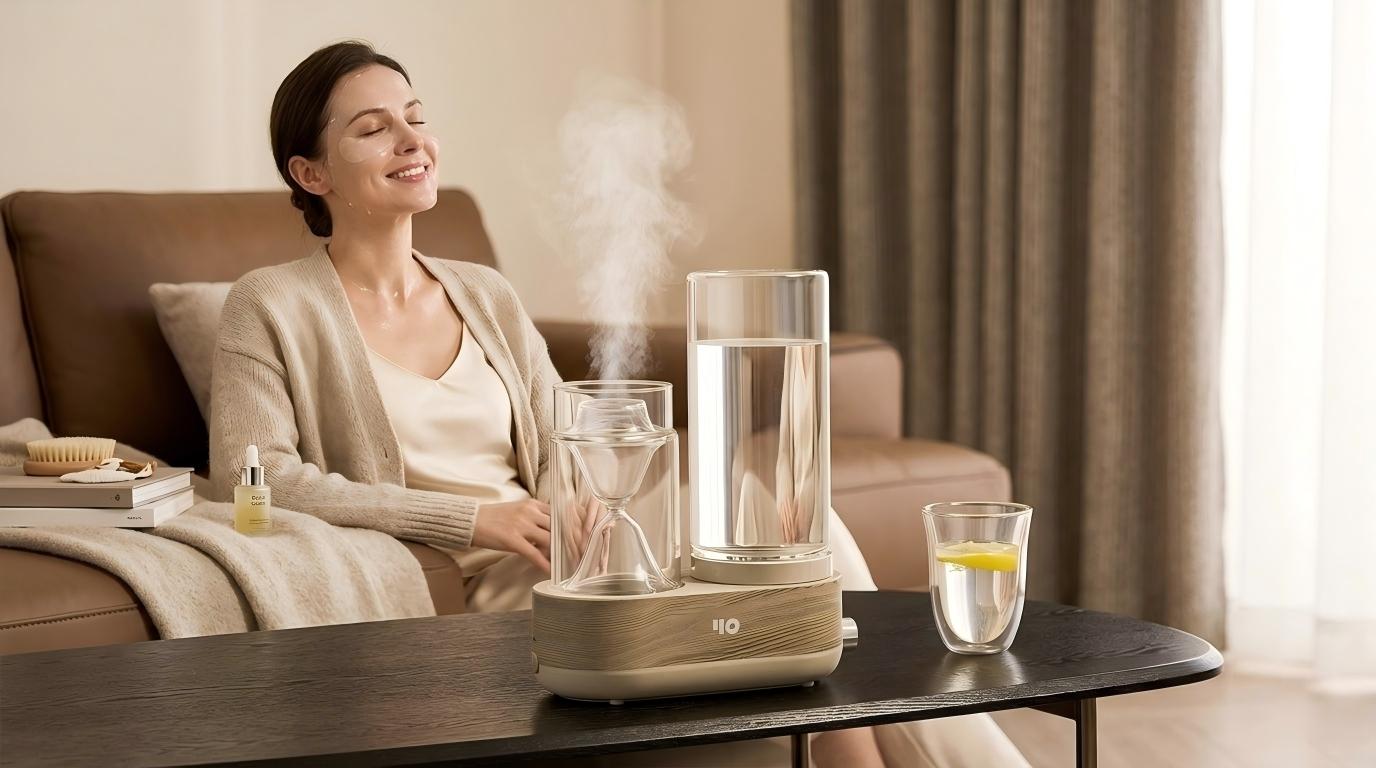

There's a reason every high-end facial starts the same way: warm steam on the face.
Before the serums, before the masks, before anything else — the esthetician softens your skin with steam. It's the step that makes everything after it work better.
You can recreate that exact ritual at home. The catch: the steam and the oils you use both matter more than most people realize.
A facial sauna isn't about heat for its own sake. It's about preparing the skin to receive — softening the surface, opening the routine, and pairing warm vapor with the right botanical oils to turn five minutes into a genuine ritual.
What a Facial Steam Actually Does for Your Skin
Warm steam works on the skin in a few simple, well-understood ways. None of them are magic — they're just physics and skin biology.
First, warmth softens the outermost layer of skin. A softened surface feels suppler and lets the products you apply afterward spread and absorb more evenly.
Second, gentle heat encourages a flushed, rosy look. That fresh-from-a-walk glow is simply increased circulation at the skin's surface.
Third — and this is the part people miss — steam adds moisture to the air right at your face. That brief humidity boost is the foundation of every step that follows.
The ritual is simple. The variables that make it feel luxurious — or leave skin irritated — come down to two things: the quality of the steam, and the oils you pair with it.
Why Transepidermal Water Loss Is the Real Target
Here's the concept that ties a facial sauna together: transepidermal water loss, or TEWL.
TEWL is simply the water that constantly evaporates from your skin into the air. Everyone experiences it. When it happens faster than your skin can keep up, skin starts to feel tight, dry, and dull.
A facial steam session works with this in two stages. The warm vapor briefly floods the skin's surface with humidity. Then — and this is the key — you immediately seal that moment in with the right oil or moisturizer.
Steam alone doesn't hydrate long-term — the water evaporates away as fast as it arrived. The ritual works when you follow steam with a botanical oil that helps slow that evaporation, supporting the skin's own moisture barrier.

This is why a facial sauna and essential oils belong together. The steam opens the ritual; the oils complete it.
The Oils That Make Steam a Ritual
Once you understand the steam-then-seal idea, the oils stop being an afterthought. Each one brings a different quality to the session — for the skin and for the senses.
A quick, important distinction: most plant oils fall into two groups. Essential oils are concentrated aromatics you add to the water for scent and atmosphere. Carrier oils are the nourishing oils you smooth onto skin afterward to seal everything in.
| Botanical | Type | What It Brings to the Ritual |
|---|---|---|
| Lavender | Essential | Calming, soft floral aroma; the classic choice for a soothing wind-down session |
| Rose | Essential | Luxurious, romantic scent long associated with pampering and self-care rituals |
| Frankincense | Essential | Warm, resinous aroma; a favorite in mature-skin routines for its grounding quality |
| Geranium | Essential | Fresh, green-floral note often chosen to balance combination skin routines |
| Tea Tree | Essential | Crisp, clean scent popular in routines for oilier, blemish-prone skin |
| Jojoba | Carrier | Lightweight seal that closely mimics skin's own surface oils; rarely greasy |
| Rosehip | Carrier | Rich in skin-loving fatty acids; a beloved finishing oil in glow-focused routines |
| Squalane | Carrier | Ultra-light, fast-absorbing seal that suits nearly every skin type |
Important: essential oils are highly concentrated and should never be applied directly to skin undiluted. In a facial sauna, they go in the water — never straight onto your face.
Matching Oils to Your Routine
You don't need all of them. Pick based on the mood and the routine you're building.
- For a calming evening ritual: lavender or rose in the water, jojoba to seal
- For a mature-skin pampering routine: frankincense in the water, rosehip to seal
- For combination or oilier skin: geranium or tea tree in the water, squalane to seal
- For a simple first-timer session: a single drop of lavender, any light carrier oil after
How to Run a Facial Sauna at Home, Step by Step
The whole ritual takes about fifteen minutes, start to finish.
- Cleanse first — start with a clean, makeup-free face
- Add 1–2 drops of essential oil to the water reservoir, never more
- Keep your face at least 15 cm from the steam, eyes closed
- Steam for 5–10 minutes, breathing slowly — this is the relaxing part
- Gently pat skin, don't rub, when you're done
- Seal immediately with a carrier oil or your usual moisturizer while skin is still warm
- Don't steam longer than 10 minutes — more is not better for the skin
- Don't put your face directly over a steam outlet; keep a comfortable distance
- Don't apply essential oils undiluted to your skin at any point
- Don't steam daily if your skin feels tight afterward; 2–3× a week is plenty
Why the Steam Source Matters More Than You'd Think
Here's where most at-home facial steam setups quietly fall short.
A bowl of hot water cools within minutes and gives you no control. A cheap plastic facial steamer introduces a different problem: heated water sitting against plastic, hour after hour, session after session.
When essential oils — which are natural solvents — meet warm plastic, the surface can break down over time. That's the last thing you want in vapor rising directly toward your face.
For a ritual built around skin and self-care, the material of the steam source isn't a detail — it's the whole foundation. Heated essential oils against plastic can degrade the surface, and that vapor goes straight to your face.
There's also the consistency problem. Most basic steamers mix oil straight into the water, so concentration is anyone's guess — strong one minute, gone the next.
A proper facial sauna ritual needs three things a bowl or a plastic steamer can't reliably give you: clean material, stable warmth, and controlled oil delivery.
Glass, Not Plastic — Where Your Ritual Should Start
The Yo-A1 pairs borosilicate glass with steam heat and true water-oil separation — purpose-built for a facial sauna ritual you'll actually keep.
Meet the Yo-A1 →Building the Ritual Around the Yo-A1
Once you've decided the steam source matters, the spec for a facial sauna becomes clear — and it's exactly what the Y&O Yo-A1 was built around.
The reservoir is 1,600ml borosilicate glass — the same material used in laboratory glassware. It's chemically inert, so heated essential oils never meet a plastic surface. For a ritual where the vapor rises toward your face, that's the part that matters most.
The heating system brings water to 100°C (212°F), then releases steam at a gentle ~50°C (122°F). Warm enough to feel like a spa, soft enough to sit with comfortably for the length of a session.
And because it uses true water-oil separation, your essential oil diffuses as a consistent, controlled vapor — not dumped into the water where concentration swings wildly. Your ritual feels the same every single time.
There's a bonus most people discover later. After your facial session, the same glass unit becomes a quiet room humidifier — gently supporting the skin's moisture barrier against everyday water loss, long after the ritual ends.

So the same device anchors two routines: the focused facial sauna a few times a week, and the background humidity that keeps skin comfortable every day.
Independent reviews showing the glass unit in real homes:

Your Five-Minute Glow Ritual Starts Here
Borosilicate glass · gentle steam · true water-oil separation · whisper-quiet. The Yo-A1 turns steam-and-oils into a ritual you'll keep.
Shop the Yo-A1 →Frequently Asked Questions
How often should I do a facial sauna?
For most skin types, 2–3 times a week is plenty. Steaming softens the skin's surface and supports your routine, but more isn't better — over-steaming can leave skin feeling tight. If your skin feels comfortable and looks fresh afterward, you've found your rhythm. If it feels dry, cut back to once a week.
Which essential oils are best for a facial steam?
It depends on the mood and routine you want. Lavender and rose are lovely for a calming evening ritual. Frankincense is a favorite in mature-skin pampering routines. Geranium and tea tree suit combination or oilier skin. Use just 1–2 drops in the water — never apply essential oils directly to your face.
What's the difference between essential oils and carrier oils here?
Essential oils are concentrated aromatics you add to the steam water for scent and atmosphere. Carrier oils — like jojoba, rosehip, or squalane — are the nourishing oils you smooth onto your skin after steaming to seal in that moment of hydration. The ritual uses both: essential oils in the water, carrier oils on the skin.
Why use a glass steamer instead of a bowl of hot water?
A bowl cools within minutes and gives you no control over temperature or oil concentration. A glass steam unit holds a steady, gentle warmth for the whole session and — with water-oil separation — keeps the aromatic vapor consistent. It also avoids the plastic-contact issue that comes with cheaper plastic steamers when heated essential oils are involved.
Can I use my facial steamer as a humidifier too?
With the Yo-A1, yes. Its 1,600ml reservoir and 8-hour runtime mean that after your facial session, the same glass unit works as a quiet room humidifier. That background humidity helps keep your skin comfortable against everyday water loss — so one device covers both the focused ritual and daily skin comfort.
Is facial steaming suitable for sensitive skin?
It can be, with a gentler approach: shorter sessions (around 5 minutes), more distance from the steam, and a mild single oil like lavender at just one drop. Keep the steam warm rather than hot. If you have a diagnosed skin condition, check with a dermatologist before adding steam or essential oils to your routine.
References
- U.S. EPA — Indoor Air Quality: epa.gov/indoor-air-quality-iaq
- USGS — Water Hardness: usgs.gov — Water Hardness
- Justia Patents — Steam Diffusion Patent 11052167: patents.justia.com/patent/11052167