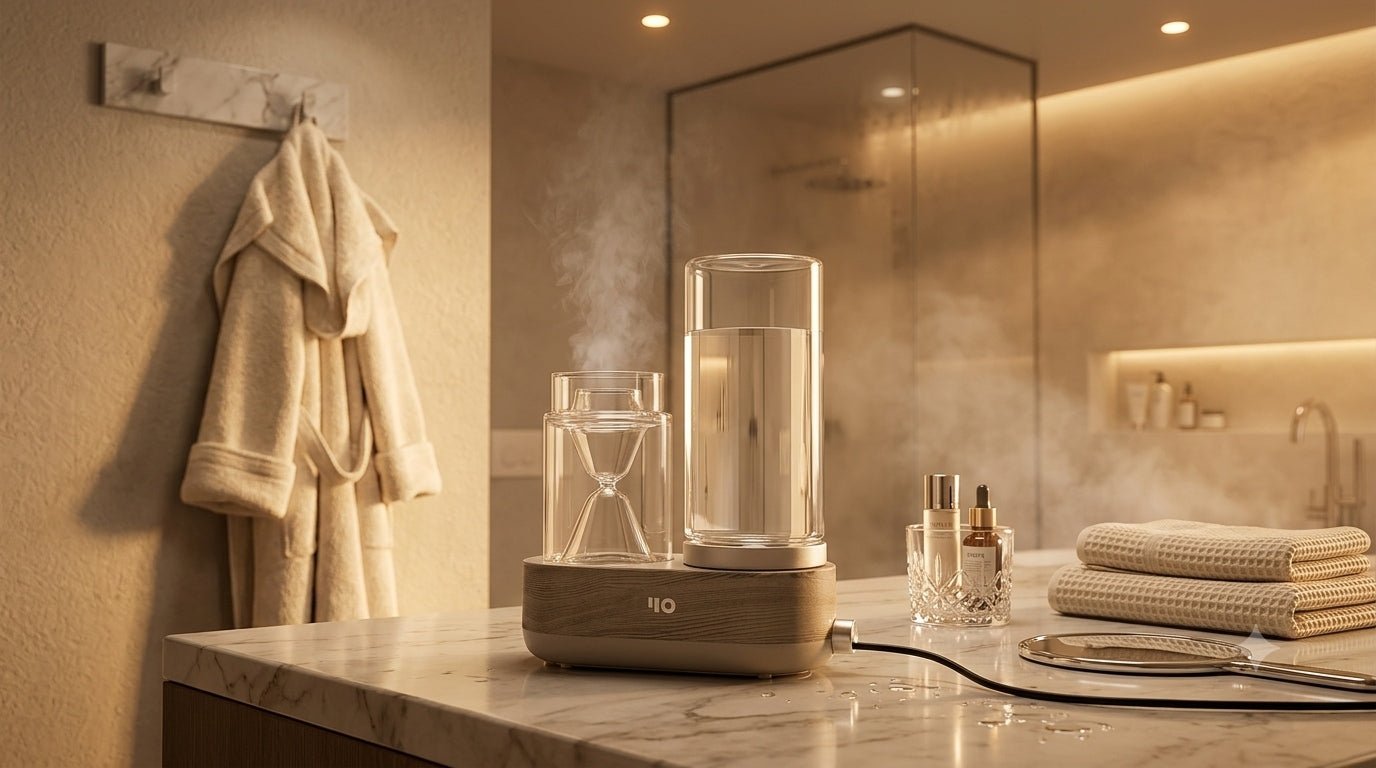

You step out of the shower. Your skin is warm. The room is still steamy. Everything feels a little softer than usual.
Then you check your phone, and three minutes later the moment is gone.
That window — the two to three minutes right after a shower when skin is warm and the surface feels receptive — is one of the most underused moments in any skincare routine. Most people don't have a ritual built around it. Most people don't even notice it passing.
A post-shower essential oil ritual isn't about adding more steps. It's about using the sensory environment you've already created — warm air, quiet, the lingering steam — and giving your skin and your senses something to land in before the rest of the day (or night) begins.
The 3-Minute Window After a Shower
Hot water does something interesting to the skin's surface. The warmth temporarily softens the outermost layer, and the steam-saturated air around you means the moisture gradient between your skin and the environment is briefly much smaller than usual.
This is the moment your carrier oils and moisturizers feel like they glide on — because in a real sense, they do. The surface is warm, softened, and ready to receive. Apply a few drops of a carrier oil in this window and it spreads easily, leaving skin looking dewy and comfortable.
Wait ten minutes until you're dressed and dry, and that same oil feels different. The moment has passed.
The two to three minutes immediately after stepping out of a warm shower are when skin feels most receptive to the carrier oils you apply. A diffuser running during this window adds a sensory layer — aromatic steam that extends the feeling of the shower into the ritual that follows it.
Why Scent Makes a Ritual Actually Stick
Most skincare habits fail not because people don't know what to do, but because nothing signals the brain that it's time to do it.
Behavioral research on habit formation consistently points to three elements: a cue, a routine, and a reward. The cue is the trigger that initiates the behavior — and scent is one of the most effective cues available because it connects directly to the brain's limbic system, bypassing the reasoning layer that might otherwise say "I'll do it later."
When you consistently pair a specific aromatic oil with your post-shower routine, the scent itself becomes the trigger. You smell it, and the habit initiates — not as a decision, but as an automatic response. This is why rituals built around a consistent scent tend to hold better than those built around discipline alone.
The olfactory pathway connects directly to the limbic system — the brain's center for emotion and automatic behavior. A consistent post-shower scent may help the ritual move from "something I try to remember" to "something that just happens," in the same way a specific coffee smell signals morning to most people.
Essential Oils for a Post-Shower Atmosphere
Post-shower calls for a different register than morning. You've just washed the day off — or you're transitioning into evening. The oils that suit this moment tend to be warmer, quieter, and more grounding than the citrus-sharp notes of a wake-up ritual.
| Essential Oil | Sensory Character | Best For | Drops |
|---|---|---|---|
| Lavender | Soft, familiar, settling | Evening shower wind-down | 2–3 |
| Sandalwood | Warm, smooth, luxurious | Slow, unhurried evenings | 2 |
| Frankincense | Resinous, grounding, quiet | Meditative post-shower ritual | 2 |
| Rose | Rich, floral, sensory | Pampering or weekend ritual | 1–2 |
| Ylang Ylang | Exotic, sweet, intense | One drop only — very potent | 1 |
| Bergamot | Floral-citrus, nuanced | Evening that still needs a lift | 2 |
| Cedarwood | Woody, steady, calm | Before bed transition | 2–3 |
A note on what to avoid after a shower: peppermint and eucalyptus — excellent for mornings — can feel jarring in the post-shower context. Their sharp, opening quality works against the settling feeling most people want when they step out of a warm shower in the evening.
The Other Half: Carrier Oils for After the Shower
Essential oils in the diffuser create the atmosphere. Carrier oils on the skin complete the ritual.
The two serve different purposes and shouldn't be confused. Diffused essential oils are aromatic — they create a sensory environment. Carrier oils applied to skin are the nourishing element — they spread across warm, post-shower skin and leave it feeling comfortable and smooth.
| Carrier Oil | Texture | How It Feels Post-Shower | Best For |
|---|---|---|---|
| Jojoba | Lightweight, fast | Absorbs quickly, leaves skin feeling smooth | Everyday use, any skin type |
| Argan | Light-medium, silky | Luxurious feel, leaves a subtle glow | Pampering evenings |
| Squalane | Ultra-light, dry finish | Disappears almost instantly, no greasy feel | Oilier skin, quick rituals |
| Sweet Almond | Medium, slightly rich | Feels nourishing on very dry skin | Winter or dry climate use |
| Rosehip | Medium, slightly dry | Rich feel, popular in facial rituals | Face-focused evening ritual |
Apply to still-damp skin right after stepping out — the warmth helps it spread evenly. A few drops go further than you'd expect when the skin surface is warm.

Building the Post-Shower Ritual, Step by Step
- Start the diffuser before or as you step into the shower — so the scent is already present when you step out
- Choose one oil and keep it consistent — the ritual strengthens when the scent becomes a reliable cue
- Apply carrier oil to still-damp skin immediately after toweling off lightly — while the surface is still warm
- Use 2–3 drops of essential oil in the diffuser for a bathroom-adjacent space; 1–2 drops if the diffuser is inside a small enclosed bathroom
- Let the ritual take 5 minutes — no rush, no phone, just the scent and the skin
- Don't use peppermint or eucalyptus for an evening post-shower ritual — they're energizing when you want to be settling
- Don't apply undiluted essential oils directly to skin — always use a carrier oil as the base
- Don't run a diffuser in a very small, unventilated bathroom for extended periods — crack the door after your shower
- Don't skip the carrier oil step and expect the diffused oil alone to do the work — they serve completely different functions
Why the Device Matters More in a Steamy Environment
Running a diffuser in or near a bathroom after a shower puts it in one of the most demanding environments a diffuser will encounter: warm, humid air with elevated moisture levels from the shower steam.
For a plastic ultrasonic diffuser, this environment accelerates the exact problems that affect it anyway: the plastic reservoir, already in contact with essential oils, is now also in a warm humid environment. Plastic degradation from oil contact and heat happens faster. The mineral mist from hard tap water lands on damp skin surfaces rather than dry ones.
And there's a subtler issue: in the already-humid post-shower air, the cold mist output of an ultrasonic diffuser adds more water to air that doesn't need more water. The result can feel heavy rather than clean.
After a hot shower, the air is already humid. A cold ultrasonic mist adds more moisture and mineral particulate into an environment where you don't need it. A glass steam unit produces a consistent, dry-feeling aromatic vapor — adding scent without adding humidity the room doesn't need.
A post-shower ritual deserves a device that's built for the conditions. Glass that won't degrade with oil contact. A heating mechanism that sterilizes the reservoir. Output that's aromatic without being heavy in an already-humid room.
Built for the Moments After a Shower
Borosilicate glass · steam heat · water-oil separation · whisper-quiet. The Yo-A1 produces clean aromatic vapor without adding unwanted humidity to a room that already has plenty.
Meet the Yo-A1 →The Yo-A1 in a Post-Shower Ritual
The Yo-A1 handles the post-shower environment differently than an ultrasonic unit — and the differences matter when the ritual happens every evening.
The 1,600ml borosilicate glass reservoir means essential oils never contact plastic — not in the warm, humid post-shower environment, not after months of daily use. The glass stays inert regardless of how many evenings you run lavender or sandalwood through it.
Because the heating element brings water to 100°C (212°F) before diffusion, the reservoir is sterilized at the start of every session. You're not carrying yesterday's water into today's ritual. And because it produces steam rather than atomized water, there's no additional mineral mist layered onto already-humid post-shower air.
The output is aromatic vapor — scent, warmth, the feeling of the ritual being present — without the heaviness of added cold mist in a room that doesn't need more moisture.
Set it up before your shower. By the time you step out, the scent is already there waiting. The ritual starts before you've made a decision about it.

Independent reviews of the Yo-A1 in home environments:
Start It Before the Shower. Step Out Into the Ritual.
Glass reservoir · 100°C sterilization · aromatic steam output · 8-hour runtime. The Yo-A1 turns the three minutes after your shower into the best part of the evening.
Shop the Yo-A1 →Frequently Asked Questions
Can I use a diffuser in the bathroom after a shower?
Yes — but with a few considerations. The post-shower bathroom is warm and humid, which is actually a pleasant environment for diffusing. The concern is with the device: plastic ultrasonic diffusers in humid, warm conditions can accelerate oil-plastic degradation and produce a heavier mist output in air that's already saturated. A glass steam diffuser is better suited — it produces aromatic vapor without adding cold mineral mist to an already-humid room, and the glass reservoir doesn't degrade with oil contact over time.
What essential oils are best after a shower?
Post-shower calls for warmer, more grounding scents than a morning routine. Lavender is the most popular choice for an evening wind-down. Sandalwood and frankincense suit slower, more meditative rituals. Rose and bergamot work well for a slightly more sensory experience. Cedarwood is a good transition oil before sleep. Avoid peppermint and eucalyptus after an evening shower — they're energizing in a way that can work against settling into rest.
How many drops of essential oil should I use after showering?
For a bathroom-adjacent bedroom or dressing area, 2–3 drops is a good starting point. If you're placing the diffuser inside a small, enclosed bathroom, start with 1–2 drops — the space is smaller and already warm, so scent concentrates faster than in an open room. With potent oils like ylang ylang or rose, one drop may be enough. You can always add more; an overly strong scent in a steamy bathroom can feel overwhelming rather than relaxing.
Can I put essential oils directly on my skin after a shower?
Not undiluted. Essential oils are highly concentrated and can cause irritation or sensitization when applied directly to skin without a carrier oil. After a shower, apply a few drops of a carrier oil — jojoba, argan, squalane, or sweet almond — to still-damp skin, and let the essential oil do its aromatic work via the diffuser. If you want to incorporate a specific oil topically, dilute it in the carrier oil first: typically 1–2 drops of essential oil per teaspoon of carrier oil.
Is it safe to run a diffuser in a steamy bathroom?
Generally yes, with ventilation. The main consideration is the device: plastic diffusers in warm, humid environments can degrade faster and may produce inconsistent output. A glass steam unit is more stable in these conditions. For air quality, make sure the bathroom has some airflow — even a slightly open door — so the aromatic vapor can circulate rather than concentrate in a sealed space. Don't run any diffuser in a completely sealed, unventilated bathroom for extended periods.
What's the difference between diffuser oils and carrier oils for skin?
They serve completely different purposes. Essential oils are concentrated aromatics that go in the diffuser — they create the sensory environment of the ritual. Carrier oils (jojoba, argan, squalane, etc.) are the nourishing oils you apply directly to skin after a shower — they spread across warm skin and leave it feeling smooth and comfortable. You don't put essential oils in a carrier role on skin without diluting them first, and you don't put carrier oils in a diffuser. Both have their place in the ritual; neither replaces the other.
References
- U.S. EPA — Indoor Air Quality: epa.gov/indoor-air-quality-iaq
- CDC — Indoor Environmental Quality: cdc.gov/niosh/topics/indoorenv
- Justia Patents — Steam Diffusion Patent 11052167: patents.justia.com/patent/11052167