Skip to content

The world's healthiest humidifier: Up to 15% off | Shop now

Blog

Humidifier and Croup: How to Help Your Child Breathe Easier

Humidifier and Croup: How to Help Your Child Breathe Easier

Humidifier and Croup: How to Help Your Child Breathe Easier That frightening barking cough hits without warning, usually around 2 AM when everything feels worse. Your child's breathing becomes noisy and labored, their little chest working hard with each breath—and you just want to help them feel better, now. Using a humidifier and croup care together actually works: moist air soothes the swelling in your child's airways and makes breathing easier while their body fights off the virus. When Your Child's Cough Wakes the Whole House There's no mistaking that sound—a harsh, seal-like bark that jolts you awake and sends you running to your child's room. Their breathing is strained, maybe even making a high-pitched whistle with each inhale, and you can see the worry in their eyes. Croup doesn't give warnings; it strikes suddenly and peaks during nighttime hours when pediatricians' offices are closed and everything feels more urgent. Here's what helps: moist air genuinely calms the inflammation in your child's throat and windpipe. When those small airways are swollen, humid air reduces the swelling and opens things up so breathing becomes less of a struggle—it's not just comfort, it's measurable relief. A humidifier for croup becomes essential once you've been through an episode. Having one set up and ready means you can start easing your child's airways immediately instead of watching them struggle while you scramble for solutions. Just remember that humidifiers provide supportive care, not medical treatment. If your child's breathing becomes severely labored, their lips turn blue, they're drooling excessively, or they can't make sounds, seek emergency care immediately. How Dry Air Makes Croup Worse When your child is already dealing with croup, dry air becomes the enemy. It doesn't just fail to help—it actively makes things worse by irritating their inflamed airways and intensifying symptoms throughout the night. It Irritates Their Sore Throat Dry air feels like sandpaper against your child's already-swollen throat and windpipe. Every breath they take in that parched air triggers more coughing and irritation, making an already uncomfortable situation even more distressing for them. It Thickens Mucus Without enough moisture, the secretions in their airways become sticky and thick. This makes it harder for your child to clear their throat, leading to more coughing fits and even more difficulty breathing. Their body is trying to protect those inflamed tissues, but dry air makes that mucus work against them instead. It Creates a Vicious Cycle The drier the air gets, the more your child's airways react and tighten up. This leads to worsening symptoms that escalate through the night—more coughing, harder breathing, less sleep for everyone. Winter is especially brutal for croup because heating systems strip moisture from indoor air. That's exactly why croup symptoms often peak during cold, dry months when your home's air is at its driest. Why Does Humid Air Help with Croup? Croup causes swelling in your child's throat and windpipe, which creates that distinctive barking cough and noisy, labored breathing. When those small airways are inflamed and narrowed, adding moisture to the air they breathe can make a genuine difference. It Soothes Swollen Tissues Moist air works directly on the inflamed tissues in your child's throat. When they breathe in humidity, it calms the swelling and helps their airways relax and open up. It's the same reason steam from a hot shower helps when they're congested—moisture just works. It Makes Breathing Easier As humid air reaches your child's swollen windpipe, breathing becomes less of a struggle. That tight, raspy feeling eases up, and the harsh coughing often becomes less intense. You're essentially creating a personal steam room for your little one, but one they can breathe in comfortably all night long. It Supports Their Recovery Using a humidifier and croup management together helps ease your child's symptoms while their body fights off the virus. The moisture won't cure croup, but it makes the episode more bearable and helps them rest better—which is exactly what their growing body needs to recover. What's the Right Humidity Level for Croup Relief? When your child is dealing with croup, humidity matters—but the exact level makes all the difference between relief and creating new problems for their sensitive airways. Aim for 40% to 60% Humidity This is the range that has been shown to alleviate croup symptoms without causing any harm. Your child's airways receive 40–60% moisture, which is below the threshold where mold and dust mites flourish, yet provides enough moisture to keep them comfortable and less swollen. This series is regularly suggested by pediatricians and medical professionals for children's respiratory relief. Below 40% Makes Croup Worse Your child's throat and windpipe will rapidly dry out when the humidity falls below 40%. This exacerbates that barking cough and makes breathing more difficult, which is precisely what you want to avoid. Anything less than 40% hinders their ability to recuperate since their irritated airways require moisture to repair. Above 60% Creates Different Problems You're exchanging one issue for another if you raise the humidity above 60%. Your child's already delicate airways may become irritated by mold and dust mites, which are both encouraged by excessive wetness. While some parents believe that "more is better" when it comes to humidity during croup, going overboard might actually make coughing and breathing more difficult. Don't guess your humidity level—measure it with a hygrometer ($10-15 at any store). Place it in your child's room where you're using your humidifier for croup, check it regularly, and adjust your settings to maintain that 40-60% sweet spot throughout the night. Cool Mist vs. Warm Steam: Which Type Works Better? When you're shopping for a humidifier for croup, you'll face a basic choice: cool mist or warm steam. Both add moisture to the air, but they work differently and come with distinct trade-offs for your child's safety and comfort. Here's how they compare: Feature Cool Mist Humidifier Steam Humidifier (Warm Mist) How It Works Uses a fan or ultrasonic vibrations to disperse room-temperature moisture Boils water to create steam, like a tea kettle Safety Safe to place anywhere—no hot surfaces or burn risk Requires careful placement out of children's reach due to hot steam Germ Control Can harbor mold and bacteria if not cleaned daily Boiling kills 100% of bacteria, mold, and viruses—completely sterile White Dust Ultrasonic types create mineral dust from tap water Zero white dust—minerals stay in the unit Energy Use Energy-efficient, lower electricity costs Uses more energy to boil water Maintenance Requires daily cleaning to prevent contamination Less frequent cleaning needed due to sterilization Best For Busy families, warm weather, when placed in child's room unsupervised Maximum croup relief, sterile air quality, soothing warmth for inflamed airways For croup relief specifically, a steam humidifier is better than a cool mist humidifier in terms of sterility and soothing warmth—the boiling process guarantees clean moisture that won't add bacteria to your child's already-inflamed airways. However, cool mist humidifiers are better than steam models for safety and placement flexibility, making them the preferred choice for many pediatricians when the unit needs to be in a child's bedroom unsupervised. When Humidifiers Make Things Worse Here's what nobody warns parents about: a dirty humidifier can actually worsen your child's croup symptoms. If you're not cleaning it properly, you might be doing more harm than good. Dirty Humidifiers Spread Germs Skip cleaning your cool mist humidifier for even a day or two, and it becomes a breeding ground for mold and bacteria—then sprays it directly into the air your child breathes. You think you're providing relief, but they're actually inhaling contaminants with every breath. Small Airways Can't Handle Extra Irritants When croup has your child's airways swollen and struggling, adding mold spores or bacteria to the mix can trigger secondary infections or allergic reactions. Their respiratory system is already working overtime—don't make it worse with a contaminated humidifier. White Dust Gets Breathed In That white powder from ultrasonic humidifiers using tap water? Those mineral particles don't just settle on furniture—they get inhaled straight into your child's sensitive, inflamed airways. Clean your humidifier daily with citric acid or vinegar—not just a rinse. Use distilled water to eliminate white dust. Better yet, choose a steam humidifier that boils water for automatic sterilization. A dirty humidifier is worse than no humidifier at all. Why Warm Steam is the Best Choice for Croup When it comes to croup relief, steam humidifiers have earned their reputation as the gold standard. There's a reason pediatricians have recommended warm, moist air for children's throat swelling for generations—it simply works better. Boiling Kills Everything The high temperatures in a steam humidifier destroy 100% of bacteria, viruses, and mold spores before they ever reach the air your child breathes. You're not hoping your humidifier is clean—you know the steam is completely sterile. No other humidifier type can guarantee that level of purity for your child's sensitive airways. Zero Mineral Dust The boiling process leaves all minerals behind in the unit, so what comes out is pure water vapor. No white dust settling on surfaces, no mineral particles irritating your child's inflamed throat. Just clean moisture that helps instead of harms. It's Proven to Work Warm, moist air has been the trusted remedy for throat swelling and tight airways for generations. That soothing warmth helps relax your child's constricted airways and calm that harsh barking cough in a way that cool air simply doesn't match. Peace of Mind When Your Child Needs It Most During a croup episode, every breath your child takes matters. Knowing they're breathing the cleanest possible air—free from germs, mold, and mineral particles—gives you one less thing to worry about at 2 AM. This is especially valuable if your child experiences croup repeatedly or has other respiratory sensitivities. How to Use Your Humidifier Safely and Effectively Getting a humidifier for croup is only half the battle—using it correctly makes all the difference between real relief and wasted effort for your child. Place It at the Right Distance Set your humidifier 3-4 feet away from your child's bed, not right on their nightstand. This distance lets the moisture disperse properly without making bedding damp. If you're using a steam humidifier, place it on a stable, elevated surface like a dresser where your child absolutely cannot reach it—hot steam poses a serious burn risk. Run It Through the Night Start your humidifier before your child's bedtime and let it run continuously through the night. Croup symptoms typically peak between midnight and early morning, so you want that moisture working when they need it most. Consistent humidity gives better relief than stopping and starting. Clean It Every Single Day Each morning, empty all the water from the tank and base. Rinse both thoroughly with clean water and let them air dry. Once a week, do a deep clean: fill the tank with white vinegar and water (1:1 ratio), let it sit for 30 minutes, scrub with a soft brush, and rinse completely. Use Distilled Water Only Skip tap water and use distilled or demineralized water instead. This prevents mineral buildup and eliminates white dust that could irritate your child's airways. You'll find distilled water at any grocery store for around $1 per gallon—a small price for protecting your child's sensitive respiratory system. Monitor Your Humidity Level Keep a hygrometer in your child's room and check it regularly. Adjust settings to maintain 40-60% humidity. If it climbs above 60%, turn down the output. If it drops below 40%, increase the setting. Match Size to Your Child's Room Check your humidifier's coverage area (listed in square feet on the box). A small unit won't effectively humidify a large bedroom. Most children's bedrooms need a unit rated for 300-500 square feet. For more on what makes a humidifier truly safe and effective, see our ultimate guide to healthy humidification. Y&O Steam Plus: Clean Steam for Your Entire Home When croup strikes your child at night, you need clean, safe humidity—not a humidifier that creates new problems. The Y&O Steam Plus is built specifically for families dealing with respiratory issues. 99.9% Sterile Mist The Steam Plus heats water to 212°F to kill all bacteria, viruses, and mold, then cools it to a comfortable 122°F before it reaches your child. You get completely sterile warm mist that's safe for their sensitive airways—no guessing, no worrying about what they're breathing. Covers Your Whole Home With coverage up to 1000 square feet and a 10-liter capacity, it humidifies your entire home, not just your child's bedroom. The two removable 5-liter tanks run all night without refilling, providing consistent relief when croup symptoms hit hardest in those early morning hours. No White Dust, No Filters The heating process leaves minerals behind in the unit, so there's zero white dust irritating your child's airways. The filterless design means nothing to replace—ever. Just add distilled water and let it work. Runs Itself The built-in sensor monitors humidity and adjusts automatically to maintain that ideal 40-60% range. Choose Sleep, Auto, or Powerful mode, and it handles the rest while your child recovers and you finally get some rest too. When your child is struggling to breathe, you need humidity you can trust. The Y&O Steam Plus delivers hospital-grade clean steam throughout your home with zero daily maintenance—one less thing to worry about during difficult nights. Help your child breathe easier during croup—see how Y&O Steam Plus delivers sterile humidity to your entire home. Helping Your Child Through Croup at Home A humidifier for croup really does help—you just need to use it right. Keep humidity between 40-60%, clean it daily if it's cool mist, or choose sterile steam to skip the maintenance hassle. The Y&O Steam Plus takes the guesswork out with hospital-grade clean steam for your whole home. When that barking cough wakes your child at 2 AM, you'll be ready to help them breathe easier.

Explore Now
What Is the Safest Humidifier for Baby?

What Is the Safest Humidifier for Baby?

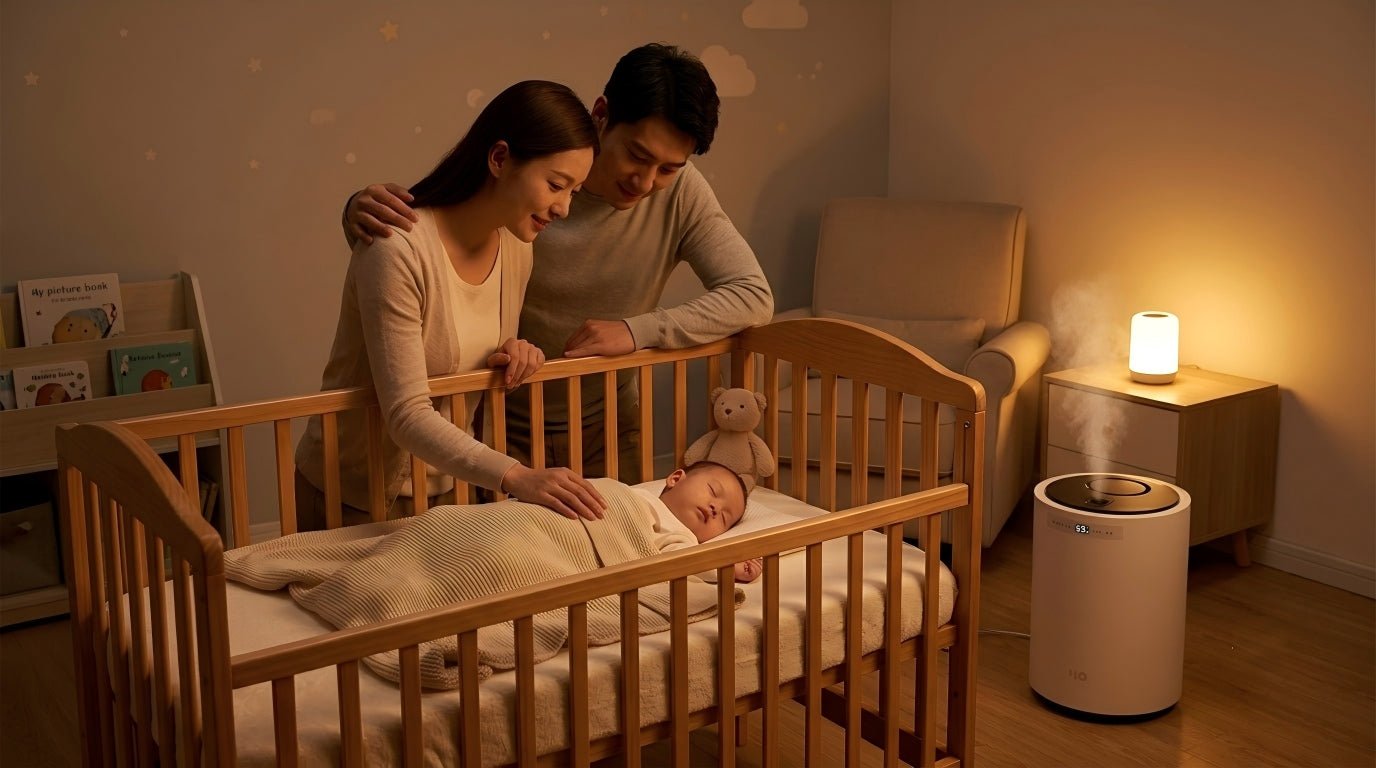
What Is the Safest Humidifier for Baby? Your baby's skin is dry, their nose is stuffy, and someone told you a baby humidifier would help. But now you're staring at dozens of options wondering which cool mist humidifier or steam humidifier won't become a mold factory in your nursery. We'll break down what actually matters for safety so you can stop second-guessing and start helping your little one breathe easier. Why Parents Use Humidifiers (And Why Safety Comes First) Dry air makes everything harder for babies. You've probably noticed your little one waking up with a stuffy nose, developing dry skin patches, or coughing more at night. A humidifier for baby rooms can genuinely help with these issues, but the tricky part is knowing which one is actually safe. Here's what the right humidity level does: 1. Clears stuffy noses faster. Moisture thins out thick mucus so it drains naturally instead of blocking tiny nasal passages. 2. Stops dry, itchy skin. Proper humidity keeps your baby's delicate skin from cracking and getting irritated. 3. Reduces nighttime coughing. Moist air soothes scratchy throats so everyone sleeps better. 4. Keeps the air comfortable at 40-50% humidity. This sweet spot prevents both dry air problems and mold growth. But here's the worry: what if your nursery humidifier spreads bacteria or creates other problems? Some humidifiers can actually make the air quality worse if they're the wrong type. 3 Hidden Dangers in Baby Humidifiers 1. The Germ Problem Similar to a water bottle left in your car, water in a tank quickly becomes slimy. Within 24 hours, mold and bacteria begin to proliferate. The main problem is that a lot of cool mist humidifiers release this tainted water as a fine mist into the atmosphere. Throughout the night, your infant inhales it. Babies are more susceptible to illness than adults, so rather than improving your child's breathing, you may be contributing to the spread of viruses. 2. The Problem of White Dust Near your humidifier, do you see that fine white powder on the furniture? These are minerals that were released into the atmosphere from tap water. Calcium and other minerals are broken down into microscopic particles that float through the air by ultrasonic cool mist humidifiers. These can irritate your baby's airways because they are inhaled by their lungs. 3. The Burn Risk (Mostly Fixed Now) Old vaporizers could burn kids badly, and that fear still stops parents from considering steam humidifiers. The difference is that contemporary steam humidifiers chill the steam to roughly 50°C before releasing it, making it warm like shower steam rather than hot like boiling kettle steam. While maintaining the advantages of boiling, germ-free water, models with "temperature control" or "safe-touch steam" have resolved the long-standing burn issue. Types of Baby Humidifiers: What You Need to Know Cool Mist Ultrasonic Humidifiers Ultrasonic humidifiers vibrate water so fast that it turns into a fine, cool mist. Parents like them because they're nearly silent and use little electricity. The problem: the tank needs daily cleaning or bacteria spreads into your nursery air. They also leave white dust everywhere unless you use distilled water. If you skip cleaning for a few days, you're spraying germs into your baby's room. Best for: Parents who can commit to daily scrubbing and buying distilled water. Evaporative Humidifiers Evaporative humidifiers blow air through a wet filter, and water naturally evaporates into the room. They can't over-humidify (the air only takes what it needs) and don't create white dust. The downside: the wet filter grows mold and needs replacing every week or two. The fan can also be noisy during sleep. While safer than ultrasonic models, buying filters regularly gets annoying and expensive. Best for: Parents okay with weekly filter changes and some fan noise. Steam Humidifiers (Warm Mist) Steam humidifiers boil water like a kettle, then release steam into the room. Boiling kills 99.9% of germs naturally—no chemicals or daily scrubbing needed. There's no white dust, and regular tap water works fine. The worry: "Won't hot steam burn my baby?" Modern steam humidifiers cool the steam to 122°F (50°C) before it comes out—warm like shower steam, not scalding. Even if your baby got close, it wouldn't burn them. You get the cleanest mist with the least daily work—just rinse and refill. Best for: Busy parents who want safe, low-maintenance humidification. Quick Comparison Feature Cool Mist Ultrasonic Evaporative Steam (Warm Mist) Kills germs? No (unless you clean daily) Somewhat (filter dependent) Yes (boiling does it) White dust problem? Yes (unless using distilled water) No No Daily work Clean the whole tank Change filter weekly Just rinse and refill Noise Almost silent Fan hum Quiet Extra costs Distilled water adds up Filters every 1-2 weeks None Burn risk None None None (with modern 50°C models) If you want a nursery humidifier that cleans itself and doesn't need daily attention, modern steam humidifiers with temperature control are your best bet. Your Baby Humidifier Safety Checklist When you're comparing models online or standing in the store aisle, focus on the must-haves first—those keep your baby safe. ✅ The 7 Must-Haves (Don't Skip These) Safety Feature What to Look For Why It Matters 1. Germ Protection Boils water OR has UV light Stops bacteria from spreading into the air your baby breathes 2. Safe Temperature Steam comes out at 50°C or lower (for steam humidifiers) Warm to touch, not hot—won't burn if baby gets close 3. Easy Cleaning Wide opening—your hand fits inside If you can't reach in, you can't clean it properly 4. Right Size Covers 300+ square feet Small units won't humidify the whole nursery 5. Auto Shut-Off Turns off when water runs out Prevents overheating and fire risk 6. Quiet Under 35 decibels Won't wake your baby (quieter than a whisper) 7. Stable Base Heavy, wide bottom Won't tip over when toddlers bump into it Before you buy any humidifier for baby use, ask yourself: ☐ Does it sterilize the water somehow? ☐ Can I actually clean it without tools? ☐ Will it cover my baby's room size? ☐ Does it have the 7 must-haves above? If you answered "no" to any of these—keep shopping. A baby humidifier loaded with fancy features means nothing if it doesn't nail the safety basics first. For more on what makes a humidifier truly safe and effective, see our ultimate guide to healthy humidification. Y&O Steam Plus: Why This Steam Humidifier Stands Out The Y&O Steam Plus steam humidifier is designed specifically for families with babies and addresses the exact safety concerns parents worry about most. Here's what sets it apart: Complete sterilization process: Heats water to 212°F, killing 99.9% of germs, then cools steam to a comfortable 122°F through dual air ducts before releasing it into your home. Large capacity, easy maintenance: The 10-liter system uses two removable 5-liter tanks with wide openings that make weekly cleaning quick and simple. Whole-home coverage: With whole house humidifier capacity, it effectively humidifies spaces up to 1,000 square feet—ideal for bedrooms, living rooms, or nurseries. No ongoing costs: Filterless design means nothing to replace, just regular cleaning with water and vinegar. Smart automation: Built-in humidity sensor with sleep, auto, and powerful modes adjusts output automatically to maintain optimal levels. The best humidifier keeps air clean without creating extra work—and steam humidifiers like the Y&O Steam Plus deliver on both counts. How to Use Your Baby's Humidifier Safely Getting a humidifier for babyis one thing—using it correctly is another. Here's how to set it up and maintain it so it actually helps instead of causing new problems. Where to Place It Keep it 4-8 feet away from the crib. You want moisture spreading through the room, not blowing directly into your baby's face. Too close can make their bedding damp. Put it on a dresser or sturdy table. Elevating it helps the mist spread better and keeps it out of reach of curious toddlers. Make sure the surface is stable—you don't want it tipping over. Point it away from walls and furniture. If mist hits the wall constantly, you'll get mold or water damage. Aim it toward the center of the room. Refilling Your Humidifier Use the right water. For steam humidifiers, regular tap water is fine since boiling purifies it. For cool mist humidifiers, always use distilled water to prevent white dust and mineral buildup. Don't top off—empty first. Each time you refill, empty any remaining water first. Don't just add fresh water to old water. Even a steam humidifier can develop bacteria in standing water that didn't get boiled yet. Fill to the line, not beyond. Overfilling can cause leaks or prevent proper operation. Follow your model's maximum fill line. Wipe the tank opening. Before putting the tank back, wipe around the opening and base connection with a clean cloth to remove any residue. Daily Maintenance (Takes 2 Minutes) Every morning: 1. Empty any leftover water from the tank 2. Give it a quick rinse with clean water 3. Refill with fresh water Why dump yesterday's water? Because water sitting around grows bacteria fast—even in a steam humidifier. Starting fresh each day keeps things cleaner. Weekly Deep Clean (Takes 10 Minutes) Once a week: 1. Fill the tank halfway with white vinegar or citric acid and water 2. Let it sit for 20-30 minutes to break down mineral buildup 3. Scrub all the corners and crevices with a soft brush 4. Rinse thoroughly until there's no vinegar smell left 5. Let it air dry completely before refilling This prevents mineral deposits and keeps the unit running efficiently. What Water to Use For steam humidifiers: Regular tap water works fine. The boiling process purifies it and kills any contaminants, so you don't need to buy distilled water. For cool mist humidifiers: Use distilled water only. Tap water will create white dust all over your nursery furniture and put mineral particles in the air. How to Know It's Working Properly The room should feel comfortable, not sticky. If surfaces feel damp or clammy, you're over-humidifying. Check your windows. See condensation or water droplets forming? That means humidity is too high. Turn it down or run it less often. Get a hygrometer (they cost about $10-15 online). Keep the nursery between 40-50% humidity. Below 30% is too dry. Above 60% encourages mold growth. Your baby should breathe easier. Less congestion, fewer coughs at night, and skin that doesn't look dry or cracked are good signs it's helping. Safety Checks While Running Listen for unusual sounds. Gurgling is normal. Grinding, rattling, or buzzing means something's wrong—turn it off and check for issues. Watch for leaks. Check around the base daily. Leaks mean the tank isn't seated properly or a seal is damaged. Feel the mist temperature. For steam humidifiers, the output should be warm (around 122°F/50°C), not hot. If it feels scalding, stop using it immediately. Check the cord. Make sure the power cord isn't frayed, positioned where someone could trip, or creating a hazard. A baby humidifier only works well when you maintain it properly. But if you choose a steam humidifier, you're already doing less work than other types. Your Questions About Baby Humidifiers Answered Q1: Can I run the humidifier every night? Yes, as long as you keep the humidity between 40-50% and maintain it regularly. Running it every night is fine—just don't let the room get damp or you'll create mold problems. Q2: Is it safer to use warm or cool mist? Modern steam humidifiers with temperature control are safest because they kill germs through boiling and need less daily maintenance. Cool mist humidifiers require daily scrubbing or they spread bacteria. Q3: Is distilled water truly necessary? It depends on your type. Steam humidifiers boil the water, so regular tap water works fine. Ultrasonic cool mist humidifiers need distilled water or they'll create white dust everywhere. Q4: What is the maximum distance from the crib? Keep it away from the crib by at least 4 feet. Instead of blowing directly into your baby's face and getting their mattress wet, you want the wetness to permeate the entire space. Q5: How frequently should I really clean it? Cool mist types need daily rinsing and deep cleaning every 3 days. Steam humidifiers need daily rinsing but only weekly deep cleans since boiling handles sterilization. Q6: Will it create too much moisture in my baby's room? Not if you monitor it with a hygrometer (about $10). If you see condensation on windows or the room feels sticky, turn it down—you're over-humidifying. Q7: Can I add essential oils to my baby's humidifier? Most manufacturers say no, and pediatricians don't recommend it for babies under 6 months. Essential oils can irritate tiny airways and damage the humidifier's components. Q8: What if my baby has a cold—should I use it more? Yes, proper humidity helps thin mucus and makes breathing easier during congestion. Just stick to the 40-50% range—more isn't better and can make respiratory issues worse. Q9: How do I know if the humidity is helping my baby? Your infant should sleep better, have softer skin, and have less congestion. Make sure you aren't over-humidifying if symptoms worsen or if new problems (such as increased coughing) arise. Choosing Your Baby Humidifier with Confidence After comparing cool mist humidifiers, evaporative humidifiers, and steam humidifiers, the winner for most families is clear—modern steam with temperature control. It kills germs naturally, needs less maintenance, and eliminates white dust problems. The safest baby humidifier is the one you'll actually use correctly, so pick one that makes your life easier. If you want a nursery humidifier that does the safety work automatically, the Y&O Steam Plus checks all the boxes.

Explore Now