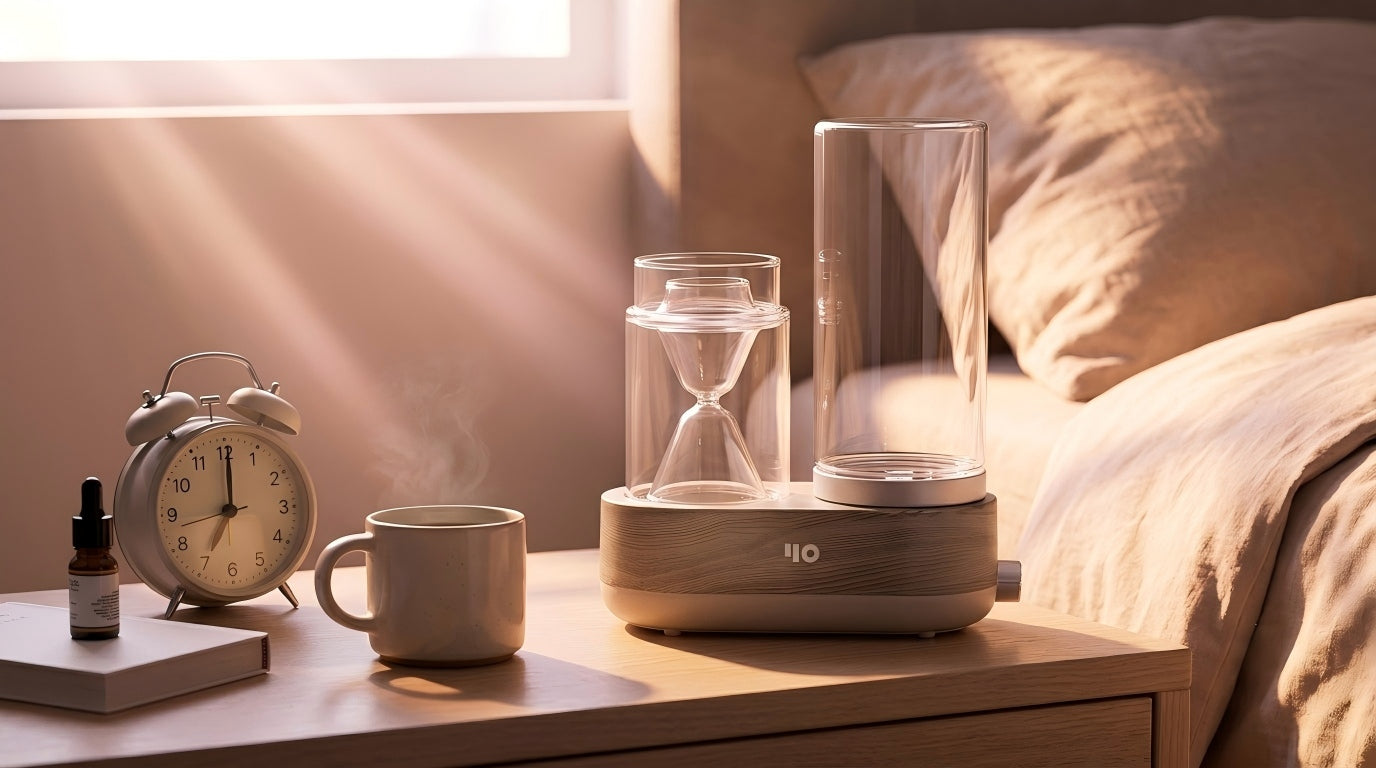

Es ist 23 Uhr. Sie geben drei Tropfen Lavendel in den Diffusor, stellen ihn auf den Nachttisch und schalten das Licht aus.
Acht Stunden später ist das Wasser weg. Der Raum riecht genauso wie beim Einschlafen. Sie fragen sich: Hat das überhaupt etwas gebracht? War es sicher?
Die Antworten sind spezifischer, als die meisten Menschen erkennen – und das wahre Risiko ist nicht das, worüber Sie sich Sorgen machen.
Einen Diffusor über Nacht laufen zu lassen, ist nicht so gefährlich, wie die Leute befürchten. Das ätherische Öl sammelt sich nicht in Ihrer Lunge an. Aber Ihre Nase hat den Geruch nach etwa 20 Minuten nicht mehr wahrgenommen – und je nach Ihrem Diffusor hat das Gerät seither seine eigenen Probleme verursacht.
Das 20-Minuten-Problem: Warum Ihre Nase abschaltet
Ihr Geruchssystem ist darauf ausgelegt, Veränderungen im Geruch wahrzunehmen, nicht konstante. Deshalb riechen Sie Ihr eigenes Parfüm innerhalb einer Stunde nach dem Auftragen nicht mehr, und deshalb riecht es spezifisch, wenn Sie ein fremdes Haus betreten – aber nur für ein paar Minuten.
Der Mechanismus wird Geruchsermüdung genannt und tritt schnell ein. Sensorische Neuronen im Riechepithel hören nach kontinuierlicher Exposition gegenüber derselben Verbindung auf zu feuern. Bei den meisten Menschen tritt dies zwischen 15 und 25 Minuten ein.
Danach ist der Geruch immer noch im Raum. Sie nehmen ihn nur nicht mehr bewusst wahr.
Was das für das Diffundieren über Nacht bedeutet. Wenn Sie mit Lavendelgeruch eingeschlafen sind, haben Sie ihn vielleicht die ersten 20 Minuten wahrgenommen. Die restlichen 7 Stunden waren sensorische Stille – die gleiche Menge Öl wurde verbraucht, aber kein wahrgenommener Nutzen.
Das Reset-Fenster
Riechneuronen erholen sich, sobald die Exposition endet. In einem normal belüfteten Raum kehrt die Empfindlichkeit innerhalb von 20–30 Minuten nach dem Ausschalten des Diffusors zurück.
Dies ist der Hauptgrund, warum klinische Aromatherapeuten intermittierendes Diffundieren anstelle von kontinuierlichem verwenden. Nicht um Öl zu sparen. Sondern um die Nase funktionsfähig zu halten.
Die 30/30-Regel (und warum Aromatherapeuten sie verwenden)
Das branchenübliche Protokoll lautet: 30 Minuten an, 30 Minuten aus. Es hat zwei Zwecke:
- Bewahrt die Geruchsempfindlichkeit – die Aus-Phase ermöglicht den Geruchsneuronen, sich zurückzusetzen, sodass der nächste Zyklus tatsächlich wahrgenommen wird.
- Begrenzt die Inhalationsdosis – reduziert die kumulative Exposition gegenüber konzentrierten aromatischen Verbindungen, besonders relevant für Kinder, Schwangere und Menschen mit Atemwegserkrankungen.
- Verlängert die nutzbare Diffusionszeit – ein 30/30-Muster mit einem vollen 1,6-Liter-Tank reicht über den größten Teil eines Tages mit ein- und ausgeschaltetem Raumduft.
Für die nächtliche Anwendung funktioniert ein modifiziertes Muster: 30 Minuten vor dem Schlafengehen an, während der Tiefschlafphase aus, dann ein kurzer Zyklus im Wachwerden-Fenster. Die meisten Menschen brauchen den Duft nicht die ganzen acht Stunden. Ihre Nase nimmt ihn sowieso nicht wahr.
Was tatsächlich zwischen Stunde 4 und Stunde 8 passiert
Hier verlagert sich das Gespräch. Das ätherische Öl selbst ist nicht das nächtliche Risiko. Das Gerät, das das Öl betreibt, ist es.
1. Ultraschallmembranen erwärmen sich
Ultraschalldiffusoren verwenden eine piezoelektrische Platte, die bei ~1,7 MHz schwingt, um Wasser zu zerstäuben. Bei kontinuierlichem Betrieb über mehrere Stunden sammeln die Membran und ihr Treiberstromkreis Wärme an.
Billige Geräte haben kein Wärmemanagement. Das Kunststoffgehäuse schließt diese Wärme am Wasserreservoir ein, was jedes andere der unten genannten Probleme beschleunigt.
2. Das Warmwasserreservoir wird zu einem Wachstumsmedium
Ein Ultraschall-Diffusorreservoir bei Raumtemperatur liegt während des Betriebs bei etwa 24–27 °C. Das ist der ideale Bereich für Biofilm- und Bakterienwachstum.
Fügen Sie ätherische Ölrückstände als Nährstoffquelle hinzu, und Sie haben einen kleinen, warmen Nährstoffteich, der acht Stunden lang läuft. Aus diesem Grund bildet sich in Diffusoren innerhalb weniger Wochen bei täglichem Gebrauch sichtbarer Schleim.
Verwandte Lektüre: Schimmel in Ihrem Diffusor: Was tatsächlich darin wächst – und wie Sie es stoppen können behandelt das Biofilm-Problem detailliert, einschließlich der Materialien, die es widerstehen.
3. Plastiktanks zersetzen sich schneller unter anhaltender Hitze + Öl
Die Chemie aus unserem Artikel über Zitrusöle – d-Limonen und andere Terpene, die als Lösungsmittel für Kunststoff wirken – beschleunigt sich mit Hitze. Der Betrieb über Nacht bedeutet acht aufeinanderfolgende Stunden Hitze plus Öl, jede Nacht.
Aufgeweichte Polymerfragmente werden dann mit dem Nebel vernebelt. Das ist eine langsame, kumulative Exposition, an die die meisten Benutzer nie denken.
4. Überschüssige Luftfeuchtigkeit verstärkt das Problem
Ein laufender Diffusor fügt dem Raum 200–300 ml Wasserdampf pro Stunde hinzu. In einem kleinen Schlafzimmer mit geschlossener Tür drückt der achstündige Betrieb die relative Luftfeuchtigkeit über 60 % – die Schwelle, ab der sich Wand-Schimmel, Hausstaubmilbenpopulationen und Kondensation an Fenstern beschleunigen.
"Auto-Off Timer" ist nicht das, was Sie denken
Die meisten Diffusoren werben mit einem Timer. Fast keiner gibt an, welcher Art. Die Unterschiede sind wichtiger als das Vorhandensein der Funktion.
| Abschalttyp | Was er tut | Die Lücke, die er hinterlässt |
|---|---|---|
| Fester Timer (1h / 3h / 6h) | Schaltet nach eingestellter Dauer ab | Erkennt leeres Wasser nicht – kann die Membran trocken laufen lassen, wenn der Tank fast leer ist |
| Wasserstandsensor | Schaltet ab, wenn der Tank leer ist | Löst nur am Ende des Tanks aus – könnte viele Stunden dauern |
| Temperatursensor | Schaltet bei Überhitzung ab | Reaktiv, nicht präventiv – löst aus, nachdem der Schaden begonnen hat |
| Kombiniert (Füllstand + Zeit + thermisch) | Alle drei Sicherheitsfunktionen | Das Design, das die meisten Verbraucher annehmen, aber selten bekommen |
Der eigentliche Fehlerfall über Nacht ist nicht das Öl. Es ist ein billiges Gerät, dessen Timer nach 3 Stunden abgelaufen ist, aber der leere Tank ließ den Motor gegen eine trockene Membran brummen bis zum Morgen.
Das nächtliche Risiko, über das niemand spricht: Das Gerät, nicht das Öl
Die Incident-Datenbank der U.S. Consumer Product Safety Commission enthält Berichte über kleine Luftbefeuchter und Diffusoren, die überhitzt, geschmolzen und in seltenen Fällen Brände ausgelöst haben, wenn sie unbeaufsichtigt liefen.
Das Muster ist konsistent: billiges Kunststoffgehäuse, kein thermischer Abschaltschutz, Trockenlauf, Plastik weicht am immer noch heißen Heizelement auf, Zündquelle kommt mit brennbarem weichen Plastik in Kontakt.
Es ist ungewöhnlich. Aber es ist die tatsächliche nächtliche Gefahr, nicht die Aromatherapie.
Wenn Ihr Diffusor eines dieser Anzeichen aufweist, lassen Sie ihn nicht unbeaufsichtigt laufen: Kunststoffgehäuse, das sich nach 30 Minuten Gebrauch warm bis heiß anfühlt, keine automatische Abschaltung bei leerem Wasser, nur Einzeltimer (keine thermische Sicherung), sichtbare Verfärbungen oder Verformungen in der Nähe der Heizbasis, Gerät älter als 2 Jahre bei starkem nächtlichem Gebrauch.
Was sicheres Diffundieren über Nacht (konstruktiv) tatsächlich erfordert
Die Anforderungen sind keine Marketingaussagen. Sie sind physikalisch:
- Feste Tankkapazität, die der Laufzeit entspricht. Ein 1,6-Liter-Tank mit einer Leistung von ~200 ml/h leert sich in etwa 8 Stunden. Wenn das Wasser ausgeht, stoppt das Gerät – mechanisch, nicht elektronisch.
- Wasserstandssensor, der den Timer überschreibt. Wenn der Tank leer ist, bevor der Timer abläuft, unterbricht der Sensor zuerst die Stromzufuhr. Kein Trockenlauf.
- Tankmaterial ohne Kunststoff. Borosilikatglas wird unter anhaltender Hitze nicht weich, verformt sich nicht und gast nicht aus. Langfristige Materialintegrität.
- Niedrige Auslasstemperatur. Ein gekühlter Dampfaustritt von 50 °C bedeutet keinen heißen Nebel, der zu Bettwäsche oder Decke aufsteigt, und keine Verbrennungsgefahr, falls ein Kind oder Haustier ihn umstößt.
- Separate Ölkammer. Öl bleibt nicht 8 Stunden lang im Wasserreservoir und bildet Biofilm-Nährstoffe. Es befindet sich in einer eigenen Keramikschale und wird über Dampf abgegeben.
Der Y&O Yo-A1 ist nach diesen physikalischen Prinzipien konstruiert. Nicht wegen eines Marketingaspekts – sondern weil ein Borosilikatglastank in Verbindung mit einem Dampfheizmechanismus Kunststoff nicht überhitzen, keinen Biofilm in warmem Nährwasser bilden und nicht trocken über die Kapazität hinaus laufen kann.
Speziell für die nächtliche Nutzung: Füllen Sie den Tank einmal, geben Sie Öl in die Keramikschale, und das Gerät läuft etwa 8 Stunden und stoppt dann. Kein Trockenlauf, keine Plastikzersetzung, keine kumulative Feuchtigkeitsspitze (Dampf verteilt sich gleichmäßiger als Ultraschallnebel), kein Brandrisikofaktor durch weichgewordenes Polymer.
Das praktische Nacht-Setup
Was die meisten Benutzer nach dem Wechsel einrichten:
- Voller Tank vor dem Schlafengehen mit 4–6 Tropfen Lavendel, Kamille oder Sandelholz in der Ölschale.
- Läuft etwa 8 Stunden, stoppt automatisch, wenn das Wasser ausgeht.
- Ölschale morgens leeren und abwischen. Für die nächste Nacht nachfüllen.
- Kein Timer einzustellen. Keine Sorge vor Trockenlauf. Keine Plastikzersetzung.
Praxisnutzung: Was 8 Stunden bedeuten
Die ganze Nacht diffundieren, ohne sich um das Gerät sorgen zu müssen
Der Y&O Yo-A1 läuft 8 Stunden lang mit einem vollen Wassertank und stoppt dann automatisch. Keine Plastikzersetzung, kein Trockenlauf, kein Timer einzustellen.
Zum Yo-A1 Glas-Diffusor Shop →
Möchten Sie einen Diffusor, der speziell für den Schlaf entwickelt wurde?
Die physikalischen Eigenschaften, die einen Diffusor über Nacht sicher machen, sind dieselben, die ihn optimal für den Schlaf machen – leiser Betrieb, gekühlter Dampf, kein Plastik.
Alle Spezifikationen des Yo-A1 ansehen →FAQ
Kann ich einen Diffusor tatsächlich die ganze Nacht laufen lassen?
Ja, wenn der Diffusor dafür ausgelegt ist. Das bedeutet: eine Tankkapazität, die der Laufzeit entspricht (damit er stoppt, wenn das Wasser ausgeht), ein Wasserstandssensor, der jeden Timer überschreibt, und nicht-plastische Materialien, die bei längerem Gebrauch nicht zerfallen oder überhitzen. Bei einem billigen Ultraschallgerät aus Plastik ist die Antwort eher "nicht sicher".
Ist es gefährlich, ätherische Öle stundenlang einzuatmen?
Für die meisten gesunden Erwachsenen mit gängigen Ölen (Lavendel, Kamille, Zedernholz) nein. Die inhalierte Dosis aus einem richtig verdünnten Diffusor ist gering. Allerdings – für schwangere Nutzer, Säuglinge, Menschen mit Asthma und bestimmte Haustiere ist eine längere konzentrierte Exposition mit größerer Vorsicht zu genießen. Für diese Personengruppen ist intermittierendes Diffundieren (30 Min. an / 30 Min. aus) oder kürzere Gesamtsitzungen sicherer.
Muss ich wirklich die 30/30-Regel befolgen?
Für die Wirksamkeit des Duftes ja – Ihre Nase nimmt den Duft nach ca. 20 Minuten sowieso nicht mehr wahr, so dass kontinuierliches Diffundieren Öl verschwendet. Für die Sicherheit kommt es darauf an: 30/30 ist die Standardpraxis in der klinischen Aromatherapie, aber gesunde Erwachsene, die gut verdünnte Öle verwenden, können in der Regel längere Zeiträume ohne Probleme diffundieren.
Was passiert, wenn ich vergesse, ihn auszuschalten und das Wasser ausgeht?
Beim Yo-A1 unterbricht der Wasserstandssensor automatisch die Stromzufuhr – kein Trockenlauf, keine Beschädigung. Bei einem billigen Ultraschallgerät ohne diesen Sensor vibriert die piezoelektrische Membran weiter auf einer trockenen Oberfläche, was den Treiberstromkreis durchbrennen, das Kunststoffgehäuse verformen und in seltenen Fällen ein Brandrisiko darstellen kann.
Stellen ätherische Öl-Diffusoren tatsächlich ein Brandrisiko dar?
Selten, aber dokumentiert. Das Muster ist konsistent: billiges Kunststoffgehäuse + keine thermische Abschaltung + Trockenlauf + Hitze, die Kunststoff gegen ein Heizelement weich macht. Deshalb sollte jedes kleine Gerät, das 8 Stunden lang unbeaufsichtigt läuft, über sich überlappende Sicherheitsmechanismen verfügen – Füllstandssensor, Timer und thermische Abschaltung – nicht nur einen.
Kann ich meinen Diffusor 24/7 laufen lassen, wenn ich ihn nachfülle?
Bei einigen Geräten ist es physikalisch möglich, aber praktisch eine schlechte Idee. Kontinuierliche Exposition desensibilisiert Ihre Nase vollständig (Sie würden ihn nicht mehr riechen), erhöht die Luftfeuchtigkeit in Innenräumen über gesunde Werte, fördert das Biofilmwachstum im Reservoir und belastet den Mechanismus unnötig. Intermittierender Gebrauch ist besser für Sie und das Gerät.
Hat der Yo-A1 einen manuellen Timer oder nur eine automatische Abschaltung?
Beides. Das Gerät ist für eine Laufzeit von etwa 8 Stunden mit vollem Tank ausgelegt, wobei der Wasserstandssensor die primäre Abschaltvorrichtung ist. Manuelle Bedienelemente sind für kürzere Sitzungen verfügbar.
Was, wenn ich länger als 8 Stunden Duft haben möchte?
Realistisch gesehen werden Sie es nach den ersten 20 Minuten nicht mehr wahrnehmen. Wenn ein Raumduft während eines ganzen Arbeitstages wichtig ist, teilen Sie die Laufzeit in Morgen- und Abendzyklen auf, anstatt zu versuchen, einen einzelnen Tank über 12+ Stunden zu dehnen. Ihre Nase – und das Gerät – werden beide besser funktionieren.
Haftungsausschluss: Dieser Artikel dient Bildungszwecken und stellt keine medizinische Beratung dar. Individuelle Empfindlichkeiten gegenüber ätherischen Ölen variieren. Schwangere Benutzerinnen, Säuglinge, Personen mit Atemwegserkrankungen und Haustierbesitzer sollten qualifizierte Fachkräfte bezüglich geeigneter Diffusionspraktiken für ihre spezifische Situation konsultieren. Bei Auftreten von Atemwegsreizungen die Anwendung einstellen.
Referenzen & Quellen
- U.S. EPA — Raumluftqualität (IAQ): epa.gov/indoor-air-quality-iaq
- CDC NIOSH — Raumluftqualität: cdc.gov/niosh
- ASHRAE — Richtlinien für die Raumluftfeuchtigkeit: ashrae.org
- Y&O Yo-A1 Produktspezifikationen: yoairpro.com
- Community-Diskussion — r/sleep über die Verwendung von Diffusoren über Nacht
- Unabhängige Video-Rezensionen — The Nutmeg Home, KG Simple Reviews, Your Review Channel (2025–2026)